

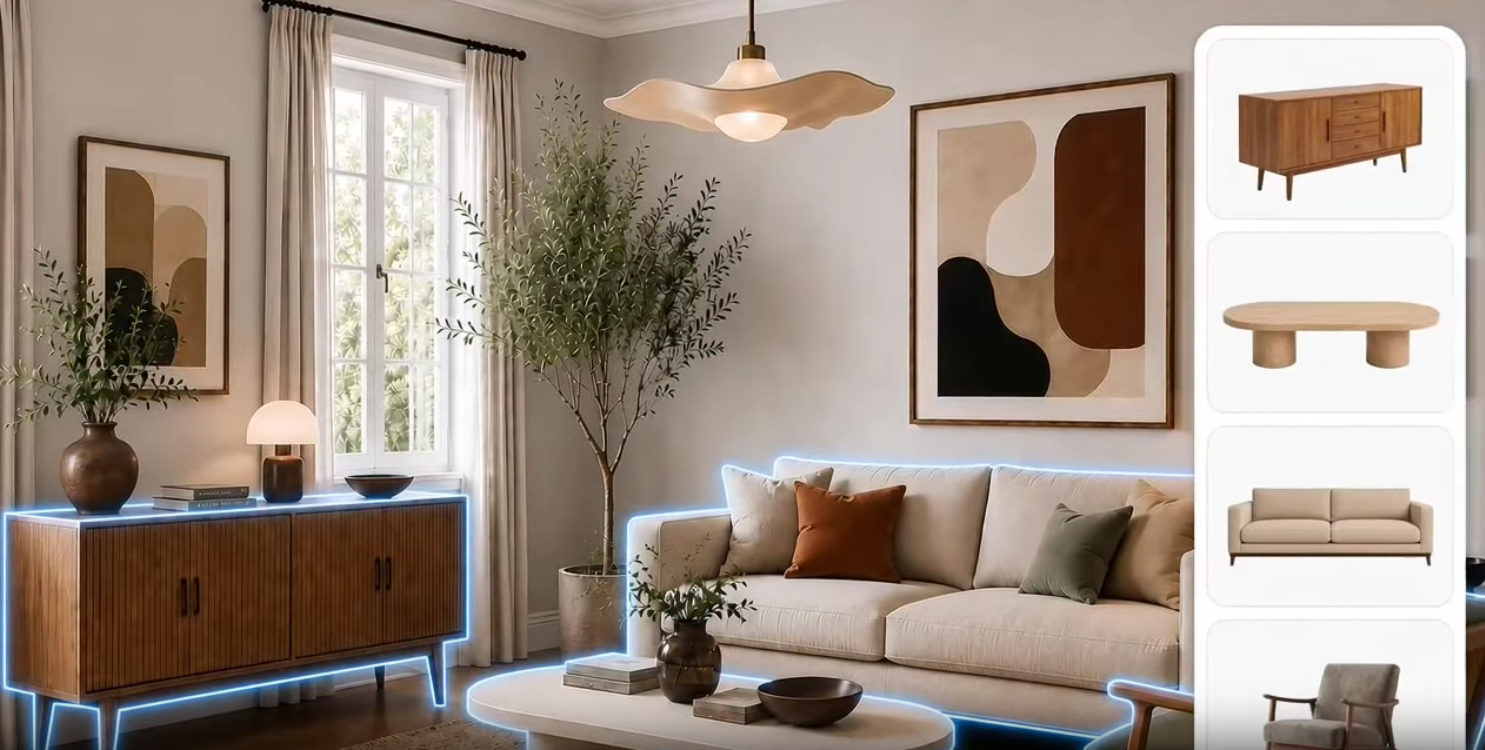

Furniture recognition from photos gives furniture stores a chance to understand what a customer is looking for, even when they don’t know the names or specifications of products. A shopper may send a photo of a room they liked online, or share a photo of the living room they want to renovate, but not know how to search for the sofa, table, or lighting units that appear in it. Instead of asking them to describe each piece separately, the AI agent can analyze the photo, recognize its elements, and help them find similar products.
In this article, we will look at how furniture recognition from photos works, and how room photo analysis can be used to turn a customer’s interest in design into a sales opportunity.
Why Have Customer Photos Become an Important Starting Point for Furniture Store Sales?
Many customers begin their search for furniture from a photo they saw on social media or design platforms, not from a specific product name.
They may like a sofa in a living room or a table with a certain design, but they don’t know the name of the style, the materials, or the specifications that would help them find it.
This is where photos prove important as a means of communication between the customer and the store.
When a store can understand the elements shown in a photo and help the customer find similar pieces, the search becomes easier and more closely tied to what they actually prefer.
But if the store cannot handle photos, the customer may struggle to describe what they want, and may give up searching before reaching the right product.
That is why furniture recognition from photos and AI furniture discovery allow stores to make use of the photos customers share and turn their interest in a particular design into a real sales opportunity.
What Is Furniture Recognition from Photos, and How Does It Work?
It is the use of computer vision and artificial intelligence technologies to analyze photos and identify the furniture pieces and elements in them.
Instead of relying on the customer’s description or their knowledge of product names, the system can understand the visual content of the photo and extract information that helps in searching for suitable pieces.
This process takes place through several steps:
- The customer sends a photo of a room or a piece of furniture, and the system begins examining its visual content.
- The AI can identify furniture from a photo by recognizing the different furniture pieces, such as sofas, tables, and chairs, and distinguishing each piece from the elements around it.
- The AI analyzes characteristics such as shape, color, and design, which helps identify the products closest to what appears in the photo.
- The analysis results are used to find matching or similar products among those available at the store.
Thus, the benefit of furniture recognition from photos is not limited to describing the photo. It helps the customer move from the photo to actual purchase options, without needing to know technical terms or furniture piece names.
Which Furniture Pieces Can AI Recognize Within a Single Photo?
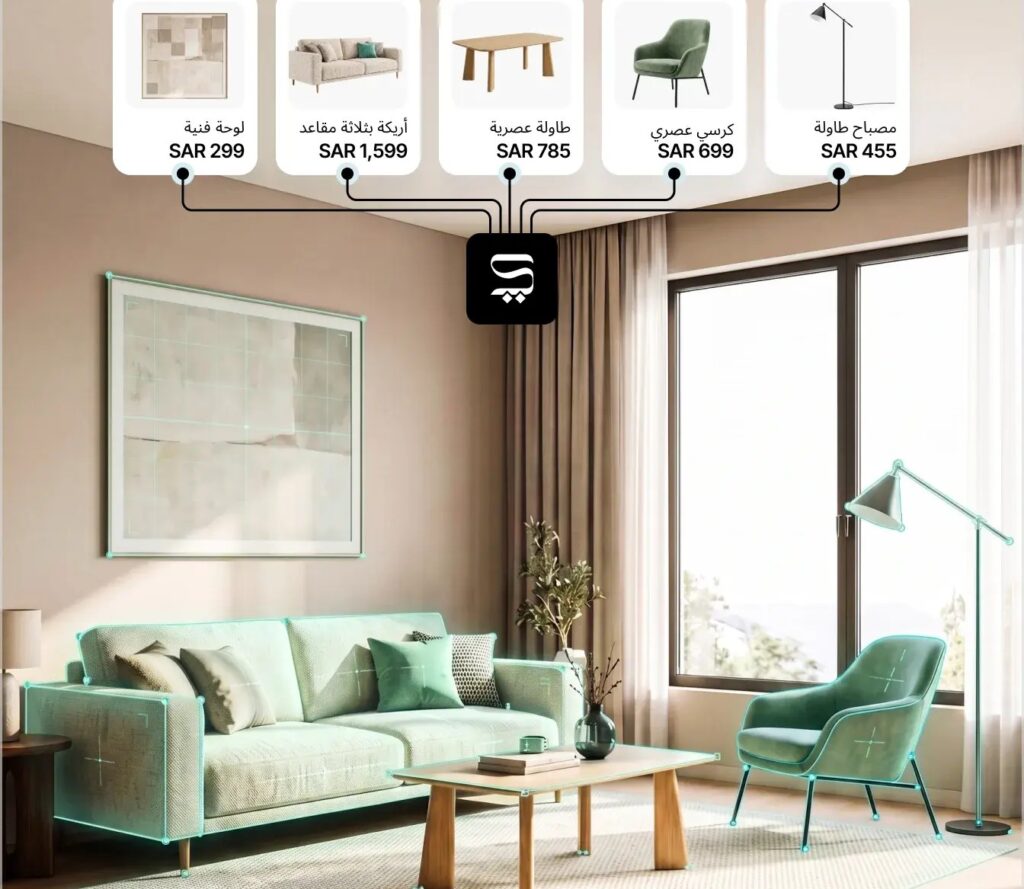
Furniture recognition from photos technologies can identify multiple types of furniture and household items within the same photo, even when several pieces appear next to each other in an integrated design. This includes:
- Living room furniture: Sofas, chairs, side tables, coffee tables, and TV units.
- Bedroom furniture: Beds, wardrobes, nightstands, and dressing tables.
- Dining room furniture: Dining tables, chairs, and storage and dishware units.
- Decor and styling elements: Rugs, curtains, lighting units, mirrors, and home accessories.
How Does Visual Search Help Customers Find the Furniture They Want?
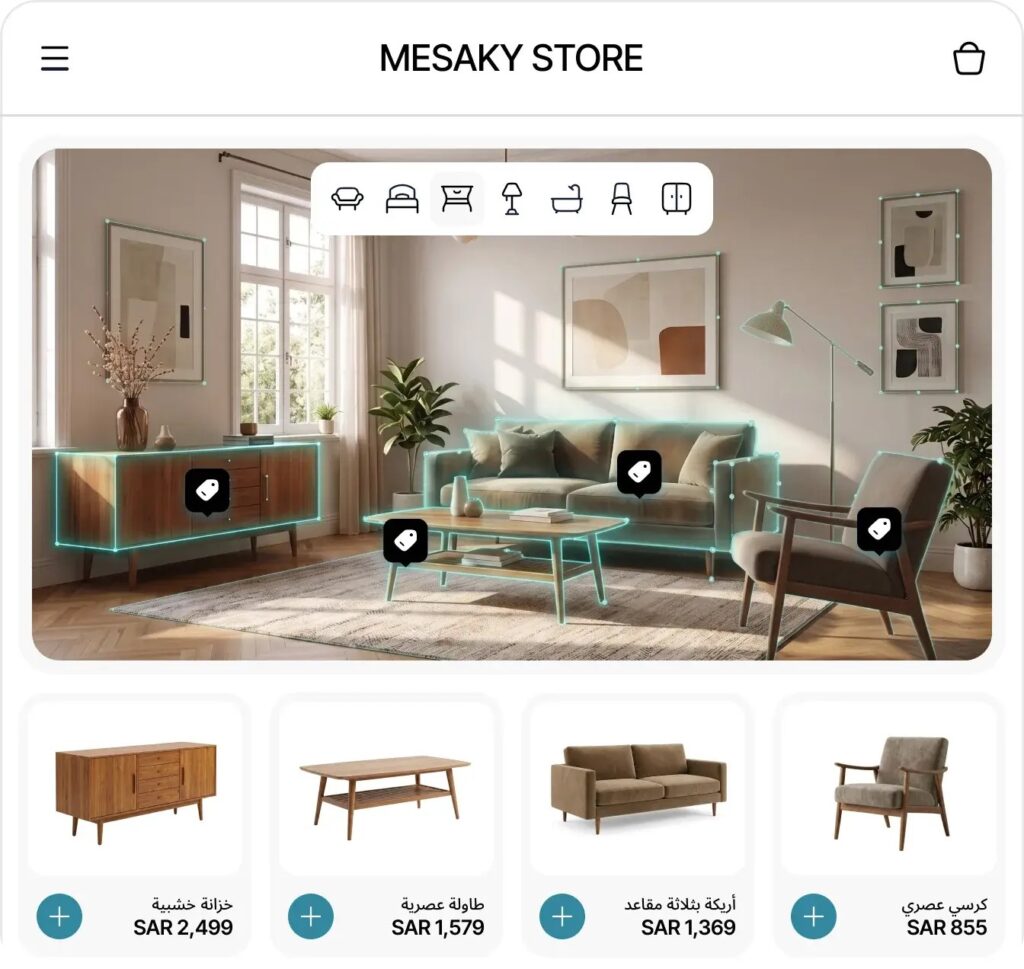
Visual search makes it easier for the customer to reach the furniture pieces they like without needing to know their names or describe their specifications precisely.
Visual search, or furniture recognition from photos, is also more useful for:
- Finding similar products: If a customer likes the design of a sofa in a photo, they can explore sofas that are close to it in shape, color, or style.
- Making it easier to search for unfamiliar pieces: When the customer doesn’t know the name of a piece of furniture or the term used to describe it, the photo becomes a direct way to identify what they want.
- Exploring multiple alternatives: The customer can compare similar products and choose the most suitable in terms of design, price, and materials, according to the information available at the store.
As a result, the time the customer spends searching is reduced, and discovering suitable products becomes easier, which increases their chances of reaching a purchase decision.
How Does Room Photo Analysis Turn into Additional Sales Opportunities?

The benefit of AI room photo analysis is not limited to helping the customer find one specific piece of furniture. It can also reveal other needs related to styling the space.
When a customer shares a photo of a room they liked, the AI agent can recognize the furniture pieces in it, then help them explore complementary products that keep the design consistent.
Accordingly, photo analysis and furniture recognition from photos technologies open up opportunities for furniture stores to upsell through:
- Recommending products that help the customer complete the room’s styling instead of just buying a single piece.
- Showing furniture and accessories with similar colors or styles, which encourages the customer to buy more than one product.
- Suggesting alternatives that fit the customer’s budget if the similar product is not available or its price is higher than expected.
- Helping the customer identify the pieces they need to furnish the room according to the design they liked.
In this way, the photo changes from just a visual reference into a starting point for discovering additional products, and the chances of completing multiple purchases in a single order increase.
How Does Your Store Benefit from Furniture Recognition from Photos?

Furniture recognition from photos helps furniture stores make their product catalog easier to explore, especially for customers who rely on photos to decide what suits their homes.
This capability affects the store’s performance in several ways:
- Making it easier to discover furniture the customer likes instead of trying multiple search keywords, which reduces the difficulty of reaching the right product.
- Reducing customer hesitation by making it easier to find items close to the design they are looking for, which makes the purchase decision easier.
- Increasing upselling opportunities through the role of the AI agent in furniture store customer service, and through suggesting suitable complementary pieces, such as rugs, lighting, and side tables.
- Using visual search activity to learn which types of furniture and designs attract customers, and thereby improving product display and recommendations.
How Does Zory’s AI Agent Help Furniture Stores Turn Photos into Sales Opportunities?

Zory’s AI agent allows customers to interact with the store’s catalog using photos instead of relying only on text descriptions.
Through its visual understanding capabilities, it can analyze photos, recognize the furniture pieces and elements that appear in them, and then help the customer find similar products within the store’s catalog.
The main capabilities offered by Zory’s AI agent for furniture retailers include:
- Recognizing products within photos: Identifying different furniture pieces, even when a single photo contains several products.
- Visual furniture search: Helping the customer find products similar to the piece they shared a photo of, without needing to know its name.
- Similar and complementary AI product recommendations: Guiding the customer to alternatives close to the design they prefer, or to other pieces that help them complete the room’s styling.
- Linking photos to the store’s catalog: Turning the customer’s interest in a visual element into actual product options they can explore and compare.
With these capabilities, Zory helps furniture stores shorten the distance between the customer’s inspiration from photos and reaching the right products to buy, while providing additional opportunities to display complementary products and increase the value of purchases.
Conclusion
Photos are no longer just a means by which customers draw inspiration for styling their homes. They have become an opportunity for furniture stores to understand customers’ needs and guide them toward the right products.
Through furniture recognition from photos, the search journey can be shortened, discovering similar and complementary pieces becomes easier, and new opportunities for upselling open up.
Give your store’s customers an easier way to shop for furniture. Contact the sales team and start trying Zory’s AI agent to discover how it can turn photos into real sales opportunities.
FAQs
How Does Searching for Furniture Using Photos Work?
The customer sends a photo of the piece they are looking for, and the system analyzes it, recognizes its visual characteristics, and then searches for similar products within the store’s catalog.
Can AI Recognize More Than One Piece of Furniture in a Single Photo?
Yes, it can identify several pieces and elements within the same photo, such as sofas, tables, chairs, and lighting units.
Can I Find Furniture Similar to a Photo from the Internet?
Yes, the furniture recognition from photos solution from Zory’s AI agent can be used to search for products similar to a photo from the internet in shape, color, or design, according to the products available in the store’s catalog.
What Is the Difference Between Text Search and Visual Search for Furniture?
Text search relies on typing the product’s name or description, while visual search allows using a photo to find similar products, even if the customer doesn’t know the name of the piece.