

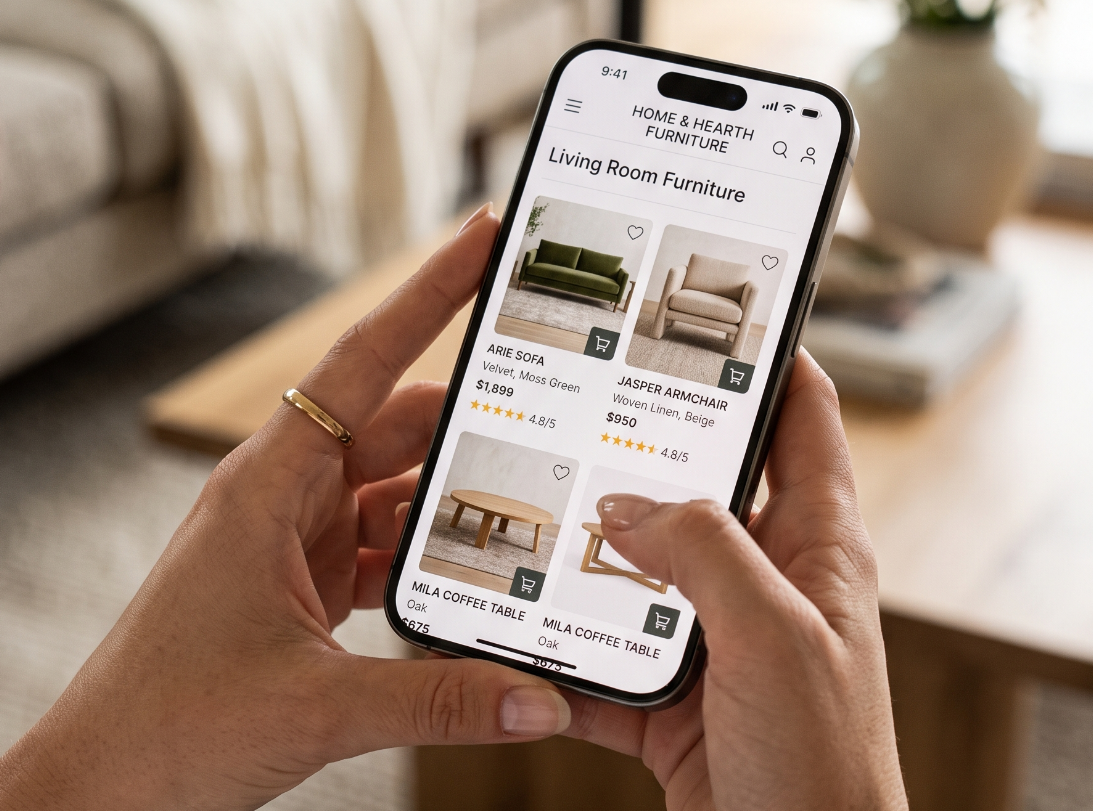

Furniture shopping behavior in Saudi Arabia and MENA is no longer based only on visiting showrooms and comparing prices. Today’s buyer searches and compares online, and wants to picture the piece in their home before paying. These decisions are big and costly, and they are often made with the family’s involvement, which makes hesitation part of the buying journey. Between buyers’ changing expectations and merchants’ need to turn visits into sales, AI solutions are emerging as a practical way to bridge this gap.
In this article, we look at the key features of furniture shopping behavior in Saudi Arabia and MENA, what buyers are looking for, and how merchants can offer it to them.
Key Features of Furniture Shopping Behavior in Saudi Arabia and MENA
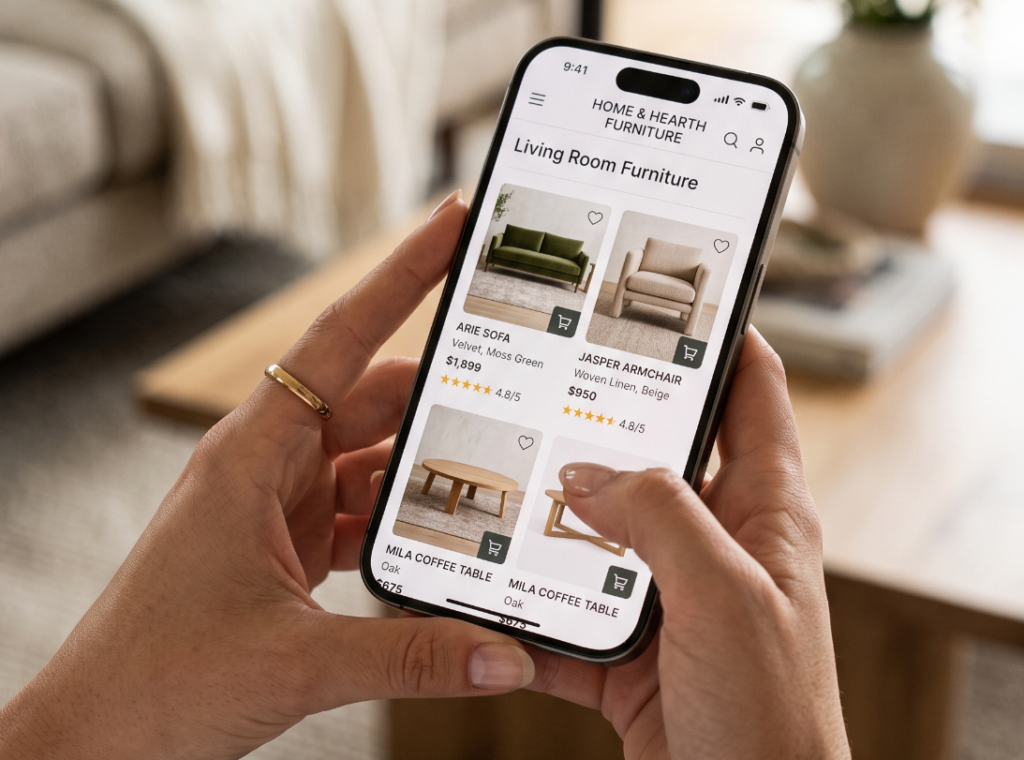
The buyer’s behavior in this market is shaped by two factors: the nature of furniture itself as a big and costly decision, and the change in shopping habits with the spread of digital tools. Below are the most important features of this behavior:
A Collective Decision Involving the Family
Choosing furniture is rarely an individual decision. The spouses, and sometimes the parents, take part in deciding the color, the style, and the budget.
This lengthens the time it takes to make a decision, and leaves the buyer needing clear materials that are easy to show to family members and discuss, such as realistic images or full visualizations of the room.
A Research Journey That Combines the Showroom and Online Shopping
Many buyers start by searching online, browsing stores, and comparing options and prices, then visit the showroom to check the quality and materials, and they may return online to complete the purchase.
This means the buyer’s experience spans more than one channel, and any break in this journey may push them to postpone their decision.
What Does the Furniture Buyer Look for Before Making a Decision?

Before paying for a piece of furniture, the buyer goes through several questions that determine whether they will go ahead with the purchase or postpone it.
Below are the most important things the buyer looks for to feel reassured about their decision, which are among the features of furniture shopping behavior in Saudi Arabia and MENA:
Seeing the Piece Inside Their Space
The buyer’s biggest worry is that the piece will look different in their home from what they saw in the picture.
They wonder: Will this sofa fit in the space? Does its color go with the walls and the flooring? The more clearly they can picture the final result, the more confident they become in the decision.
Clarity of the Total Cost
The buyer does not look only at the price of a single piece, but at the cost of furnishing the entire room.
When they see the full financial picture from the start, they can manage their budget and avoid surprises.
One of the most important features of furniture shopping behavior in Saudi Arabia and MENA is that the buyer postpones the purchase or looks for another store. This behavior happens specifically when prices are unclear.
Compatibility with Taste and Home Style
Tastes in the region vary between classic, contemporary, modern, and others, and the buyer looks for pieces that match the identity of their home, not for an isolated product.
That is why they need coordinated suggestions that take colors, materials, and space into account.
Speed and Confidence in the Purchase Decision
The buyer wants to reach their decision without going through weeks of hesitation and comparison.
An experience that saves them time and gives them enough information pushes them to go ahead with the purchase with confidence.
The Main Challenges Facing Furniture Merchants
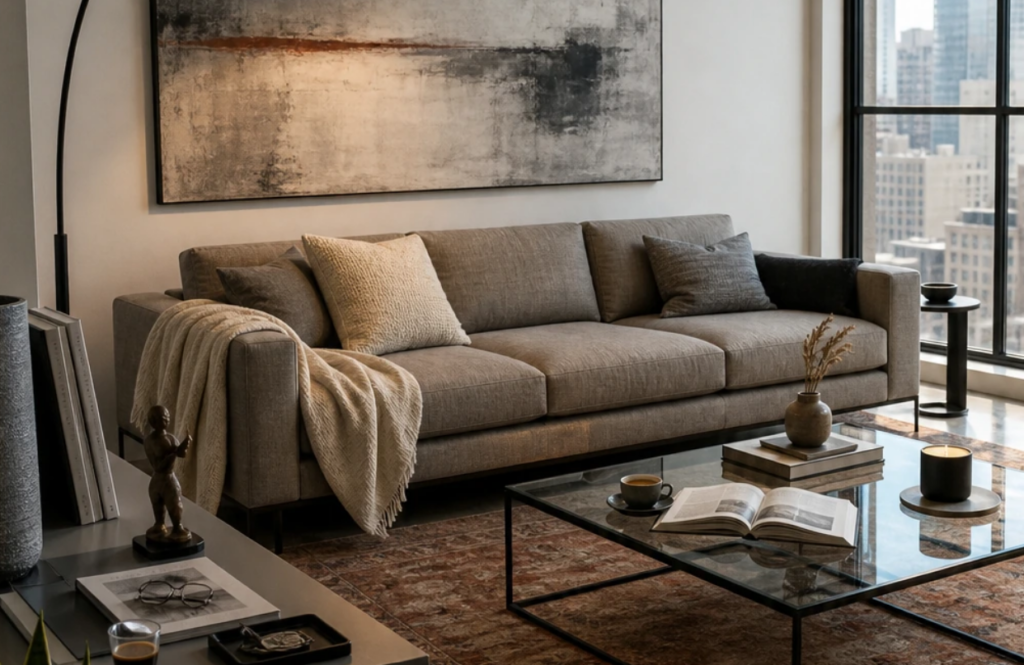
In light of the features of furniture shopping behavior in Saudi Arabia and MENA, the merchant finds themselves between a cautious buyer who wants to verify every detail and a competitive market that makes holding that buyer’s attention difficult. Here, furniture merchants face several challenges:
- Hesitation and a long decision journey: The buyer is slow to decide because they cannot picture the piece in their space, so sales opportunities that could have been completed are lost.
- Repeated explanation for every customer: The sales team spends a long time explaining sizes, coordination, and suitable options, an effort that is repeated with every visit.
- Difficulty providing personalized recommendations: Every customer differs in their space, taste, and budget, and meeting these differences manually consumes time and resources.
- Poor use of visits: A large share of store visits turn into browsing only, without a purchase, because there is nothing linking interest to decision.
- Little data on buyer behavior: Without an accurate understanding of what customers are looking for and what holds them back, it is hard to improve the offering and raise performance.
How Furniture Merchants Can Offer a Shopping Experience That Meets Buyer Expectations?
Knowing furniture shopping behavior in Saudi Arabia and MENA, as well as what the buyer wants, is half the way.
The other half is turning this knowledge into a practical experience inside your store. Below are some things that can help furniture merchants offer buyers a clearer and more convincing experience:
Visual Preview Before Purchase
The best way to reduce hesitation is for the buyer to see the result before paying. Showing the piece in a room that resembles their own saves them the trouble of guessing, and turns the static image into a decision based on a clear view.
This is exactly what AI tools for furniture merchants can offer. These tools can also have a major impact on boosting furniture sales if they are used appropriately.
Personalized Recommendations Based on Space and Style
When the presentation starts from the customer’s need, meaning their space, taste, and budget, rather than from the product catalog, choosing becomes easier and closer to what actually suits them.
This also strengthens the customer’s impression that the store understands them, as well as reduces the furniture shopping cart abandonment rate in online stores.
A Seamless Digital Experience from Discovery to Purchase
The fewer the steps between discovering a product and completing the purchase, the fewer the chances of the buyer backing out. What is needed is a smooth path, so that the customer can:
- Get to know the available options.
- See the design in front of them before buying.
- View the total cost clearly.
- Buy directly without moving between separate platforms.
Also, if this process is carried out successfully, conversion rates in furniture stores increase significantly. This would improve furniture shopping behavior in Saudi Arabia and MENA.
How Does Zory Support Furniture Merchants and Buyers?
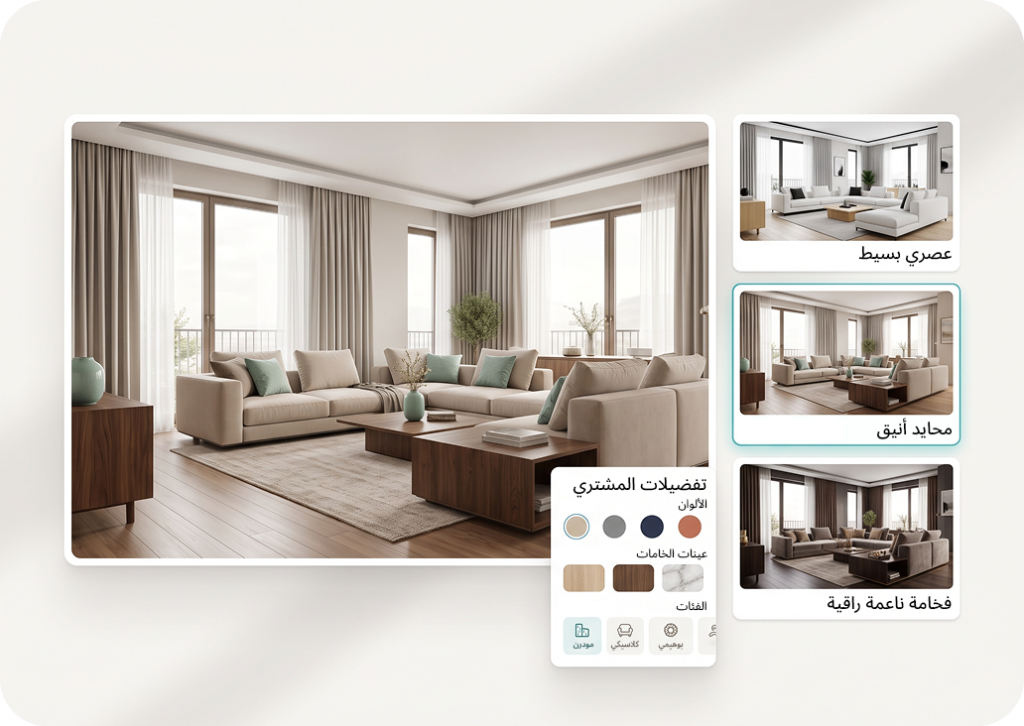
Zory is an AI interior design platform that understands furniture shopping behavior in Saudi Arabia and MENA well. It is therefore able to serve both:
- The furniture merchant who wants to turn interest into sales.
- The buyer who wants a clear decision before paying.
Below is how Zory’s AI interior design tools support each party, from merchant solutions to the tools the buyer uses themselves:
AI Sales and Design Agent
The agent understands the customer’s needs, analyzes their space and its design, then suggests suitable products and provides smart recommendations.
This reduces the effort spent on repeated explanations, and makes the purchase path shorter and clearer.
Integrating Products into Room Design Tools
The merchant’s products are integrated into AI room design tools, so that their real furniture appears within users’ designs, and reaches customers who are actually searching for furnishing ideas.
In addition to understanding furniture shopping behavior in Saudi Arabia and MENA, well-known furniture brands in the region such as Home Center, Abyat, and Ikewa work with the Zory platform.
Seeing the Design Before You Buy

Through Zory’s smart tools, the buyer can see how real furniture fits their space before buying. They can also view the total cost of the entire room instantly.
In this way, they stay in control of their budget and get a coordinated look without paying high design fees.
Performance Analytics for Merchants
Zory provides analytics that help the merchant track performance and understand customer behavior.
Zory’s publicly announced platform data also indicates that when merchants use its solutions, purchase intent rises by up to 220% and conversion reaches 2.5 times.
Conclusion
Furniture shopping behavior in Saudi Arabia and MENA is changing quickly, but its essence is constant: a buyer who wants to feel reassured about their decision before paying.
Every buyer wants to see the piece in their space, know the cost of the full room, and find what suits their taste and convinces their family. The merchant who offers all of this with clarity and ease wins not just one sale, but the trust of a customer who comes back again and again.
This is where the importance of smart AI tools and platforms such as Zory comes in, which move the buyer from guessing to seeing. So if you are a furniture merchant and want your customers to see your products in real designs before they buy them, try Zory and add your products to it now.
You can also contact the sales team to learn about the solutions suitable for your store, and start a shopping experience that makes the purchase decision easier and faster.