

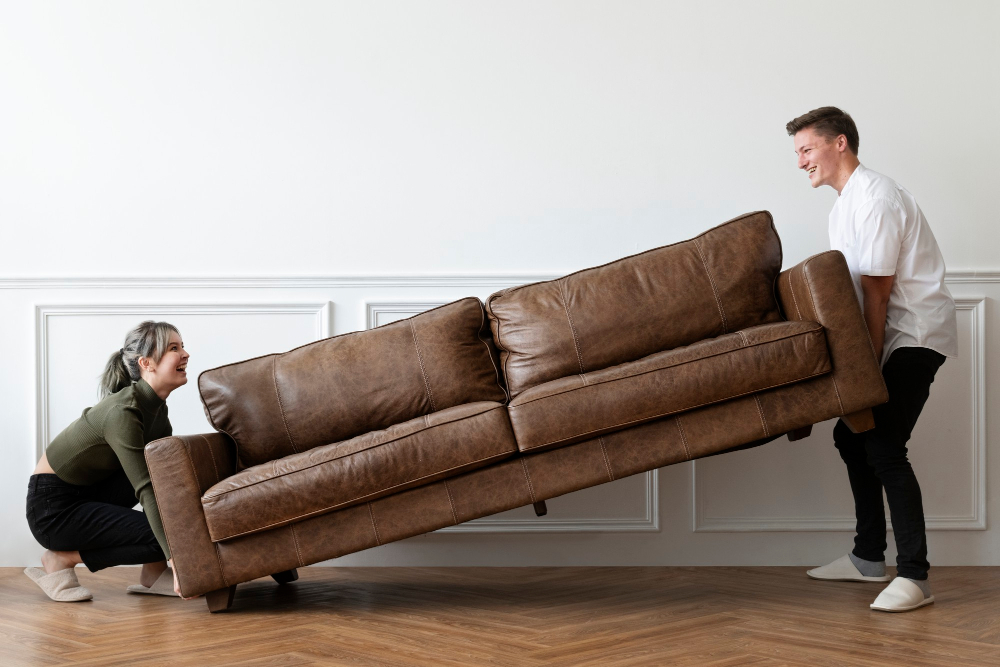

Reducing abandoned carts using AI has become an important goal for online furniture stores, especially when a customer hesitates to complete the purchase of a high-cost item or has difficulty choosing the right product. Cart abandonment is not always linked to price, it can also result from a lack of information, too many options, or unclear checkout steps. AI can help stores understand shoppers’ needs, offer more relevant recommendations, and make it easier to access the products and information that support the purchase decision.
In this article, we explain the reasons behind cart abandonment in furniture stores, how AI helps reduce it, and we review Zory’s role in improving the shopping experience.
What Is Meant by Cart Abandonment in Furniture Stores?
Cart abandonment happens when a customer adds a product to the shopping cart in an online furniture store, then leaves the site without completing the payment process.
The customer may genuinely be interested in buying, but backs away due to an obstacle or hesitation that appears during the final stages of the shopping journey.
This issue becomes more significant in furniture commerce, because products are often high in cost or large in size, and the customer may need more time to compare options and make sure the piece suits their space and budget.
Why Do Customers Abandon Their Cart in Furniture Stores?

The reasons behind cart abandonment are varied, and not all of them are related to price. Among the most notable reasons are:
- Higher final cost: such as unexpected shipping or installation fees.
- Unclear product information: such as dimensions, materials, colors, and usage details.
- Hesitation in choosing the piece: especially when buying furniture that needs to match the rest of the room.
- Difficulty comparing alternatives: the customer may find many options and not know which one suits their needs.
- Complicated checkout process: such as too many steps or requests for unnecessary information.
- Lack of options that fit the budget: when the customer can’t find a close alternative to their choice at a lower price.
- Need for consultation: the customer may want to be sure of the product’s quality or suitability before paying.
Therefore, a store needs to understand the specific obstacle preventing the customer from completing the purchase in order to reduce cart abandonment, instead of simply sending a generic cart reminder.
How Does AI Help Reduce Cart Abandonment?

AI can help stores improve the customer experience before they reach the checkout stage, by providing information and recommendations that are more relevant to their needs.
Using AI alone does not guarantee a reduction in cart abandonment, but it can help remove some of the reasons behind hesitation. Among the most notable ways to benefit from it:
- Personalizing product recommendations: suggesting pieces that match the customer’s preferences and needs.
- Displaying suitable alternatives: offering similar or lower-cost products when the original choice doesn’t suit the customer.
- Making furniture discovery easier: helping the shopper reach the pieces they’re looking for without browsing through a large number of pages.
- Suggesting complementary products: showing pieces that can be paired with the selected product, such as a rug that matches a sofa.
- Providing support and information: using smart assistants to answer frequently asked questions about products, shipping, and purchasing.
- Improving the comparison experience: helping the customer understand the differences between products before making a decision.
These strategies become more effective when combined with clear pricing, accurate product information, an easy checkout process, and customer service that can step in when needed.
What Role Do Product Recommendations Play in Reducing Cart Abandonment in Furniture Stores?
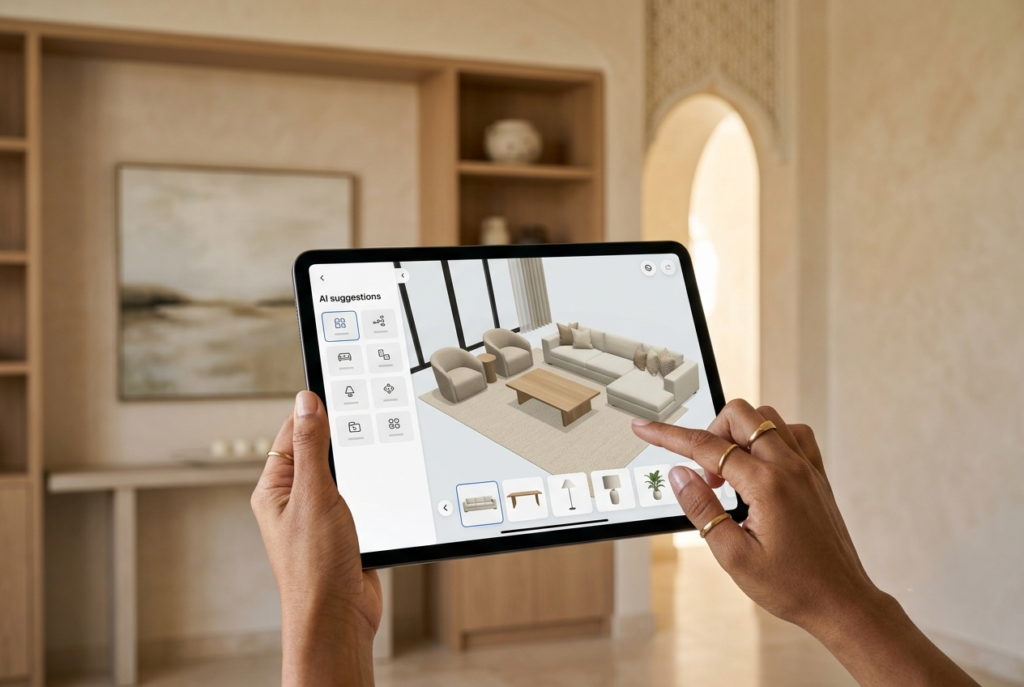
Smart furniture recommendations help reduce customer hesitation by offering options that are more relevant to what they’re looking for, instead of leaving them to face a wide catalog without guidance.
When the item in the cart doesn’t suit the customer’s budget or needs, similar alternatives or complementary options can be suggested to help them continue their shopping journey. Their importance shows in:
- Offering suitable alternatives: suggesting similar products with different prices or specifications.
- Reducing confusion: presenting specific options that match the customer’s taste and needs.
- Suggesting complementary pieces: helping the customer coordinate their furniture and choose related products.
- Making comparison easier: clarifying the available options instead of forcing the customer to search again.
- Supporting the purchase decision: offering products and information that help the customer evaluate their choice with greater confidence.
Product recommendations powered by AI don’t necessarily mean the customer will complete the purchase, but they can remove some of the obstacles that push them to abandon the cart, especially when the recommendations are accurate and the product information is up to date.
This practice works toward reducing abandoned carts using AI in furniture stores.
How Does Zory Help Furniture Stores Improve the Shopping Experience?

Zory is considered one of the best AI interior design platforms, offering smart tools that connect interior design with the discovery of real products.
Through it, the customer can visualize furniture within a complete space, then access the pieces that match their choices.
Instead of the shopper facing a long catalog, the platform helps them move from inspiration to the product, then to comparison and purchase.
Zory offers furniture stores a set of practical capabilities that help reduce cart abandonment:
- Linking products to design: displaying furniture within design scenes that help the customer imagine how it would be used.
- Making product discovery easier: suggesting matching or similar pieces based on the design’s colors, shapes, and style.
- Providing alternatives when unavailable: helping the customer continue searching for options from other stores or the same category.
- Supporting comparison: displaying similar products from multiple stores to compare design and price.
- Making the transition to purchase easier: directing the customer to the seller’s store to complete the purchase process.
How Can Zory’s Tools Be Used to Reduce Customer Hesitation Before Buying Furniture?
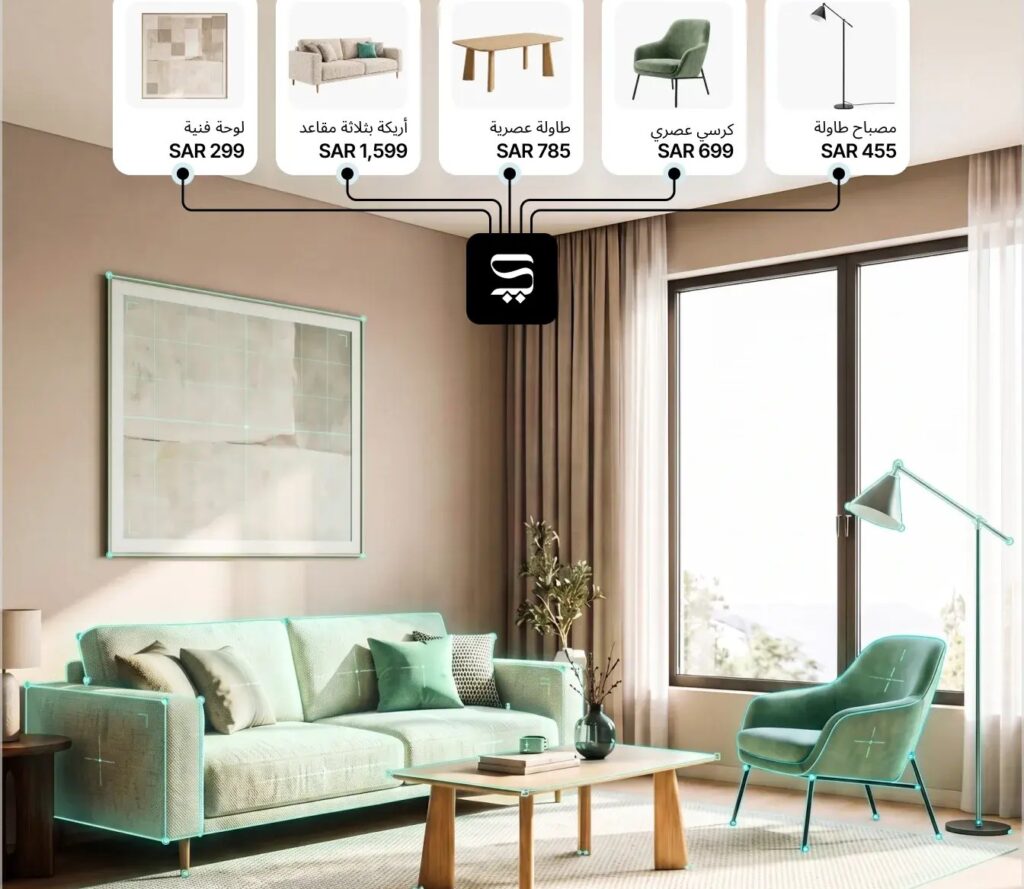
Zory’s tools can be used to help the customer move from the stage of liking a piece of furniture to visualizing it within their own space and comparing it with other options.
Instead of the shopper having to make a decision based only on product photos, they can use smart interior design tools to get a visualization closer to what the furniture will actually look like in their home. Among the most notable uses:
- Redesigning the room: the customer uploads a photo of their space and explores how it could look after adding furniture or changing its style.
- Searching for furniture: a sketch image, a text description, an inspiration photo, or even a copy of a specific design can be used to find similar products, which helps the customer when they’re not sure exactly which product they want.
- Comparing alternatives: displaying similar products gives the customer additional options in terms of shape, price, and store, instead of leaving the site when unconvinced by the first piece.
- Designing with real products: linking real furniture pieces to the design helps the shopper understand how to coordinate them with the rest of the room’s elements.
- Replacing furniture: trying to swap one piece for another within the design can help the customer test different options before making a purchase decision.
In this way, Zory becomes a tool for supporting decisions, not just a way to display furniture photos, because it connects space visualization, product discovery, and comparison between them.
What Should Be Measured to Know Whether a Cart Abandonment Reduction Strategy Is Successful in Furniture Stores?

Measuring the number of sales alone is not enough to know whether the strategy is successful.
A set of indicators must be tracked before and after applying AI interior design tools, while maintaining a similar comparison period.
Among the most important indicators that help you verify a reduction in cart abandonment in furniture stores:
- Cart abandonment rate: the percentage of carts that had products added to them without an order being completed.
- Purchase completion rate: the percentage of shoppers who moved from adding a product to completing the payment process.
- Conversion rate in furniture stores: to find out whether improving the product discovery experience has been reflected in sales.
- Transition from AI furniture recommendation to product: the number of customers who interacted with a recommendation and then moved to the product page.
- Transition from design to purchase: the number of customers who discovered a product through the design experience and then continued to the seller’s store or the purchase process.
- Average order value: to find out whether recommendations and complementary products are affecting cart value.
- Time to complete purchase: a decrease in the time the customer needs to make a decision may indicate that some purchase obstacles have eased.
- Store return rate: tracking customers who abandoned their cart and later returned to complete the purchase process.
- Zory tools usage rate: such as the number of times room redesign or product search is used, and linking this interaction to purchasing behavior.
Most importantly, no single indicator should be looked at in isolation from the others.
Cart abandonment may decrease while sales don’t increase, or interactions with design tools may rise without an improvement in conversions.
It is therefore preferable to analyze these indicators together, comparing them before and after applying the strategy to understand its real impact.
Conclusion
Reducing cart abandonment in furniture stores no longer depends only on improving the checkout page or offering discounts, it starts with helping the customer reach a purchase decision with confidence.
Here, AI can play an important role in understanding shopper preferences, providing more relevant recommendations, connecting inspiration with real products, and making it easier to compare options before buying.
For furniture retailers, Zory represents a way to create a more connected shopping experience, one that starts with space design and furniture discovery and extends to product comparison and moving on to purchase.
Try Zory and add your store’s products to the catalog, and discover how AI design and product discovery tools can help your customers make clearer purchase decisions, reducing abandoned carts using AI in your store.