

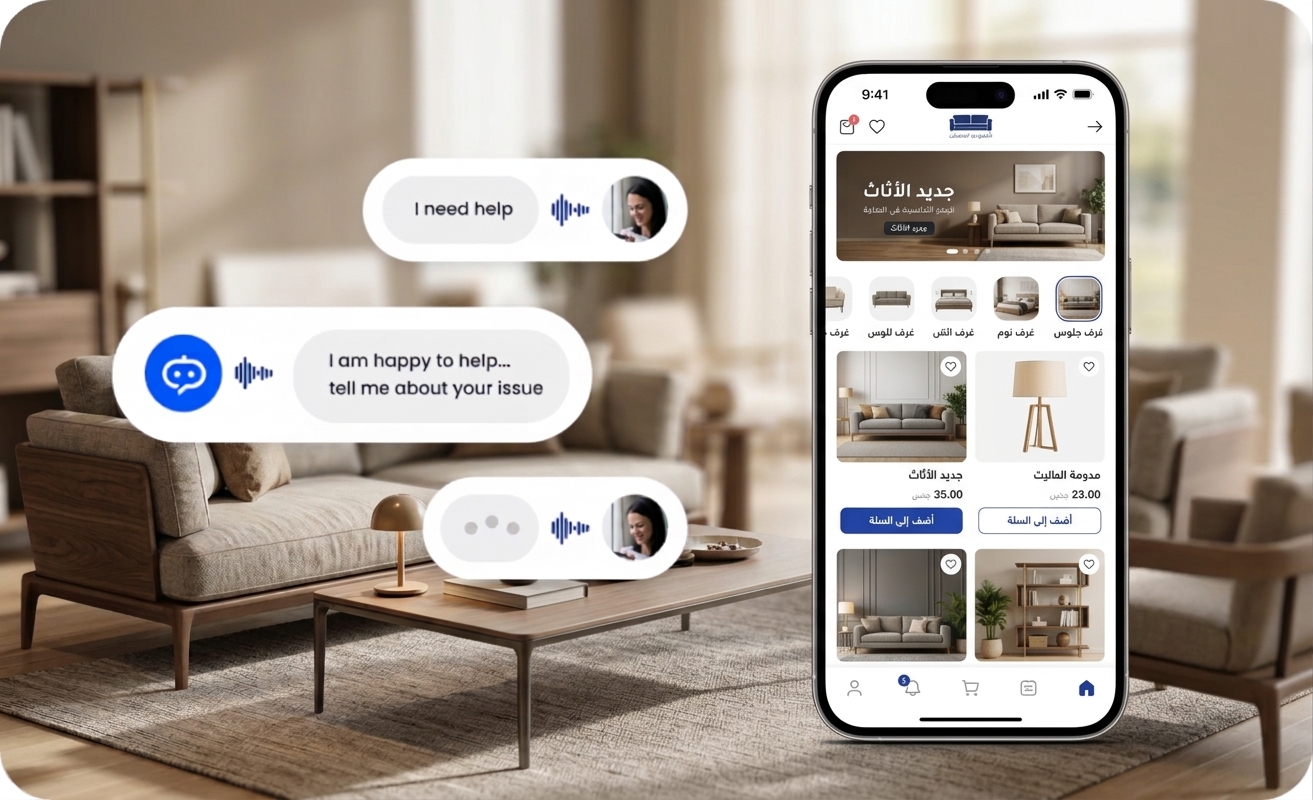

The role of an AI agent for furniture store customer service is not limited to answering shoppers’ inquiries, but extends to following up on their needs and helping them through the different stages of shopping without asking them to repeat information each time. A customer may start by asking about the dimensions of a certain sofa, then move on to searching for a design that suits the living room, and after that ask about products that match it. If the store does not keep the context of this conversation, the customer may have to re-explain their request and preferences, which weakens the communication experience and makes it harder to reach a purchase decision.
In our article, we will explain the importance of an AI agent for furniture store customer service, and what it offers to improve communication and support the furniture shopping journey.
Why Does Communicating with Furniture Store Customers Need Continuous Follow-Up?

Buying furniture is not usually a decision the customer makes after viewing a single product, but one that goes through several steps, starting with defining their needs, then searching for suitable options and comparing their specifications, and it may extend to coordinating the pieces with the home’s decor.
During this journey, the customer’s questions change and their needs develop, which requires the store to follow the conversation and understand where the customer has got to, instead of treating each inquiry as a separate request.
The problem appears when the customer moves between communication channels or returns to the conversation at a later time, and has to restate details they had already explained.
This may lengthen the shopping journey and weaken their interest in buying, especially if they do not get connected answers that help them make a decision.
Therefore, AI customer service for furniture stores needs to go beyond the speed of response; it should:
- Support continuity of communication.
- Connect follow-up inquiries.
- Help the customer move from one stage to another without losing important information.
This gives the store an opportunity to provide more consistent help, and makes the shopping experience closer to receiving an integrated consultation instead of exchanging a set of separate answers.
How Does Using an AI Agent for Furniture Store Customer Service Maintain the Context of the Conversation with the Customer?
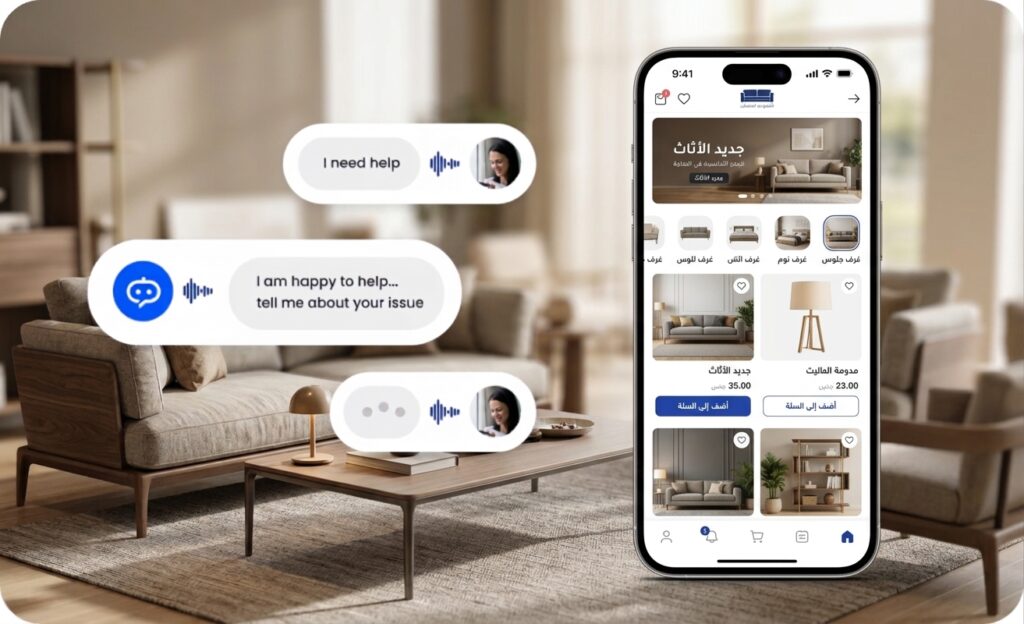
Using an AI agent for furniture store customer service relies on understanding the context of the dialogue and connecting current messages with the information the customer mentioned earlier.
Instead of treating each question in isolation from the others, it can make use of the conversation’s details to understand what is meant by new inquiries and provide answers that suit the shopper’s needs.
The importance of this capability appears in several practical situations:
- Retaining the details of the customer’s needs and relying on them when continuing to search for suitable products, instead of asking them to enter them again.
- Understanding questions related to previous inquiries so that the smart agent can link the question to the intended product instead of asking for it to be specified from the beginning.
- Following the preferences and options the customer discussed, while connecting successive conversations in order to support and take them into account when suggesting alternatives or giving AI product recommendations.
How Does the Smart Agent Move Between Stages of the Shopping Journey Without Interruption?
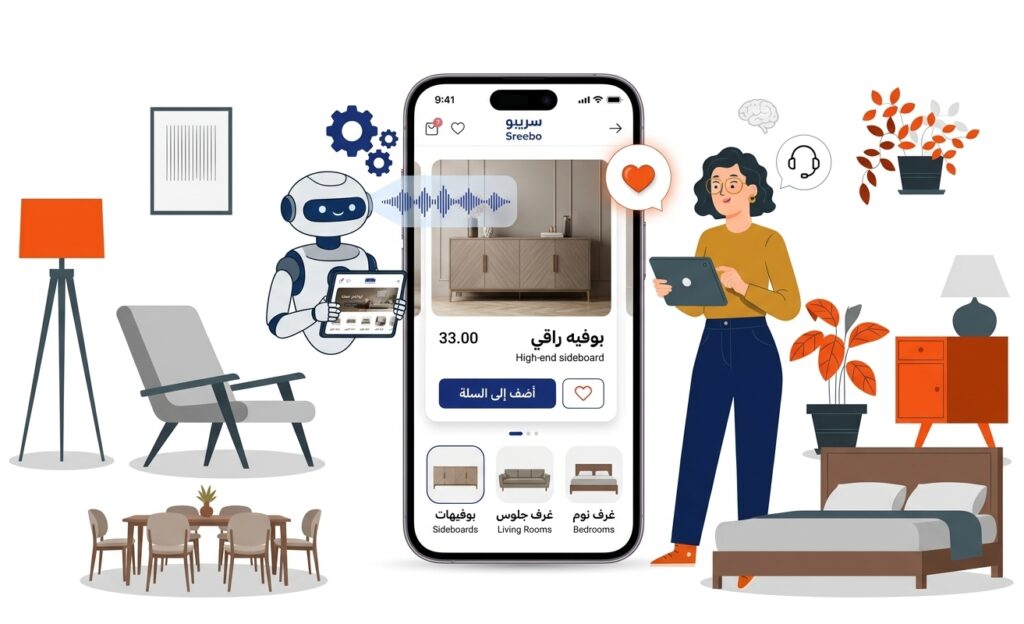
The customer does not need to contact the store again every time they move from one task to another, but can follow up on their request within the same conversation.
Here the importance of using an AI agent for furniture store customer service appears, as it links the stages of the shopping journey and understands the relationship between the customer’s different needs, instead of treating each stage as an independent conversation.
For example, a customer may start by asking about a sofa with specific dimensions, then ask for a design suggestion that suits the living room, and after viewing the design move on to choosing a side table and a rug that match it.
After that, they may need to know the total cost of the products or add them to the shopping cart.
In this scenario, the smart agent can support the transition between several connected tasks:
- Searching for products, after: understanding the specifications of the furniture the customer is looking for and displaying suitable options.
- Design and coordination: moving from the product inquiry to helping them visualize the piece inside the room and coordinate it with the other elements.
- Choosing products and adding them to the cart: following the products the customer has chosen and helping them organize their purchases.
- Asking for help: moving to the sales team when human intervention is needed, while making the conversation context and the information the agent collected available so that the customer does not have to explain their request again.
How Does Using an AI Agent for Furniture Store Customer Service Support Communication with Customers in Several Languages?

Online furniture stores receive inquiries from customers whose languages and backgrounds may differ, especially stores that target multiple markets or serve residents of different nationalities.
Relying on one language may lead to difficulty understanding some requests or the customer having to rephrase their question, which affects the quality of communication.
A multilingual AI agent for furniture store customer service can help overcome this obstacle by understanding customers’ inquiries in their own languages and responding in a way that suits them.
The importance of this is not limited to translating words, but includes understanding what the request means and making use of the context of the conversation when providing the answer.
The importance of using an AI agent for furniture store customer service with the feature of communicating with customers in several languages also appears in several aspects, including:
- Making it easier for customers to access product information without a language barrier.
- Reducing misunderstandings resulting from differences in the terms used to describe materials, sizes, and designs.
- Providing a consistent communication experience for customers from different language backgrounds.
- Helping stores serve wider segments of shoppers without fully depending on employees who speak every language.
What Is the Impact of Conversation Continuity on the Customer Experience and Furniture Store Sales?
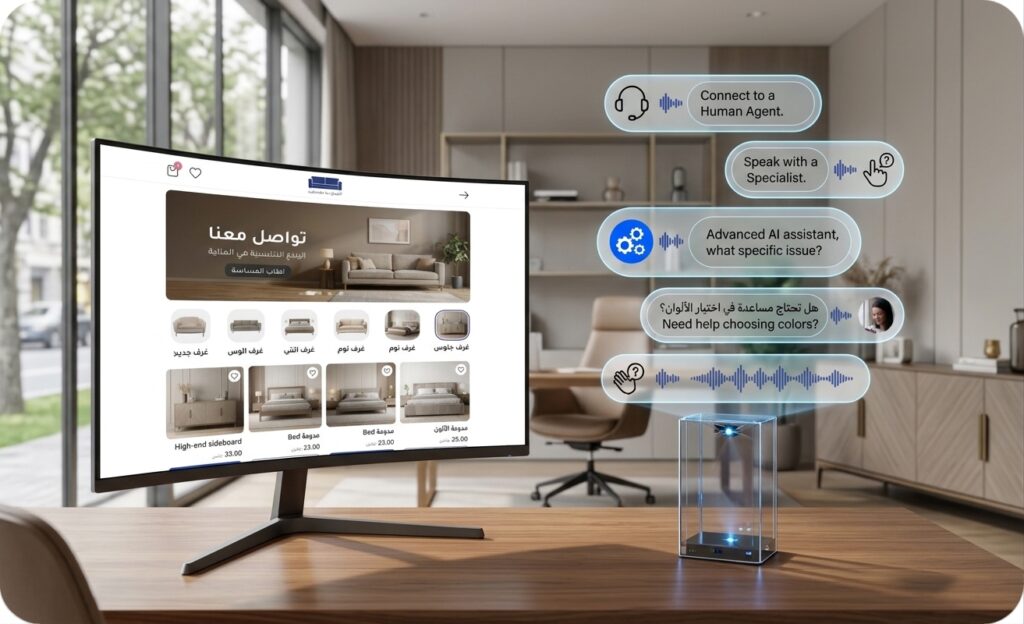
When the store retains the context of the conversation and follows the customer’s needs from one stage to another, the shopping experience becomes more connected and less dependent on repeating questions and clarifying information.
This is not reflected only in the shopper’s comfort, but also affects how the store manages sales opportunities and communicates with customers.
Accordingly, using AI customer service for furniture stores can help in:
- Making the purchase decision easier by providing the customer with connected answers about sizes, materials, and coordination. As a result, it is easier for them to evaluate the options and choose what suits them.
- Reducing the likelihood of abandoning shopping in furniture stores, as the customer does not need to repeat their request or search again for the products they discussed earlier.
- Providing more suitable recommendations by understanding the customer’s preferences and needs and suggesting products that complement what they chose.
- Understanding customers’ needs better, and knowing which products attract customers’ interest and the factors that affect their choices.
How Does Zory’s Smart Agent Apply These Capabilities in Furniture Stores?
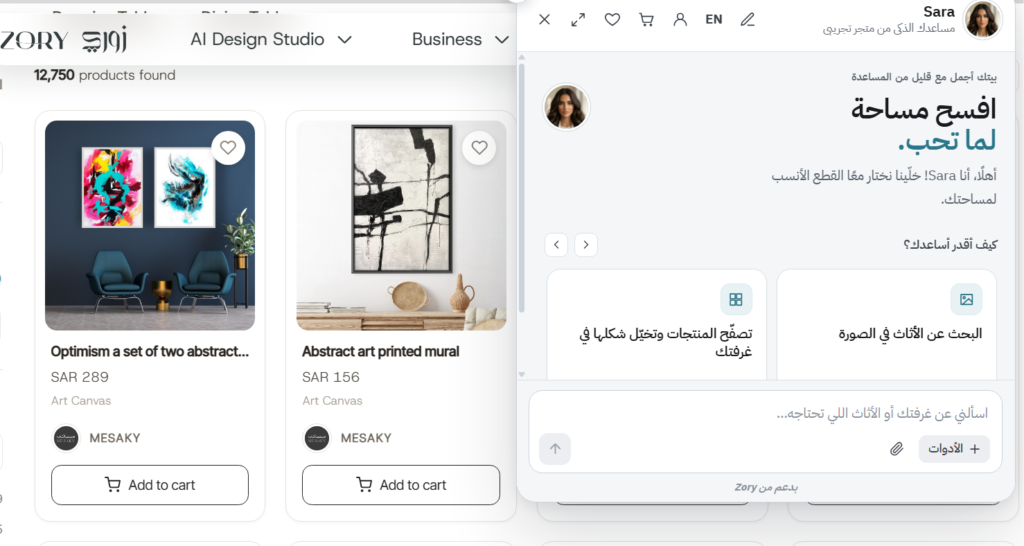
Zory’s smart agent offers a practical application of the idea of continuous communication, by combining the understanding of conversations and customer needs with moving between search, design, and shopping tasks.
Instead of limiting the interaction to answering a single question, it can follow the dialogue and make use of the information the customer shares to provide help related to what they are looking for.
Zory’s AI Agent for Furniture Store Customer Service
Zory’s AI agent for furniture store customer service also provides a set of useful solutions for furniture retailers. These include:
- Continuous smart conversations, whether text or voice, which allow understanding the context of the dialogue, with follow-up questions asked when needed, without asking the customer to repeat details they have already mentioned.
- Understanding products and images by analyzing furniture images and recognizing the products and elements that appear in them. This helps the customer move from a visual inquiry to searching for similar options.
- Searching for and comparing products through the ability to search using a natural description or by specifying sizes, materials, colors, and budget, and then continuing the comparison between options according to their needs.
- Linking design and shopping, so it is possible to move from discussing the room’s design to choosing real products from the store’s catalog and adding them to the design.
- Managing the shopping cart, where the use of the AI agent for furniture retailers supports adding products, modifying quantities and options, reviewing the total and the budget, and searching for alternatives when the stock runs out.
- Transferring to the sales team when the customer needs human help, while retaining the context and the information related to their needs and the products they discussed.
These solutions help furniture stores provide a connected experience that starts with understanding the customer’s request and extends to searching, design, choosing products, and purchasing, while allowing a transfer to an employee when needed.
The value of Zory’s AI customer service for furniture stores lies in linking these stages within a single experience, instead of leaving the customer to move between separate tools and services.
Conclusion
The quality of customer service in furniture stores no longer depends on speed of response alone, but has become tied to the store’s ability to understand the shopper’s needs and follow their conversation across the stages of searching, design, and purchase without interruption.
When the customer gets connected answers and recommendations that take their preferences into account, their journey becomes clearer and easier, and the store can handle sales opportunities more efficiently.
Discover how Zory’s smart agent helps you develop communication with your customers and link the different stages of shopping in a single experience, and try its capabilities in your store today and benefit from the best AI interior design tools.
FAQs
What Is Meant by an AI Agent for Furniture Store Customer Service?
It is a system that relies on artificial intelligence to understand customers’ inquiries, follow their conversations, and provide help with multiple tasks, such as searching for products, comparing them, and completing shopping.
Can the Smart Agent Move Between Different Tasks During the Same Conversation?
Yes, Zory’s smart agent can move between searching for products, design, choosing furniture, and managing the shopping cart, while making use of the context of the conversation.
Does the AI Agent Support Communicating with Customers in Multiple Languages?
Yes, Zory’s multilingual smart agent can understand customers’ inquiries and respond in different languages.
What Is the Difference Between a Smart Agent and a Traditional Chatbot in Following Up with Customers?
A traditional chatbot for furniture stores often relies on answers and scenarios prepared in advance, while the smart agent can understand the context of the dialogue, follow the customer’s needs, and move between different tasks.