

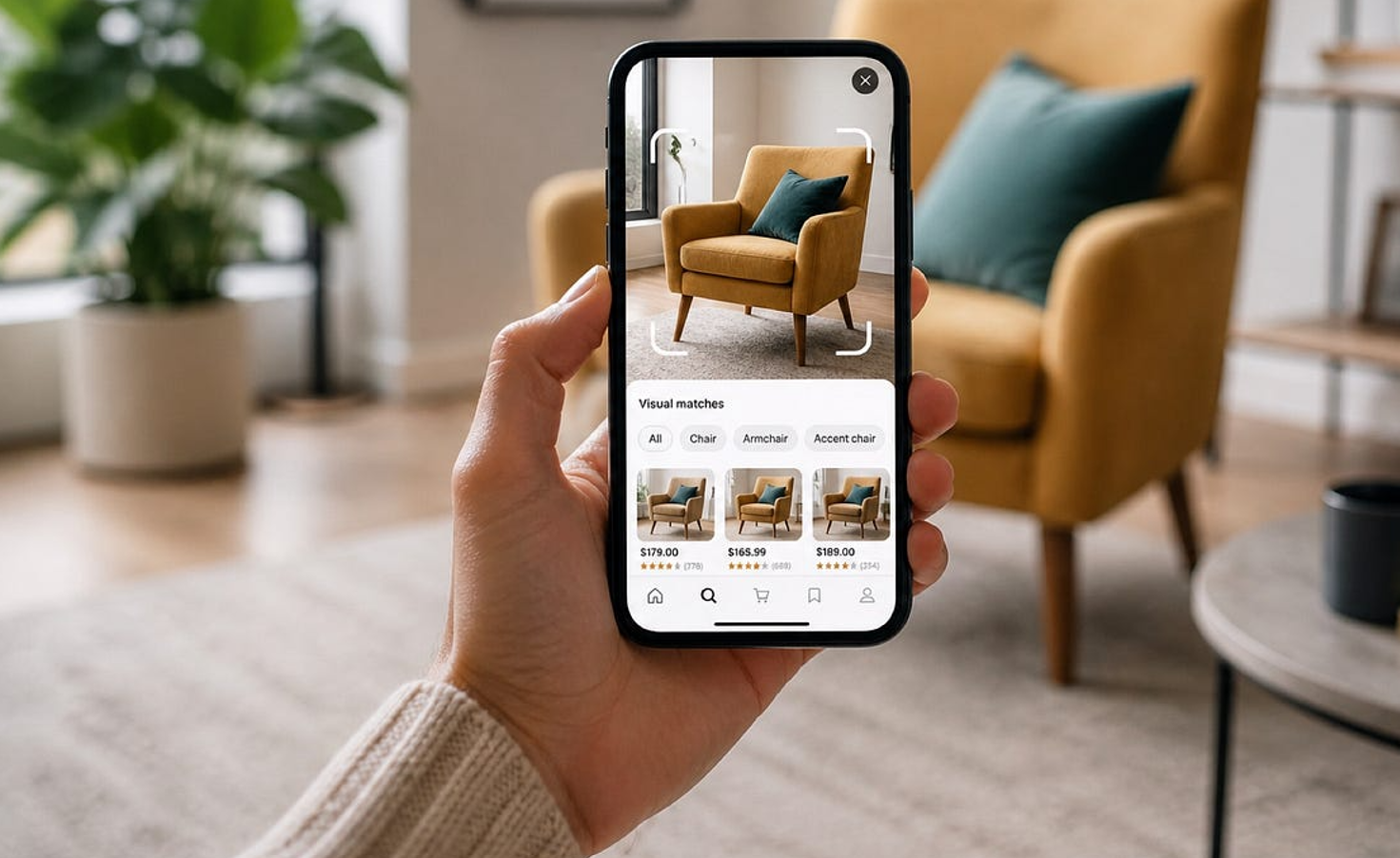

Visual search for furniture makes it easier for customers to find the pieces they like, even when they don’t know their names or the terms used to describe them. A customer may see a chair with a distinctive design, or a table they liked on social media, but not know how to search for it in words inside the online store. Here, visual search makes it possible to use the photo instead of a text description, to reach similar products and to explore and compare the available options before buying.
So how does this visual search for furniture technology work? And how does it help furniture stores turn a photo the customer has saved into an actual product they can buy? We cover this in this article.
Why Do Some Customers Find It Hard to Search for Furniture in Online Stores?

Not all customers know the names of furniture pieces or the terms used to describe their designs and materials.
A customer may see a chair with a design they liked, or a table on an interior design website, but not know what name to type in the search box to reach a similar product.
They may try to describe the piece with general words like “modern wooden chair” or “small side table,” and many results appear that don’t necessarily reflect what they are looking for.
The problem grows when the piece has an unfamiliar design or visual details that are hard to express in words. Here, the customer faces several challenges:
- Not knowing the product name: They may know the piece’s shape and use, but not its commercial name or design type.
- Difficulty describing details: They may find it hard to specify the color, material, leg shape, or patterns using precise words.
- Many unrelated search results: General words sometimes lead to a variety of products appearing, which makes reaching the desired piece more time-consuming.
- Results not matching the mental image: The customer may know what they want as soon as they see it, but the words they use don’t convey this image accurately to the search engine.
Therefore, the problem is not always a lack of available products, but the difficulty of expressing the product the customer wants.
This is what makes visual search for furniture an important way to make discovering furniture easier and reaching closer options.
What Is Visual Search for Furniture and How Does It Work?

It is a technology that allows the customer to use a photo of the piece they want instead of typing its name or description.
It relies on artificial intelligence and computer vision technologies to analyze the visual content of the photo and recognize the product characteristics that help in finding similar pieces within the store’s catalog.
This technology works through connected steps:
- The customer chooses a photo of the piece they are looking for, whether it is saved on their phone or taken from a website.
- The system examines the piece’s shape, color, design, and visible details.
- The system compares the characteristics it recognized with the products in the store’s product catalog.
- Options close to the original piece appear to the customer, so they can explore them and compare their specifications and prices.
In this way, the search moves from relying on words the customer may not know to using the photo itself to express what they want, and then reaching available products they can choose from.
How Does Visual Search Help Customers Find Furniture They Don’t Know the Name Of?
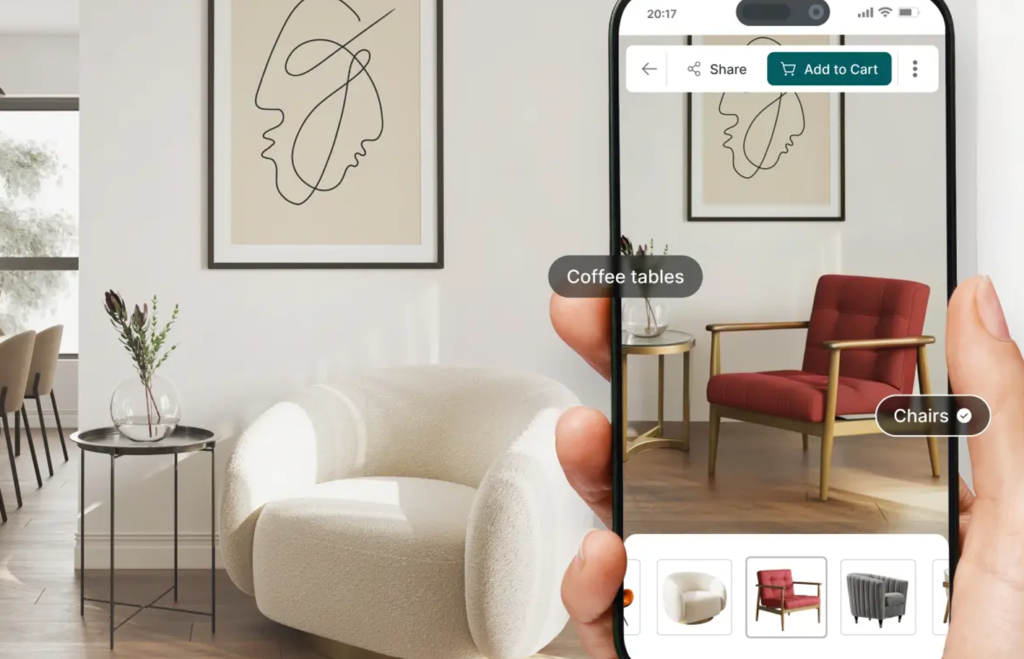
Visual search gives the customer a direct way to search for what they like, without needing to learn furniture piece names or know specialized interior design terms.
Instead of trying to describe the product accurately, they can share its photo and let AI technology look for options close to it.
The importance of searching for furniture by photos appears in different situations, including:
- When liking a piece on social media: The customer can use a photo of a chair or sofa they saw online to find similar designs in the store.
- When searching for a product with an unfamiliar design: The photo helps identify the required shape even if the customer doesn’t know its name or the category it falls under.
- When wanting to buy an alternative: If the customer finds a piece they like but it is not available, they can explore other products that are visually close to it.
- When unable to describe the product: The customer can express their preferences through the photo instead of writing a description that may be inaccurate.
In this way, it becomes an easier step to find similar furniture by image, and the customer can move from merely liking a design they saw to exploring real products available for purchase.
What Makes Searching with Photos Easier Than Text Search for Furniture?

Text search depends on the customer’s ability to choose the right words to describe the product, while searching with photos allows them to use the shape they want directly.
This makes it more suitable in cases where the customer knows what they like visually but cannot express it accurately.
The ease of visual search for furniture appears in several aspects:
- The ability to search for the required pieces without needing to know their commercial name or design type.
- Reducing description errors, since a photo conveys details of shape and color more clearly than general or inaccurate words.
- Saving search time, as the customer can start with one photo and explore similar results.
- Showing options closer to the customer’s taste by matching visual characteristics to reach products that fit the design the customer chose.
Therefore, searching by photos does not cancel the importance of text search, but provides an additional method suitable for customers who prefer to express their needs visually.
How Does Visual Search in Online Stores Turn Customer Interest into a Purchase Decision?
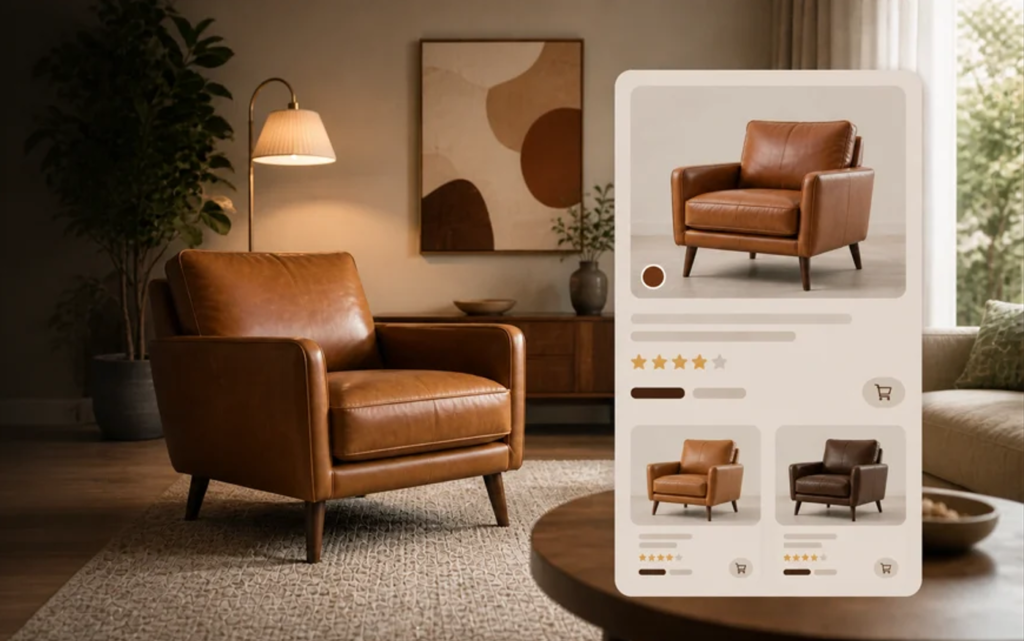
The customer may start their journey with a photo of a piece of furniture they liked, but they need to know whether they can find a similar product and buy it from the store.
Here, visual search for furniture in online stores plays an important role in linking the customer’s interest to the available products, by turning the photo into results that can be explored and compared. This journey consists of several steps:
- Turning interest into an actual search: The customer shares the photo they liked instead of just browsing products without a clear direction.
- Discovering suitable products: The store shows similar pieces that help them get closer to the design they want.
- Comparing available options: The customer can review prices, materials, dimensions, and colors to choose the product most suitable for their needs.
- Overcoming the problem of the original product being unavailable: If they don’t find the same piece, they can explore close alternatives instead of leaving the store without buying.
- Moving on to completing the order: After choosing the suitable product, they can view its details, add it to the shopping cart, and follow the purchase steps.
In this way, visual search helps reduce the obstacles between liking a product and making the decision to buy it, and gives the store a greater chance of keeping the customer during the shopping journey.
How Does Your Store Benefit from Providing the Visual Search for Furniture Feature?

Providing visual search for furniture does not merely add a new way to search inside the store, but helps to:
- Attract new customers: It gives customers who rely on photos an easier way to discover the store’s products.
- Improve the shopping experience: It reduces the time and effort needed to find a piece of furniture that matches the design the customer prefers.
- Reduce the chances of customers leaving the store: It helps customers continue searching even when they don’t know the names of products or their exact descriptions.
- Increase the chances of completing sales: It allows showing suitable alternatives when the requested piece is not available, which gives the customer additional options.
- Develop an understanding of customers’ interests: Search and interaction data, when available, helps in identifying the designs and products that receive more interest.
How Does Zory’s AI Agent Help Furniture Stores Activate Visual Search?

Zory’s AI agent helps furniture stores provide a photo-based search experience, so that the customer can share a photo of the product they are looking for instead of typing its name or trying to describe it.
The agent uses its visual understanding capabilities to recognize the piece and its characteristics, then helps the customer find similar products within the store’s catalog.
Among the most prominent capabilities of visual search for furniture through Zory’s AI agent for furniture stores:
- Understanding product photos: Analyzing photos and recognizing the furniture pieces and elements that appear in them.
- Searching for similar products: Using the piece’s visual characteristics to find options close to it in shape and design.
- Making catalog exploration easier: Guiding the customer to the available products that match what they are looking for, instead of leaving them to rely on search words they may not know.
- Supporting comparison and selection: Helping the customer explore the available options and review their details to reach the most suitable product.
In this way, Zory enables furniture stores to offer an experience where customers can shop furniture from a photo, starting from a design the customer liked and ending with discovering actual products they can choose from and buy.
Conclusion
A customer may not know the name of the piece of furniture they are looking for, but they know its shape well when they see it.
Here, visual search for furniture gives your store a chance to reach this customer and make their journey easier, from merely liking a design to finding a suitable product and buying it.
Instead of the customer losing interest because it is hard to describe what they want, give them a simpler way to search and discover.
Contact the sales team now and try Zory’s AI agent, and provide your customers with a complete furniture shopping experience that starts from the photo and takes them to the product they are looking for.
FAQs
Can I Search for Furniture Without Knowing Its Name?
Yes, a photo of the required piece can be used instead of typing its name, so that AI can analyze it and look for similar products.
Can I Use a Photo from Pinterest or Instagram to Search for Furniture?
Yes, a photo saved from design and social media platforms can be used as a reference to find similar furniture pieces in the store.
Can I Search for Furniture Using a Photo Taken with a Phone?
Yes, a photo taken with a phone can be used, provided that the piece appears clearly enough to allow its visual characteristics to be analyzed.
What Is the Benefit of Visual Search for Furniture for Store Owners?
It helps them make product discovery easier, serve customers who don’t know the names of pieces, reduce search difficulty, and increase the chances of reaching a purchase decision.