

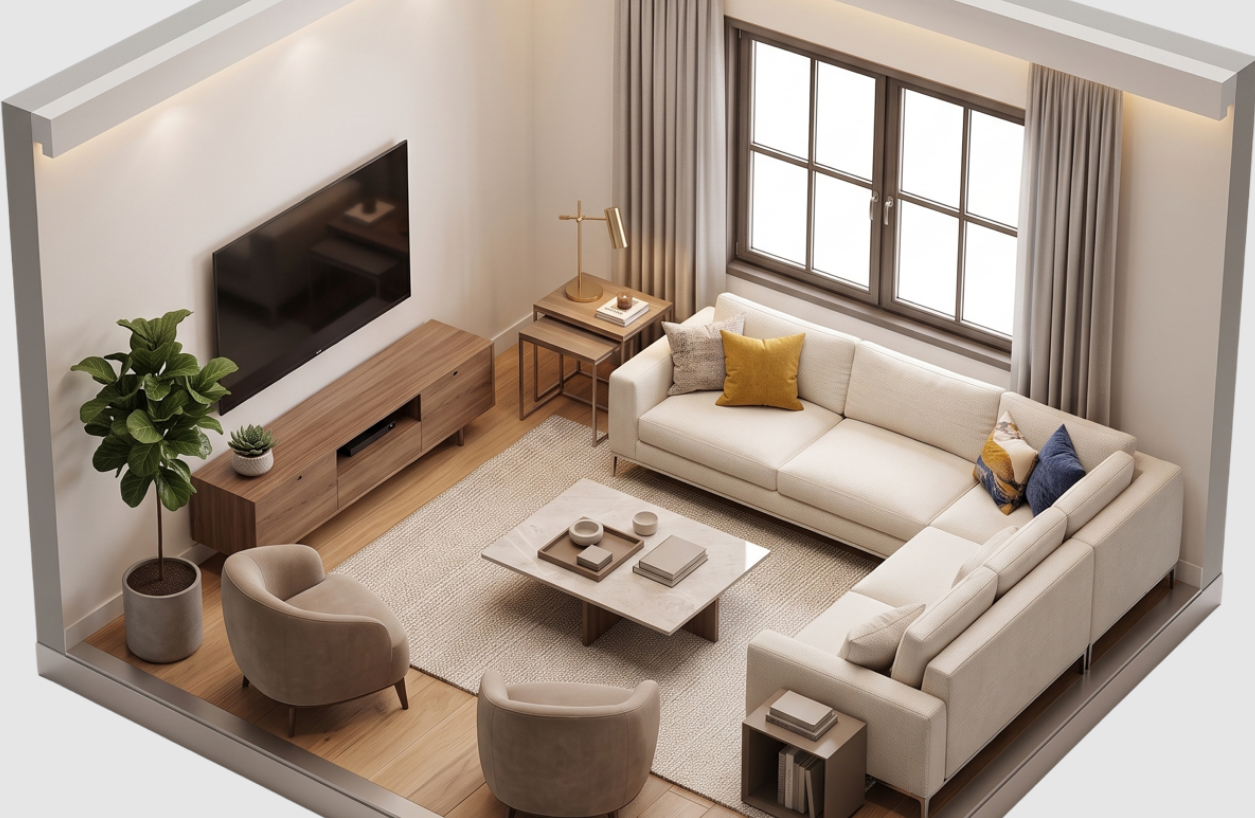

Furniture recommendations by room size help furniture stores and interior design companies offer options that are not limited to the customer liking the look of the piece, but also take into account the room’s dimensions, how it is used, and the space available for movement inside it. A customer may like an elegant sofa, but it may be larger than the space intended for it, or they may choose a dining table whose dimensions don’t suit the room’s design. Therefore, it is not enough to display products and their specifications; the store needs to understand the customer’s space in order to help them make a more suitable purchase decision.
In this article, we review how furniture recommendations by room size contribute to improving furniture layout in the room, and the role of Zory’s smart agent in providing recommendations that are more closely tied to customers’ needs.
Why Is It Not Enough for the Customer to Like a Piece of Furniture for It to Be a Suitable Choice?

A customer may choose a sofa because of its design or color, then discover after buying it that it takes up more space than needed, or that it blocks movement inside the living room.
This problem occurs when the purchase decision depends on appearance alone, without taking into account the dimensions of the place and how it is used.
Among the main factors that may make a piece of furniture unsuitable:
- Size of the piece: Its dimensions may be larger or smaller than the space available for it.
- Nature of the room: The needs of a living room differ from those of a bedroom or a home office.
- Ease of movement: Placing large pieces in a limited space may obstruct walkways and daily use.
- Harmony with existing elements: The piece may not suit the current furniture or the layout of doors and windows.
For furniture stores, the problem is not limited to customer dissatisfaction; it may also lead to hesitation in buying or requests for exchange.
Therefore, furniture recommendations by room size become an important way to help the customer choose a piece that combines the design they prefer with practical suitability for their home.
How Does Understanding the Space Affect Choosing the Right Furniture?
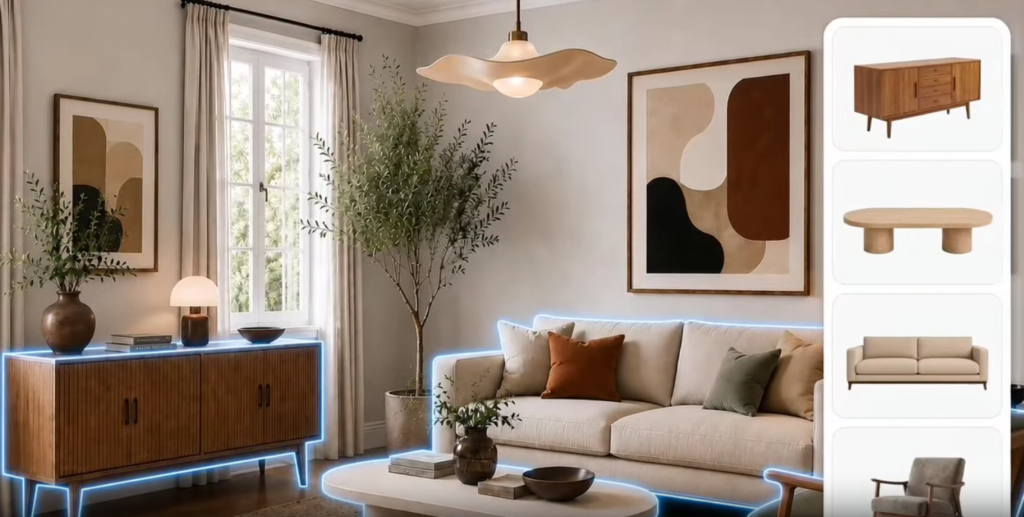
Understanding the space means looking at the room as an integrated place, not merely an empty area in which furniture can be placed.
Choosing suitable pieces requires knowing the room’s dimensions and shape, the locations of doors and windows, and the fixed elements that affect furniture layout and use.
For example, when choosing furniture for a rectangular living room, a long sofa may suit one of the walls, while a square room needs a different layout that allows the space to be used without crowding.
Likewise, the pieces that suit a heavily used family room differ from those that suit a formal reception area.
Understanding the space helps the store owner or designer take several aspects into account when suggesting products:
- Furniture dimensions: Making sure the length, width, and height of the piece suit the place intended for it.
- Function of the room: Choosing pieces according to the activities that will take place in it and the needs of its users.
- Architectural elements: Taking into account the locations of doors, windows, columns, and other fixed elements.
- Visual harmony: Choosing sizes and designs that keep the room coordinated without overlooking ease of use.
Thus, furniture recommendations by room size are not just displaying a product the customer likes, but a suggestion that takes their needs and the conditions of the space into account, which helps build trust in the shopping experience.
How Does Analyzing Floor Plans with AI Help in Understanding Spaces?
A customer may find it hard to explain the details of their home in words, and photos alone may not be enough to understand the room’s shape and layout.
This is where floor plan analysis AI proves useful, as it makes it possible to use the architectural plan to understand how the space is organized before starting to suggest furniture or form a concept for the interior design.
AI can analyze the floor plan and recognize elements that help form a picture of the place, such as:
- Room division: Identifying the different spaces and understanding the nature of each room.
- Doors and windows: Recognizing their locations and their effect on furniture layout options.
- Architectural elements: Noticing the columns and fixed details that should be taken into account when planning the place.
- Nature of the space: Distinguishing between open and closed rooms and understanding the relationship between them.
The importance of this capability appears with interior design companies that deal with plans of multiple residential projects; it helps the designer form an initial concept of the spaces before choosing suitable pieces for each room.
It also gives furniture stores a chance to understand the customer’s needs more clearly, instead of relying on a general description such as a small room or a large hall.
How Do Furniture Recommendations by Room Size Help in Choosing Suitable Pieces?
After understanding the room’s dimensions and how it is used, the next step is choosing furniture that suits it.
Here, furniture recommendations by room size help narrow down the options for the customer.
This is done by linking their needs to the available products, their sizes, and their designs, instead of leaving them facing a long list of pieces that may not suit their home.
For example, if the customer is looking for a sofa for a living room with limited space, they can be guided toward compact designs that suit the place, taking into account the number of people who will use it and the style they prefer.
As for furnishing a bedroom, the recommendations differ according to the space available for the bed, wardrobes, and bedside tables.
The quality of AI furniture recommendation depends on taking a set of factors into account, including:
- Dimensions of the pieces: Comparing the furniture’s measurements with the available space to avoid choosing pieces larger or smaller than needed.
- Customer needs: Taking into account the number of users, the nature of use, and the functions required of each piece.
- Preferred design: Suggesting products that suit the customer’s general taste and the decor style they want.
- Available products: Guiding the customer toward options that already exist in the store’s catalog, which makes it easier to move from the selection stage to purchase.
For the store, this method helps make the furniture shopping experience more connected to the customer’s actual needs, and reduces the chances of them choosing products that don’t suit their space.
How Does Space Planning Help with Furniture Layout in the Room?
Choosing the right pieces of furniture does not by itself guarantee a comfortable room; the way these pieces are arranged affects ease of movement, use of the space, and the overall look.
Therefore, space planning is an important step for determining where the furniture goes before purchase or implementation.
For example, in the living room, it is not just a matter of choosing a sofa and a TV unit, but of determining the position of each so that the TV can be watched easily, enough space is left for movement, and walkways or access to windows and doors are not blocked.
Good planning helps take several points into account:
- Determining the locations of the main pieces: Such as beds, sofas, and dining tables, as they are the elements around which the layout of the rest of the furniture is determined.
- Maintaining movement paths: Leaving spaces that allow moving around and using doors and drawers without obstacles.
- Taking relationships between pieces into account: Placing furniture in a way that serves the room’s function, such as bringing the dining table closer to suitable seating areas.
- Making use of the available space: Avoiding leaving unused spaces or crowding many pieces into a limited area.
- Here, the smart agent can help support the planning process by understanding the nature of the room and the customer’s needs, and providing suggestions for furniture and its layout according to the available information. This gives the designer and the store owner a clearer starting point when discussing options with the customer.
How Do Interior Design Companies Benefit from Understanding Spaces and Furniture Recommendations?
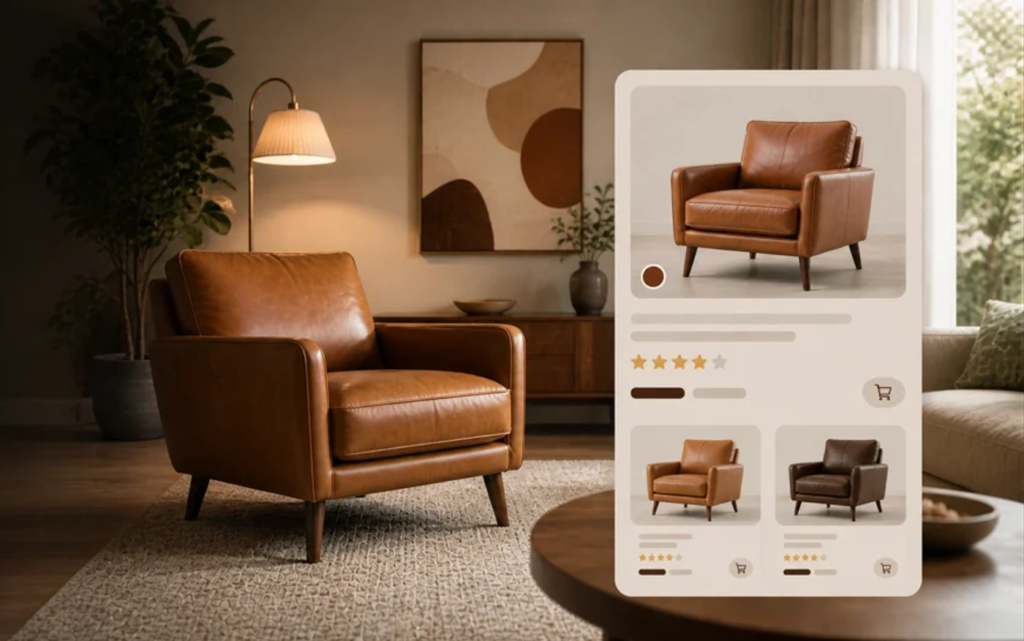
Interior design companies deal with projects that differ in their spaces, functions, and owners’ tastes.
Therefore, it is not enough for the company to choose pieces that are aesthetically coordinated; it needs to make sure they suit the place and can be integrated into the proposed design.
Understanding spaces and providing furniture recommendations by room size help improve workflow in several aspects:
- Studying the project more clearly: Using plans to understand the division of rooms and the architectural elements before starting to choose furniture.
- Speeding up the search for products: Narrowing the options according to the space’s dimensions, the required style, and the set budget.
- Linking the design to actual products: Choosing pieces available at furniture stores instead of settling for inspirational photos that may be hard to turn into an executable project.
- Improving communication with the customer: Presenting options more closely tied to the space of their home and their needs, and explaining why each choice is suitable.
- Organizing furnishing decisions: Forming an integrated picture of the pieces required in each room, which helps coordinate the stages of choosing furniture.
The commercial value of these capabilities appears when the company is able to turn the design concept into clear choices that the customer can review and make a decision on.
They also allow furniture stores to collaborate better with designers, by offering products that match the needs of their projects instead of relying on displaying the catalog in a general way.
How Does Zory’s Smart Agent Help Provide Furniture Recommendations That Suit Spaces?
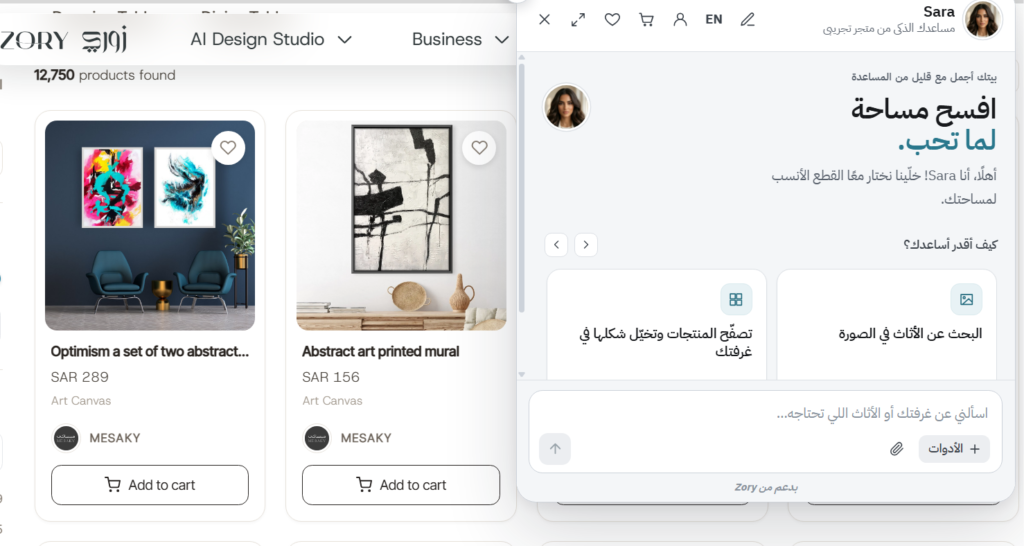
The value of the AI agent appears when it moves from merely answering the customer’s inquiries to helping them understand the space and choose the products suitable for it.
Through the capabilities of Zory’s smart agent in understanding photos and architectural plans, and in supporting interior design, stores and design companies can benefit from these capabilities to provide furniture recommendations by room size that are more closely tied to the reality of the place.
The main ways of benefiting from Zory‘s smart agent include:
- Understanding architectural plans: The smart agent can analyze plans and recognize the nature of the rooms and the architectural elements, which helps form a clearer picture of the space.
- Understanding room photos: It can recognize the type of room, its furniture, and the elements in it, and use this information when discussing furnishing options.
- Supporting space planning: It helps prepare concepts for furniture layout and for coordinating pieces to suit the room’s function and the required design, which supports space planning for interior designers.
- Choosing actual products: It links design ideas to the products in the store’s catalog, so that recommendations do not remain merely theoretical suggestions, but become options the customer can explore and buy.
Thus, Zory’s smart agent helps furniture stores, through its furniture recommendations by room size solution, provide an experience that goes beyond displaying products.
It also supports interior design companies in linking their understanding of the space to choosing suitable furniture.
Conclusion
Choosing suitable furniture does not start from the beauty of the piece alone, but from understanding the space it will occupy and how it will serve its owners’ needs.
When furniture stores and interior design companies are able to combine understanding plans and space planning with furniture recommendations by room size using suitable products, the selection experience becomes clearer, and customers’ ideas turn into concepts closer to implementation.
With Zory’s smart agent, you can benefit from AI capabilities in understanding spaces, supporting design, and linking ideas to real products from your store’s catalog.
Contact the Zory team today and discover how the AI agent for furniture retailers can develop your customers’ experience and support your sales.
FAQs
What Is Meant by Furniture Recommendations by Room Size?
It is suggesting furniture pieces that suit the room’s dimensions, shape, and function, while taking into account the customer’s needs and preferred style, to avoid choosing products that don’t suit the place.
How Do I Know That a Piece of Furniture Suits the Room’s Space?
Compare the piece’s dimensions with the available space, taking into account doors, windows, movement paths, and the location of the rest of the furniture, so that the piece doesn’t obstruct the use of the room.
What Is the Difference Between Space Planning and Furniture Layout?
Space planning is concerned with organizing the place to suit its function and the needs of its users, while furniture layout focuses on determining the locations of the pieces inside the room to achieve ease of movement and harmony.
How Do Furniture Stores Benefit from Furniture Recommendations by Room Size?
These recommendations help stores guide customers toward products that suit their homes, reduce confusion among the options, and improve the chances of making a suitable purchase decision.
Does Zory’s Smart Agent Help in Choosing Suitable Furniture for Spaces?
Yes, Zory’s smart agent supports understanding plans and room photos, planning spaces, and linking design concepts to real products from the store’s catalog, which helps customers and designers explore more suitable options.