



AI search in furniture stores changes the way customers reach the products they need. Instead of requiring them to know the exact name of each piece or use specific keywords, they can describe what they are looking for in their usual language and get results that are closer to their needs and preferences. This matters in the furniture sector, where a shopper may know the shape of a piece or its purpose, but not its name or the category it falls under.
In today’s article, we will explain how AI search in online furniture stores helps understand the shopper’s needs and turn their description into more precise search criteria, and thus enhance the buying experience and make furniture discovery easier.
Why Are Traditional Keywords Not Enough for Searching for Furniture?

When a customer enters an online furniture store looking for a particular piece, they may not know its commercial name or the exact term used to describe it.
They may search for “a small couch for the reception” instead of “a two-seater sofa,” or type “a wardrobe that suits a narrow room” without knowing the type of cabinet that suits their space.
Traditional search engines often rely on matching the words the customer types with product names and descriptions.
Therefore, they may not show suitable results if the shopper uses an expression different from the terms recorded in the catalog. This problem appears in several situations, including:
- Different terminology: The customer may use a common name for the piece, while the store records it under a different technical or commercial name.
- Imprecise description: The customer may know what they need in terms of use and shape, but not how to describe it with suitable search words.
- Multiple requirements: They may be looking for a table that combines a certain size, a specific material, and a suitable price, and one word is not enough to reach it.
- Difficulty discovering alternatives: The customer may not know the names of the other designs or categories that could meet their need.
As a result, the shopper may have to try multiple search phrases and move between product pages until they find what suits them.
This weakens the shopping experience, and may push them to leave the store before reaching the product they want.
What Is Meant by AI Search in Furniture Stores?

It is a search method that relies on understanding the meaning and context of the customer’s request, instead of merely matching the words they type with product names.
It allows the shopper to express their need in natural language, even if they don’t know the exact name of the piece or the terms used to describe it.
AI search in furniture stores relies on a set of capabilities, the most prominent of which are:
- Understanding natural language: Grasping the phrases customers use to describe their everyday needs.
- Analyzing the context of the request: Distinguishing between the type of product, the purpose of its use, and the characteristics the customer prefers.
- Handling multiple criteria: Taking into account color, material, dimensions, price, brand, and other specifications.
- Developing the search: Adjusting the results when the customer adds new details or changes one of their conditions.
The basic difference here is that the search does not wait for the customer to know the product’s name precisely, but helps them reach it starting from what they already know about their need.
How Does Smart Search in Online Stores Help Understand the Shopper’s Needs?
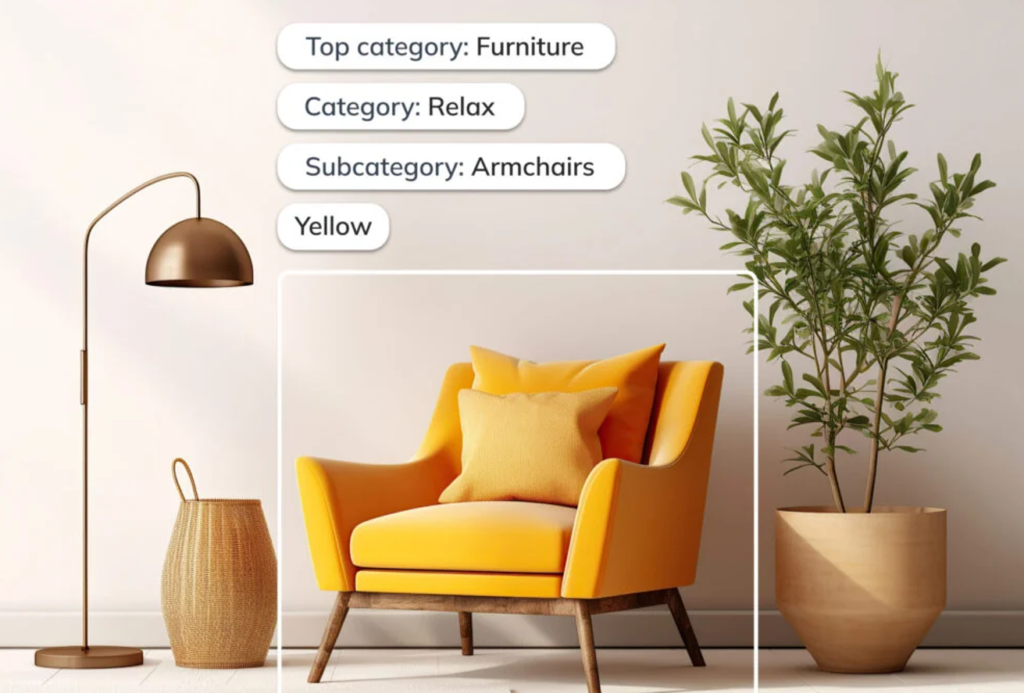
Not all customers express their needs in the same way. One may describe the sofa as comfortable for the family, while another looks for a large couch that fits three people. Both may be interested in similar products, despite the different words used.
AI search in online furniture stores helps understand these differences by analyzing the details of the request and extracting the criteria that affect choosing the product.
Instead of requiring the customer to know category names and specifications beforehand, they can talk about the use they want or the shape they prefer.
For example, if the customer asks for furniture for a family living room, the store may need to know the number of users, the preferred style, or the budget.
Through the dialogue between the AI agent for furniture retailers and the customer, these details can be clarified gradually, so the search process becomes more connected to what the customer actually needs.
How Does AI Turn the Customer’s Request into More Suitable Search Results?

After understanding the request and extracting its criteria, the next step is searching within the store’s catalog to reach the products that match these requirements.
Here, the task is not limited to showing products whose descriptions contain the same words, but extends to matching their characteristics with the meaning the customer intends.
This can be illustrated with an example: if the shopper asks for “a small home desk in a light wood color, with enough space for a laptop and at a suitable price,” AI search in furniture stores can turn this description into search criteria that include:
- Product category: Home desk.
- Dimensions: Options suitable for limited spaces.
- Color and material: Light wood tones.
- Use: A design that provides space for placing a laptop.
- Price: Products within the budget the customer sets.
After that, the results can be refined according to the details the shopper adds. If they decide to prefer a desk with drawers, or want lower-priced options, the search criteria change to provide alternatives closer to their request.
The importance of this capability for furniture stores lies in reducing the gap between what the customer is thinking of and what the store actually displays, while making it easier to discover suitable products without needing to know the names of pieces or use specialized search terms.
How Does Smart Search Help the Customer Discover Products They Didn’t Know How to Search For?
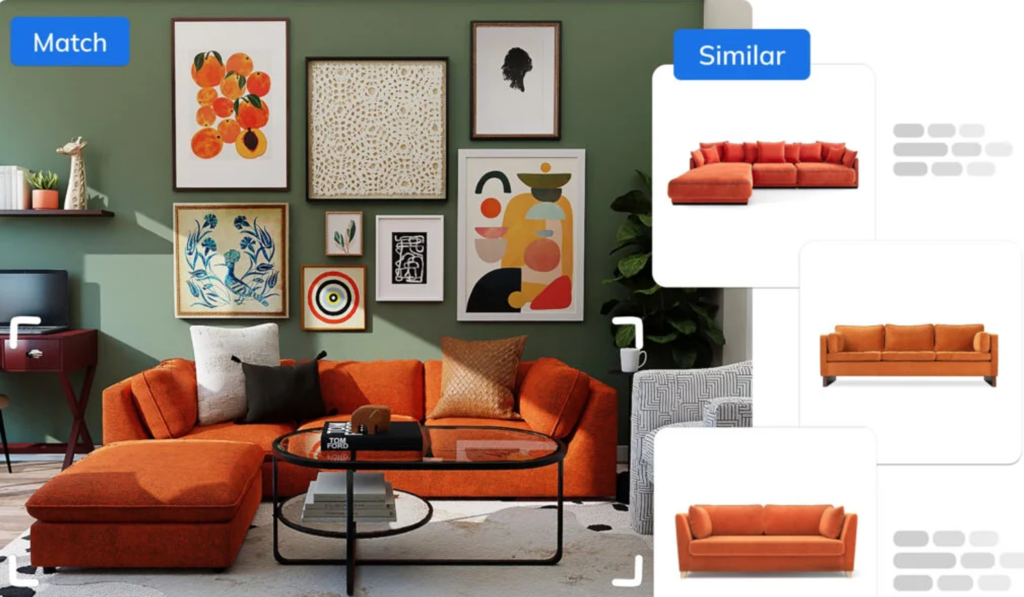
The customer does not always know the name of the piece of furniture they need, and they may not be familiar with the designs or categories that could serve their purpose.
Here, AI search in furniture stores helps widen the scope of smart product discovery, because it starts from the customer’s description of what they want, not from product names they already know. This is useful in:
- Guiding the customer to types of furniture that were not among their initial options, but that match the purpose they are looking for.
- Showing similar products when the requested product is not available or its specifications do not suit the customer’s needs.
- Diversifying options: Showing different designs, materials, and colors that match the criteria the shopper has set.
- Allowing the customer to add details or change their preferences to reach more specific options.
How Does AI Search Contribute to Enhancing the Furniture Buying Experience?

The furniture buying experience is affected by several factors, including how easy it is to find products, how clear the options are, and the ability to compare them.
When the customer has to try many search phrases or review products unrelated to their request, the shopping journey becomes longer and more confusing.
AI search in furniture stores helps address this problem by making interaction with the store more flexible and more connected to the shopper’s needs. Its most important benefits appear in:
- Making it easier to reach products: The customer can describe their need in their natural language instead of searching with technical names they may not know.
- Reducing confusion: Results tied to the request help exclude less suitable options and focus on the products closest to the preferences.
- Improving comparison: It becomes easier to move between products according to clear criteria such as price, material, dimensions, and design.
- Supporting the purchase decision: Suitable information and alternatives help the customer evaluate the options before making the decision.
How Does Zory’s Smart Agent Apply Smart Search in Furniture Stores?

Zory’s smart agent provides a search experience based on understanding the customer’s request and turning it into criteria that help reach the suitable products from the store’s catalog.
Instead of requiring the shopper to specify the product name or use precise terms, they can describe what they are looking for, then continue the dialogue to clarify details and adjust the options.
Among the most prominent features of AI search in furniture stores through Zory‘s smart agent:
- Natural language search: Understanding customers’ written or spoken requests, even when they describe the product using everyday phrases.
- Search by multiple specifications: Filtering products by category, dimensions, style, color, material, price, brand, collection, and availability.
- Asking clarifying questions: Continuing the conversation to understand missing details and identify the options closest to the customer’s need.
- Refining results: Adjusting the search when the shopper changes one of the criteria or adds a new preference.
- Suggesting similar products and alternatives: Helping the customer explore other options that match their request.
Therefore, AI search in furniture stores through Zory’s smart agent helps turn search from a process based on matching words into a dialogue that understands the shopper’s needs.
This makes it easier for them to discover suitable products and move on to the purchase stage.
Conclusion
With Zory’s smart agent, you can turn the search inside your store’s catalog into a dialogue that understands customers’ requests and responds to their preferences, which makes it easier to discover products and supports purchase decisions.
Contact the Zory team today and try the smart agent to discover how it can develop the furniture shopping experience in your store and enhance sales opportunities.
FAQs
What Is the Difference Between Traditional Search and AI Search in Furniture Stores?
Traditional search relies on matching keywords with product data, while AI search analyzes the meaning and context of the request, and helps reach products that match the customer’s needs even if the wording of the search differs from the product names.
Can I Search for Furniture Using a Normal Description Instead of the Product Name?
Yes, through Zory’s smart agent, the customer can describe the piece they want in terms of use, color, material, or design, so that AI analyzes these details and uses them to search for suitable products.
How Does AI Understand the Shopper’s Needs?
It analyzes the details of the request and extracts criteria from it such as the product type, dimensions, color, material, price, and style, and it can ask additional questions to clarify requirements that are not specified.
Does Smart Search Help Find Alternatives to Unavailable Products?
Yes, it can suggest similar products or alternatives that match the customer’s specifications and preferences, according to the available products and the store’s catalog data.
What Is the Importance of AI Search for Online Furniture Stores?
AI search in furniture stores helps make product discovery easier, reduce the time the customer spends searching, and improve their ability to reach suitable options.