

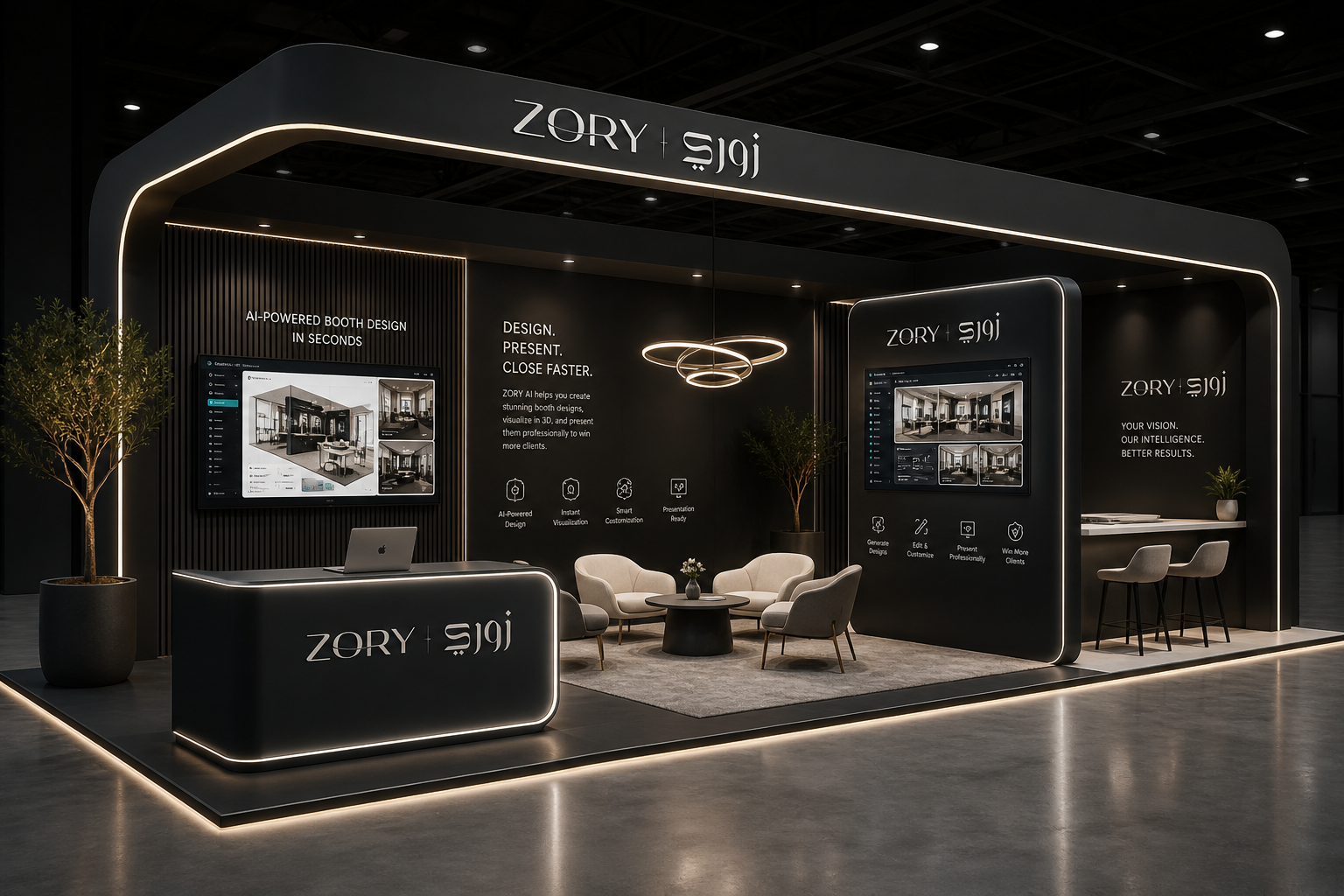

Trade show planning is a long journey, and anyone who has been through it knows its details, from the first meeting with the client to the moment the exhibition opens. It’s a journey full of coordination, reviews, and revisions, with mounting pressure on timelines that show no tolerance for delay. In the past, this path was almost fixed: preliminary meetings, initial sketches, rough models, rounds of revisions, preliminary approval, then execution that sometimes reveals gaps that didn’t appear in earlier stages. But the picture began to change when artificial intelligence entered the world of trade show planning.
It has become a partner that shortens the distance between the idea and the complete visual vision. In this article, we’ll explore how trade show planning has transformed from an exhausting journey into a smooth and well-thought-out process.
Why Do Many Trade Shows Fail Before They Even Begin?
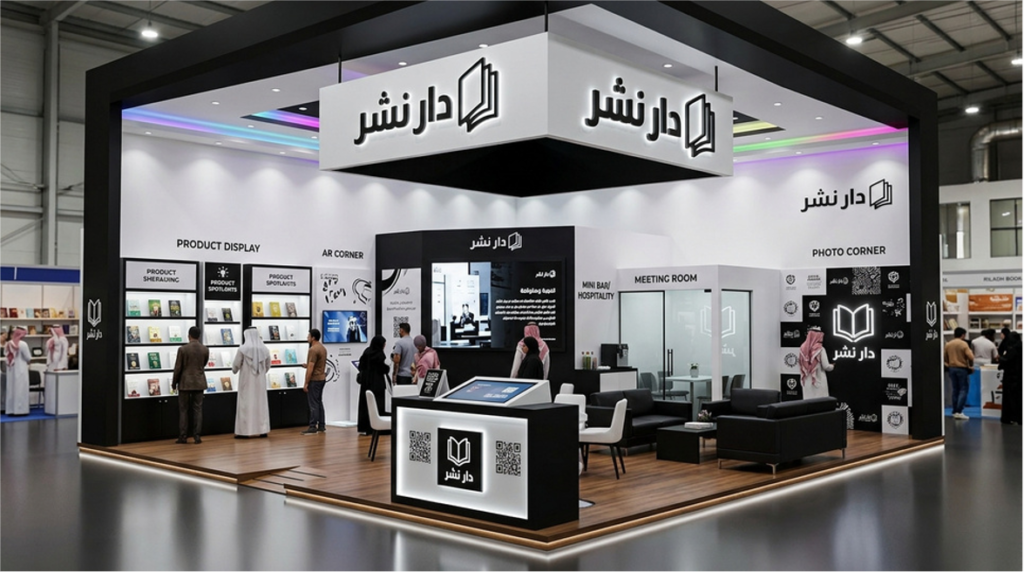
Failure in trade shows rarely happens on opening day. It begins weeks earlier, in meeting rooms, planning schedules, and design decisions made based on incomplete information or an unclear vision.
Late trade show planning is the number one enemy of any successful exhibition. When coordination begins late, all the stages get compressed on top of each other, and as a result the design gets rushed, revisions get cut short, and execution begins before the vision is complete.
The result is an exhibition that opens with details that were never settled, and mistakes that weren’t discovered until it was too late.
The gap between the mental image and the actual execution is the deeper problem.
The organizer pictures in their mind an exhibition with smooth flow, coordinated booths, and visitors moving freely, but this image stays locked in their mind until installation day.
And when execution begins, everyone discovers that the walkway that looked wide on paper is narrow once it’s filled with furniture, and that the booth the exhibitor approved is different from what they had imagined.
Very often, too, lighting that was calculated theoretically turns out not to illuminate the products the way it should.
And the cost of these mistakes isn’t measured in money alone, it’s measured in the relationships with exhibitors who walk away from the experience disappointed, and in the organizer’s reputation, which is hard to win back.
What Does Successful Trade Show Planning Actually Need?
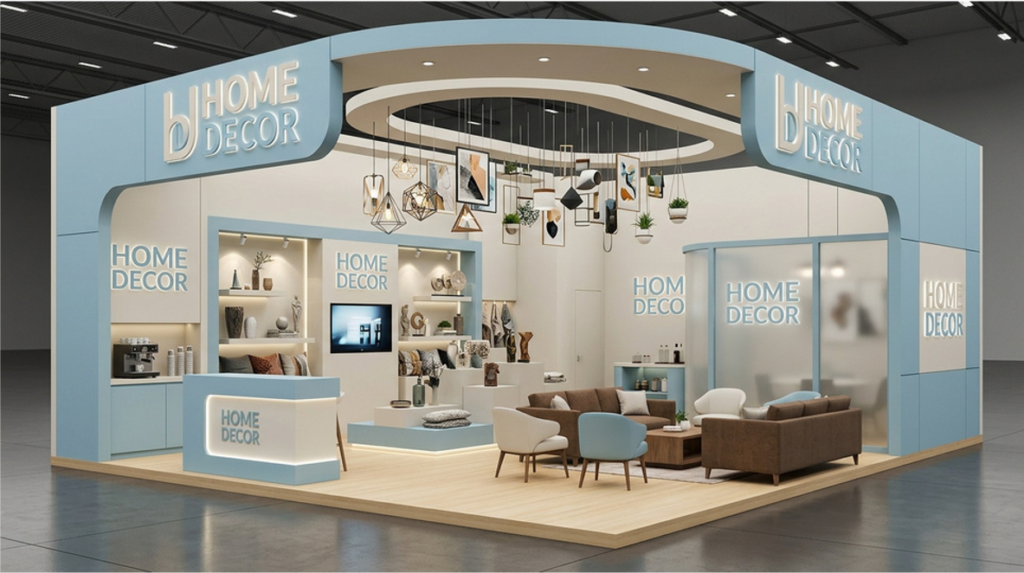
Successful trade show planning needs one essential thing: a clear visual vision shared with all parties before execution begins.
When the organizer, the exhibitor, and the designer all see one clear visual scene together before execution, most disagreements and late-stage revisions disappear.
Everyone builds on the same foundation, agrees on the same vision, and works toward the same goal.
This shared clarity is what turns planning from a series of tense reviews into a smooth, collaborative process.
Flexibility to make changes before execution, not after, is the real competitive advantage in successful trade show planning.
A smart organizer knows that investing in an accurate advance visual vision is the most cost-effective decision they can make in every exhibition cycle.
Nowadays, artificial intelligence tools in decor and booth design have cut down a lot of this time.
Adjusting an exhibition design on screen takes minutes and costs nothing, while adjusting it on the exhibition floor takes hours and costs a lot.
Stages of Trade Show Planning, From Idea to Opening
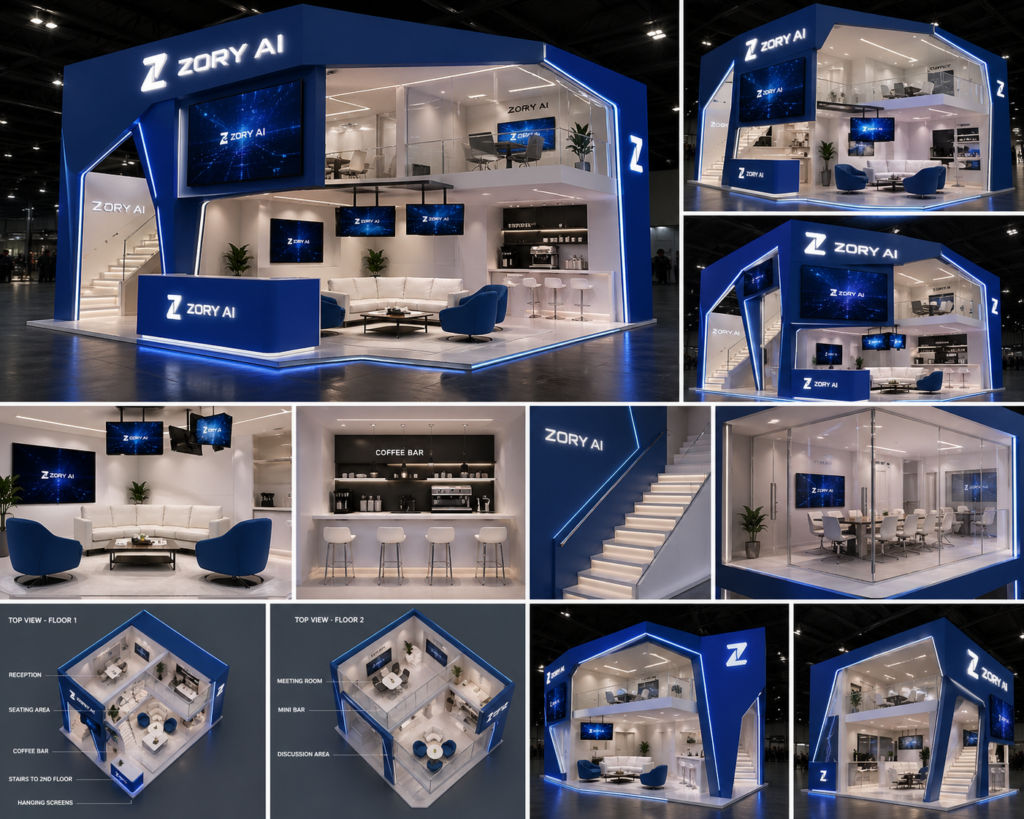
Successful exhibition planning doesn’t happen all at once, it goes through consecutive stages, each one building on what came before and paving the way for what comes next.
Stage One: Defining the Goal and Allocating Spaces
Before any design decision, the answer must be clear: what is the main goal of this exhibition? Attracting new customers? Launching a product? Strengthening market presence?
The goal determines the nature of the layout, where the interactive zone is, where the display zone is, and where the direct point of sale is.
Stage Two: Visual Design of Booths and Walkways
Here, the numbers and dimensions in trade show planning turn into real scenes: fully furnished booths, clear walkways, and carefully considered lighting.
This stage is also the most important one, because it determines what the visitor will see and feel the moment they enter the exhibition.
Stage Three: Review and Approval With All Parties
During this stage, the organizer, exhibitors, and designers all see the same scene and share their feedback before any execution begins.
Adjustments happen on screen, not on the ground, and final approval comes from a position of clarity, not guesswork.
Stage Four: Execution and Installation With Complete Confidence
When the execution team arrives at the exhibition site, they don’t face surprises, they simply build what was already seen and approved in advance.
The time that used to be wasted solving execution problems turns into time spent on fine-tuning, improvement, and exceptional preparation.
How Does Artificial Intelligence Transform Every Stage of Trade Show Planning?
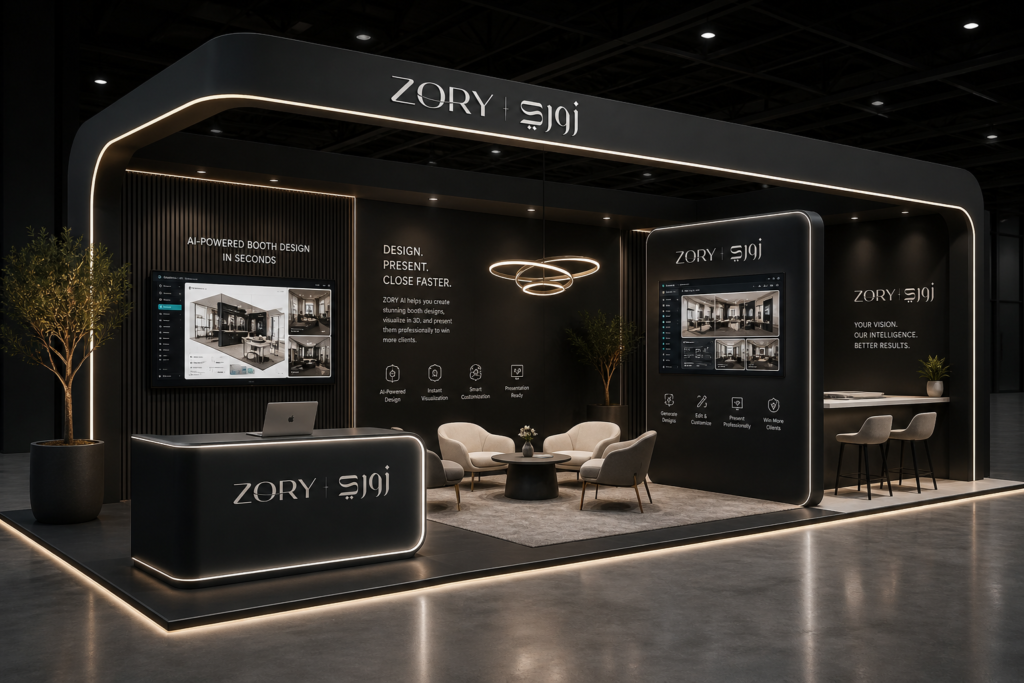
Artificial intelligence doesn’t eliminate the stages of trade show planning, it shortens the time each stage takes and noticeably raises the accuracy of its results.
In the visual design stage, what used to take days of drawing and modeling now happens in minutes.
Through AI exhibition design tools like Zory, you upload the space’s dimensions and set a few basic preferences, and the artificial intelligence generates complete 3D scenes with multiple models.
Each model also comes with a different style, layout, and visual identity. Instead of waiting days to see a single option, you see three or four options in the same session.
In the review stage, AI booth design tool gives everyone a shared language, so revisions become more precise and fewer in number. That’s because everyone is building on a clear vision, not open guesswork.
The most important result is fewer mistakes being discovered during execution. When everyone can see in advance exactly how the whole space will look, the surprises that used to cost time and budget at the hardest moment simply disappear.
Zory: Your Smart Partner in Trade Show Planning, From the First Idea to the Last Detail
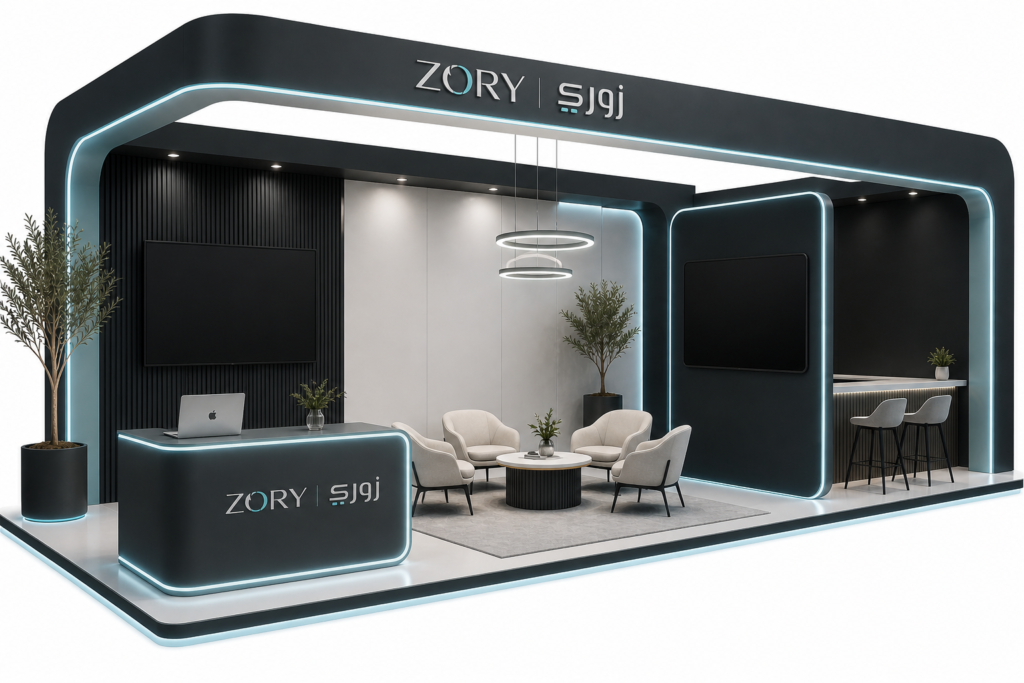
Zory offers a booth design tool to serve as the smart partner that accompanies organizers, exhibitors, and designers through every stage of exhibition planning.
Zory’s exhibition booth design tool works with great ease and professionalism. All you need to do is upload the space’s dimensions and define the goal and the visual identity.
After that, the artificial intelligence generates professional 3D scenes with multiple models within minutes.
This is exactly where trade show planning succeeds, with carefully considered lighting, precise layout, and a visual identity that accurately reflects the brand.
Everything you see in the design is also real and available for purchase immediately.
All of this makes Zory’s booth design tool an exceptional tool for organizers, giving them the chance to close the deal in the very first session, delivering exceptional value that brings their client back for every future exhibition.
How Does Each Party Benefit From AI-Powered Trade Show Planning?
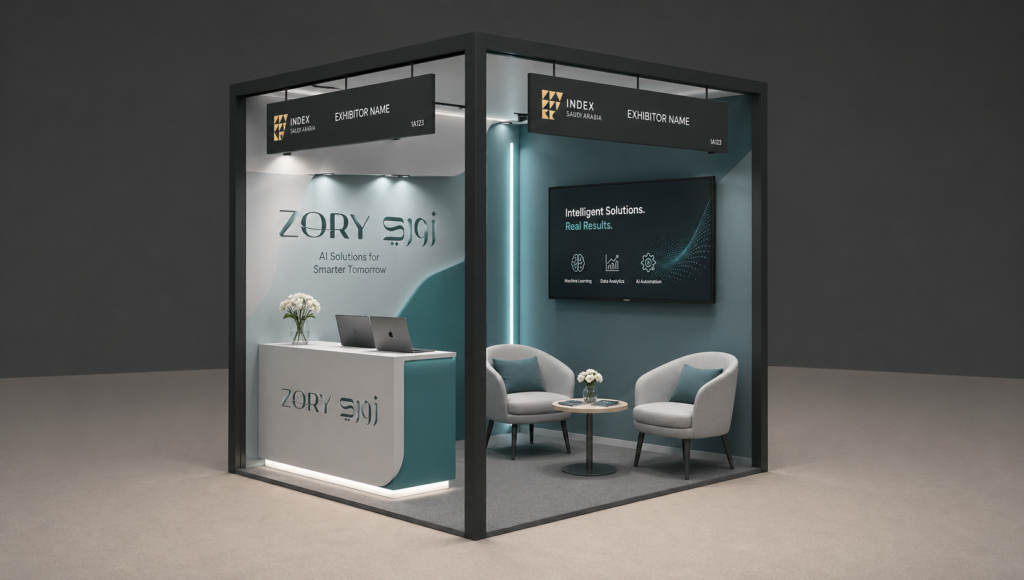
Smart exhibition planning using artificial intelligence tools in interior design doesn’t benefit just one party, it raises the level of the experience for everyone involved in the equation:
- The organizer gets a visual negotiation tool that convinces exhibitors before the contract is even signed. And on the execution side, precise advance planning reduces surprises on installation day and makes the whole process faster and less stressful for the entire team.
- The exhibitor arrives at exhibition day with confidence instead of anxiety. They’ve already seen their booth fully furnished before it was built, and they approved every detail of it in advance. No surprises, no late discovery that the product doesn’t look the way they hoped.
Conclusion
From the very first idea raised in a planning meeting, to the last detail fine-tuned before opening, trade show planning is a journey in which every party deserves a better experience than what they’re used to.
The organizer deserves a tool that lets them sell a vision, not just a space, and the exhibitor deserves to see their booth before installation day, not after. And that’s exactly what smart planning creates when it’s paired with the right tool.
Zory’s booth design tool was built to turn this journey from a chain of accumulating pressures into a clear, well-thought-out process that ends with an exhibition opening with confidence, not anxiety.
From professional 3D scenes, to multiple models shown in a single session, everything is designed to make planning faster, execution more precise, and the result better.
Don’t wait for your next exhibition date to start planning, try Zory today, and plan your exhibition smartly, from the first idea to the very last detail.