

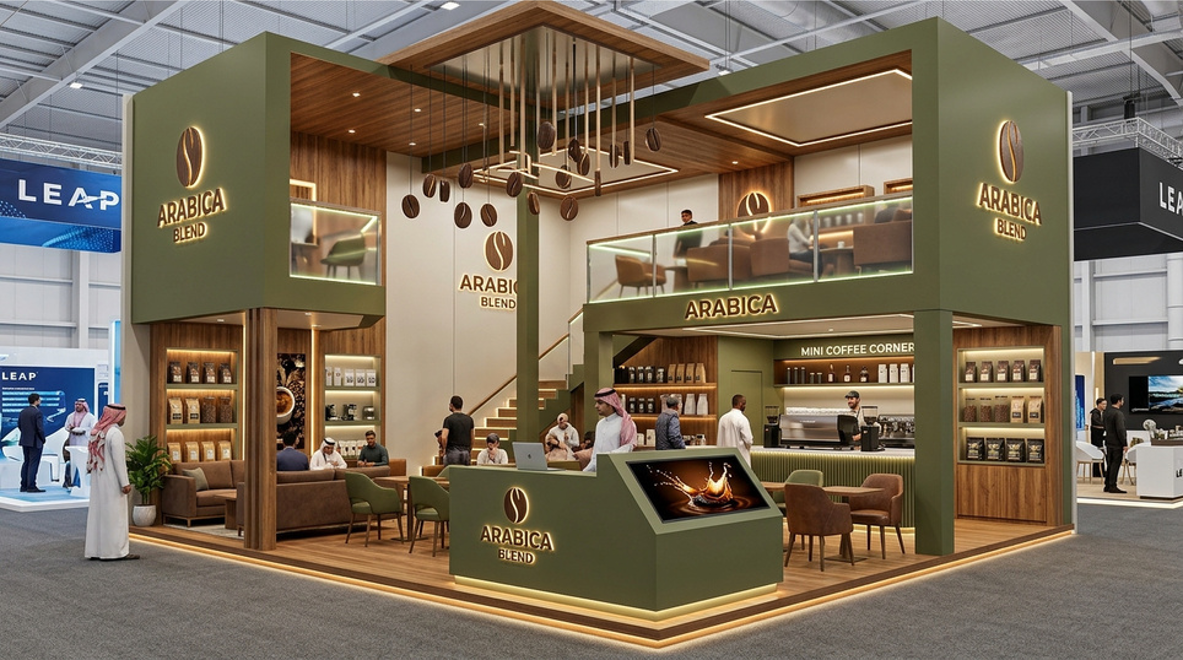

Exhibition booth design has transformed from an exhausting process that drains time and effort into a smooth and fast experience. This major shift didn’t happen on its own; it came with artificial intelligence entering the world of design with a force that can no longer be ignored. Everyone who has worked in exhibition booth design knows the pressure that accompanies every project. The client wants an exceptional result, the timeline shows no mercy, and rounds of revisions keep piling up until the very last moment before installation day. On top of that, there are client expectations that are sometimes hard to translate from what’s in their mind into a clear visual scene, so a cycle of suggestions and revisions begins that consumes both the designer’s time and the client’s patience.
In this article, we’ll explore how artificial intelligence is changing the entire methodology of exhibition booth design. We’ll also show how the Zory tool helps designers deliver a faster and more professional booth design experience to their clients.
Why Do Most Clients Complain About the Traditional Booth Design Experience?
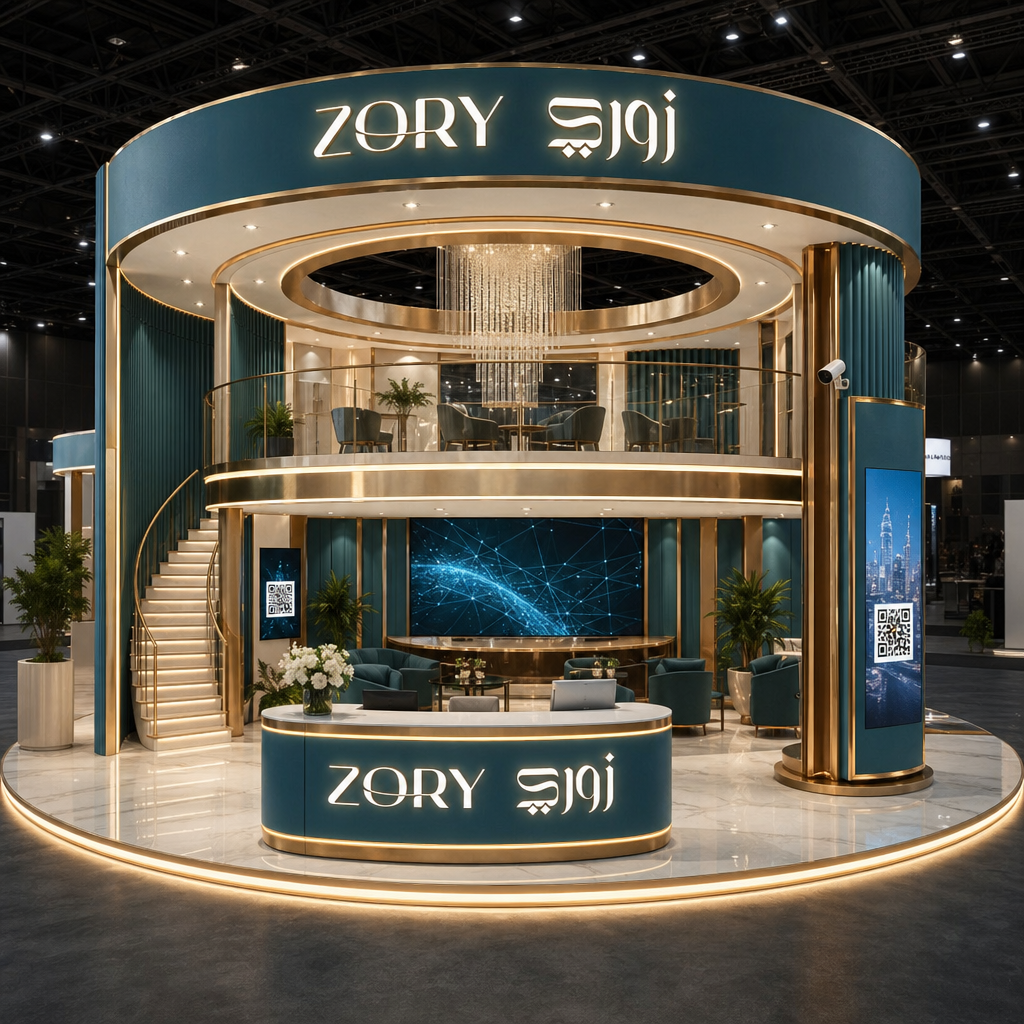
When a merchant or brand decides to participate in an exhibition, they usually start with genuine enthusiasm.
So they book their space, get in touch with a designer, then sit down with them in a meeting to explain what they want.
After that, the long journey of exhibition booth design begins, a journey many clients later describe as more exhausting than they expected. And here, two main problems appear:
1. Time
Between the first meeting and the first visual concept, days may pass. And when the client sees the concept, it’s often different from what they imagined.
From here, the first round of revisions begins, then the second, and sometimes the third. Each round means additional time being squeezed into a schedule that was already tight.
2. The Gap Between Language and Image
The client describes what they want with words like “I want something elegant and modern with a warm touch.” Here, the designer has to translate this description into a drawing, but the translation isn’t always accurate because words don’t carry a unified visual meaning for everyone.
What the client means by “elegant” and what the designer means by it can be completely different, and this difference generates endless rounds of revisions.
And what’s even more frustrating is when the design reaches the execution stage and the client discovers that the actual result still differs from what was envisioned.
This gap between imagination and execution is the wound that keeps many clients hesitant to repeat the exhibition experience.
What Makes a Booth Successful at Exhibitions?
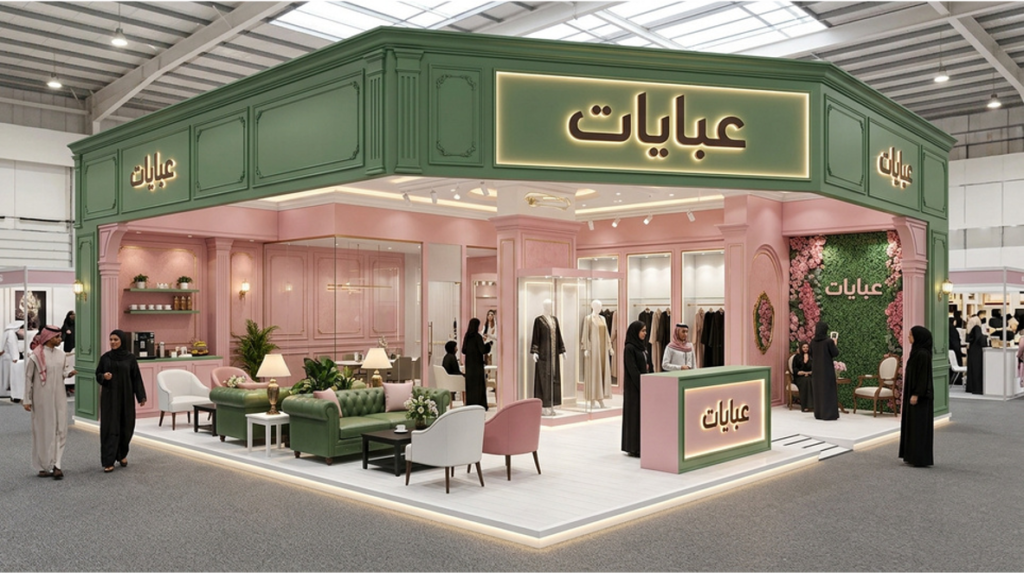
A successful booth isn’t measured by its beauty alone, but by its ability to achieve one specific goal: making the visitor stop, enter, and interact.
This goal requires strategic thinking about every element of the design before any of it is executed. Among the most important things that make exhibition booth design successful are:
Visual Attraction from a Distance
The visitor sees the booth from several meters away before reaching it, and decides whether to stop or keep moving within seconds.
The dominant color, the lighting, and the main visual element are what create this first impression that never repeats itself.
The Flow Experience Inside the Booth
Once the visitor enters, the way products, furniture, and walkways are arranged guides them through a carefully planned journey, from the point of attraction, to the point of interaction, to the point of sale.
A booth without planned flow makes the visitor feel lost or crowded, so they leave without interacting.
Alignment with Brand Identity
A booth design that doesn’t clearly reflect the brand leaves a poor impression that builds no loyalty.
The colors, fonts, materials, and overall style must all tell one consistent story that lets the visitor know who you are before you even speak to them.
How Is Artificial Intelligence Transforming the Methodology of Exhibition Booth Design?
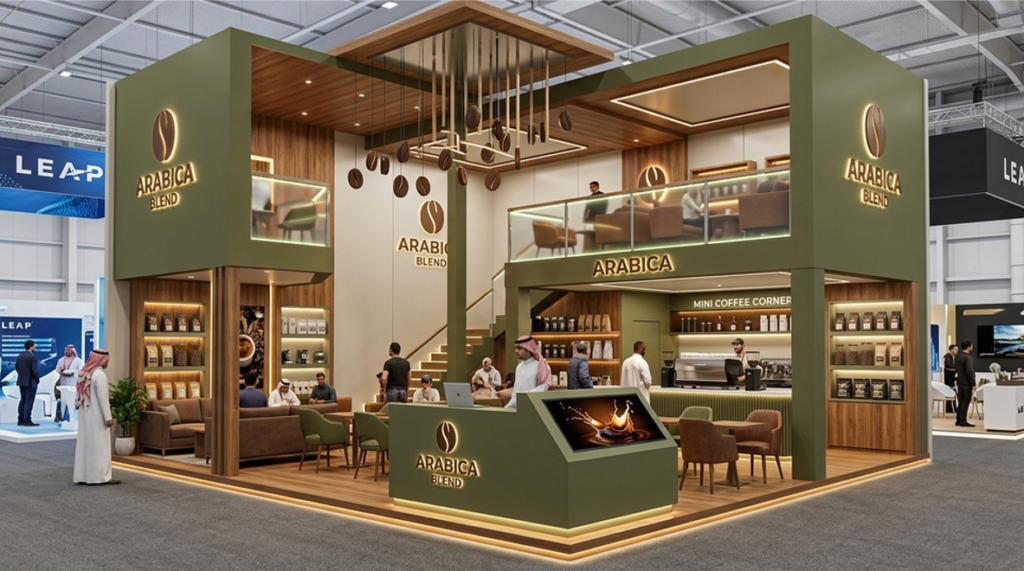
What used to take days of continuous work in booth design now happens in a single session. Not because the work has become less, but because the tool has become smarter.
When a designer sits with their client today and uses artificial intelligence, they don’t start with a blank page and a pen, they start with the space’s dimensions and a few basic preferences.
This allows the designer to then generate a complete 3D scene where the client sees their booth for the first time with real clarity.
The biggest advantage in exhibition booth design with artificial intelligence is the multiplicity of models. Instead of a single design being shown to the client and asked to accept or reject, they see three or four models in the same session.
Each model also comes with a different style, a different layout, and a different visual identity.
So the client isn’t forced to accept something that doesn’t reflect them, instead, they choose what speaks to them and ask for a blend of what they like across the models.
This alone shortens the rounds of revisions that used to drain weeks into simple adjustments completed in hours.
Zory: Design Your Client’s Booth Completely Before Installation Begins
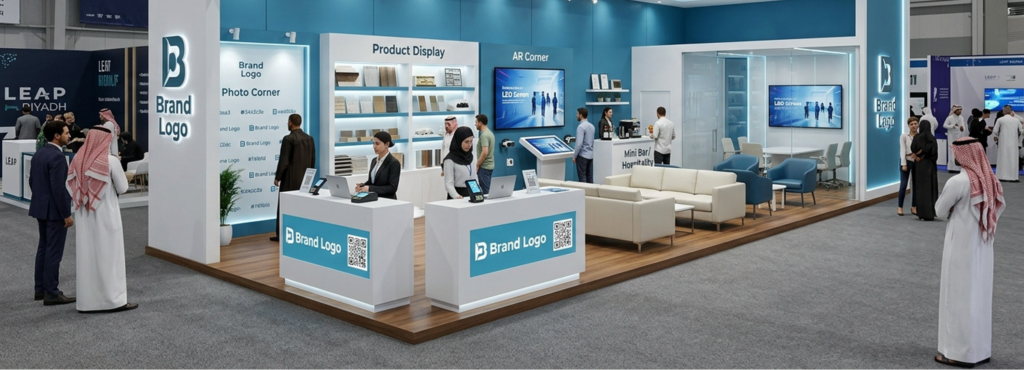
Zory added a booth design tool to serve as the real bridge between the client’s idea and the scene they see before any commitment to execution.
The tool was built with a deep understanding of the needs of the Gulf market, where:
- Speed of delivery.
- Accuracy of detail.
- The ability to offer more than one option in record time.
The process of exhibition booth design through this tool is also simple and straightforward, all you need to do is:
- Upload the dimensions of the booth space.
- Enter the client’s basic preferences.
After that, the artificial intelligence generates professional 3D scenes within minutes, with carefully considered lighting, precise layout, and a clear visual identity.
And everything you see in this AI-generated décor designs is real and available for purchase immediately, not virtual models that don’t exist in the market.
Steps to Design a Professional Exhibition Booth with Artificial Intelligence
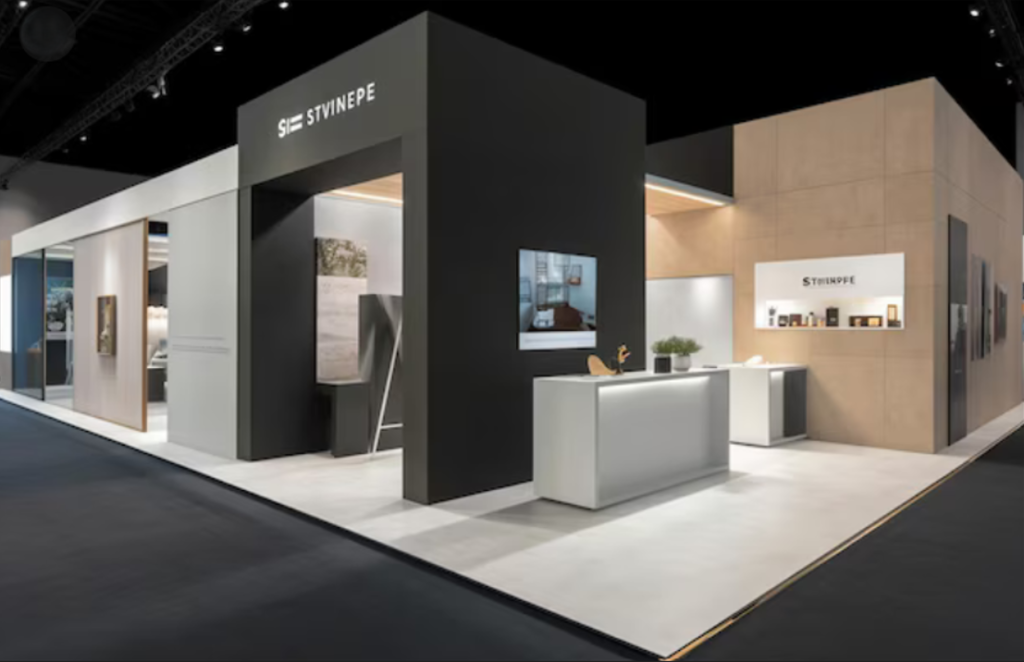
Professional exhibition booth design with artificial intelligence doesn’t mean leaving the tool to work on its own, it means guiding it with a clear methodology that ensures a result serving the client’s actual goal.
Everything you need to design a professional booth for your client’s exhibition through Zory’s smart booth design tool:
- Enter the client’s project name.
- Project basics, such as the project name, the city where it will be held, and the expected attendance size.
- Space and structure, such as the booth’s dimensions, area, and its location.
- Brand identity and design style, such as classic, modern, luxurious, industrial, or even minimalist for those who prefer it.
- Design system, which includes the nature of materials and finishes, the type of lighting, and the functional zones.
- Advanced details, such as the upper floor, ceiling elements, the technological elements used, and final instructions.
After that, Zory’s smart exhibition booth design tool will generate the model and process your instructions, then present the initial booth model to your client.
So what used to take a week of back-and-forth messaging and waiting now happens in the same session today, ending with a design approved by both parties that execution is built on directly.
How Does the Booth Design Tool Raise the Value of Your Services and Your Price?
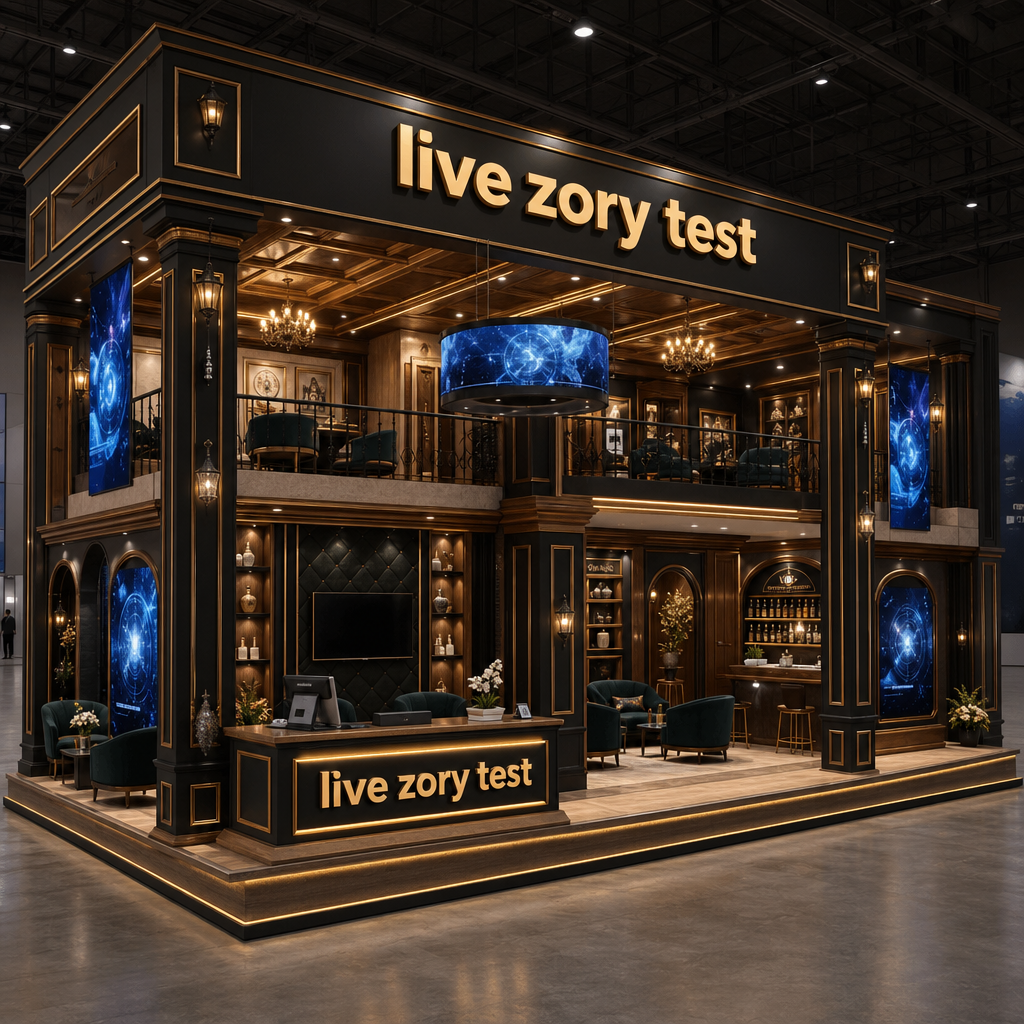
A designer who shows their client the result before it begins doesn’t need many words to convince them.
The image speaks for itself, and when the image is professional, accurate, and truly reflects what will be executed, the negotiation conversation ends quickly and the execution conversation begins.
This shift in the nature of the conversation with the client completely changes your position as a designer.
You’re no longer an executor waiting for instructions and adjusting until you satisfy them, you’ve become a strategic partner who leads the client and shows them what they couldn’t see for themselves.
This role deserves a different price, a price the client accepts easily because they see the value with their own eyes before they pay.
And in terms of workload capacity, the tool gives you the ability to take on more projects at the same time.
So instead of spending a week preparing a single design, through the exhibition booth design tools you can deliver three professional models in a single day. And that means higher revenue for the same effort or less.
The Most Common Mistakes in Exhibition Booth Design and How to Avoid Them
No matter how much experience and skill you have, some mistakes repeat themselves across many booths, and most of them could have been avoided if the result had been seen before execution.
Here are the most notable of these mistakes and how to avoid them:
- The crowded booth that packs too many products into a limited space without prior planning for flow. This makes the visitor feel suffocated and leave without interacting with any product. But 3D design with artificial intelligence shows you this overcrowding before execution.
- Poor lighting that hides the product instead of highlighting it, but artificial intelligence incorporates lighting into the design from the start and shows you its actual effect on every piece.
- A beautiful design that doesn’t reflect the brand identity, a booth that looks great but doesn’t remind the visitor of the brand once they leave is a booth that has lost half its value. Booth design with artificial intelligence fully respects a consistent visual identity and makes the booth leave an impression that lasts beyond the exhibition.
Conclusion
Exhibition booth design is no longer just a technical task that ends with a file delivery, it has become a complete experience that begins with the first meeting with the client and ends with a scene they see before it’s ever built.
A designer who gives their client this experience isn’t just offering a service, they’re building trust that makes the client come back to them for every future exhibition.
The Zory platform and its booth design tool were built for every designer who wants to give their client their best, in the fastest time and with the highest professionalism.
From precise 3D scenes, to multiple models in a single session, everything is designed to make your session with your client end with a decision, not with waiting.
Try Zory’s booth design tool on your next project now, and give your client an experience they’ll remember before they even see the exhibition.