



AI virtual staging for real estate has become a practical way to help buyers visualize real estate units before their finishes or furniture are complete. Floor plan images and empty spaces may not be enough to show a property’s potential, especially when it’s hard for a buyer to imagine the furniture layout and the look of the space once it’s finished. AI can turn unfurnished spaces into realistic visualizations of different decor styles, giving the real estate developer a clearer way to present the unit and highlight its marketing potential.
In this article, we look at how AI virtual staging for real estate can help market and sell units before they’re complete.
What Is AI Virtual Staging for Real Estate?

It is the use of AI tools to visually add furniture and decor to images of empty units or unfinished spaces, with the goal of showing the potential look of the property once it’s furnished.
Visualizations can be created in different styles, such as modern, minimalist, or luxurious, with pieces, colors, and layouts chosen to suit the size of the unit.
It is one of the best AI tools for real estate, as it helps the developer present the property more clearly, instead of relying on engineering floor plans or photos that show only empty spaces.
It can also be used to create more than one visualization of the same space, so the buyer can see how the rooms could be used and furnished according to different needs.
Why Is It Difficult to Sell Real Estate Units Before They’re Complete?

The real estate developer faces a clear challenge when marketing off-plan units, because the buyer cannot directly see the final result.
The decision becomes even harder when the unit is in an early stage of construction or when only engineering plans and renderings are available. Among the most notable reasons for buyer hesitation:
- Difficulty visualizing the space: some buyers may find it hard to imagine the size and shape of the rooms once they’re complete.
- Absence of actual furniture: an empty space doesn’t always show how the furniture could be arranged or how each room could be used.
- The need to imagine the final result: the buyer needs to picture the property after the finishes and furnishing are complete in order to form a clear image of the unit.
- Difficulty comparing options: it can be hard for the customer to decide which unit fits their lifestyle when all they see are floor plans or unfinished spaces.
- High value of the decision: buying a property is a major financial commitment, so the buyer may need more visual information before making the decision.
This is where AI virtual staging can play a role in turning a floor plan or an empty space into a visual experience closer to what the buyer expects from the final property.
How Does AI Virtual Staging Help Sell Off-Plan Real Estate?
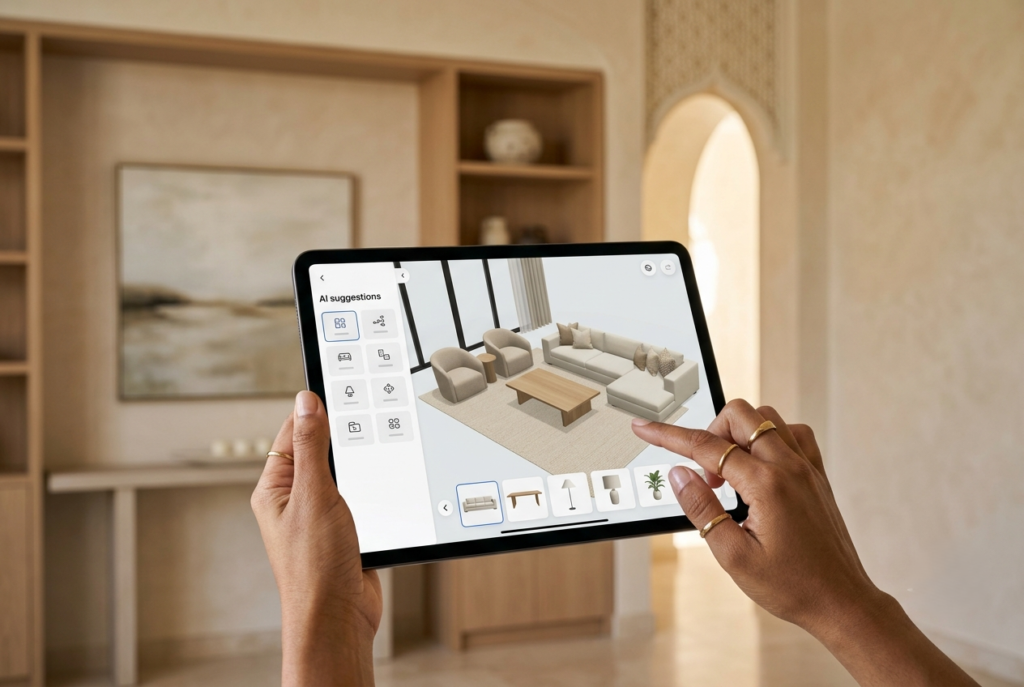
AI virtual staging tools for real estate help make off-plan units easier to visualize, by showing the space’s potential instead of leaving the buyer to rely entirely on their imagination.
The developer can use these visualizations within project pages, ads, and presentations offered to customers. Its benefits also show in several aspects:
- Showing the expected look of the unit: turning empty spaces into furnished rooms makes it easier to visualize the final result.
- Highlighting the potential of each space: different ways of arranging furniture can be shown to match the function of the room.
- Presenting more than one style: multiple designs of the same unit can be offered to reach different segments of buyers.
- Improving marketing materials: furnished images give the developer visual content that can be used in campaigns, ads, and project pages.
- Helping the customer compare: when the buyer sees how the space could be used, evaluating the unit becomes tied to an expected experience rather than the floor plan alone.
- Supporting early purchase decisions: the clearer the expected look of the property becomes, the more visual information the buyer has to help evaluate the unit before it’s complete.
In this way, the role of virtual staging isn’t limited to making the property more visually appealing, it can also be part of an off-plan real estate marketing strategy.
What Is the Difference Between Virtual Staging and Traditional Real Estate Photography?
AI virtual staging for real estate differs from traditional real estate photography in the nature of the content it offers the buyer.
The following table shows the main differences between them:
| Traditional Real Estate Photography | AI Virtual Staging | |
| Nature of content | Documents the property’s actual condition at the time of shooting | Provides a visual representation of the space after staging |
| Furniture and decor | Shows only the furniture that actually exists | Furniture, decor, colors, and layouts can be added virtually in different ways |
| Unfinished properties | Limited usefulness if the space is still under construction | Suitable for visualizing the expected look of the unit before it’s complete |
| Empty units | Shows the space as it is | Helps show how it could be used and furnished |
| Multiple designs | Requires different photo shoots and setups | Multiple visualizations of the same space can be created |
| Main goal | Documenting the property and showing its real condition | Helping the buyer visualize the unit’s potential and possible look |
| Marketing use | Suitable for properties ready for viewing | Useful for marketing off-plan units or units before they’re set up |
So one doesn’t necessarily replace the other, real photos can be used to show the property’s actual specifications, while AI virtual staging tools help the buyer visualize the space’s potential.
How Can a Real Estate Developer Use AI to Present a Unit in More Than One Design?
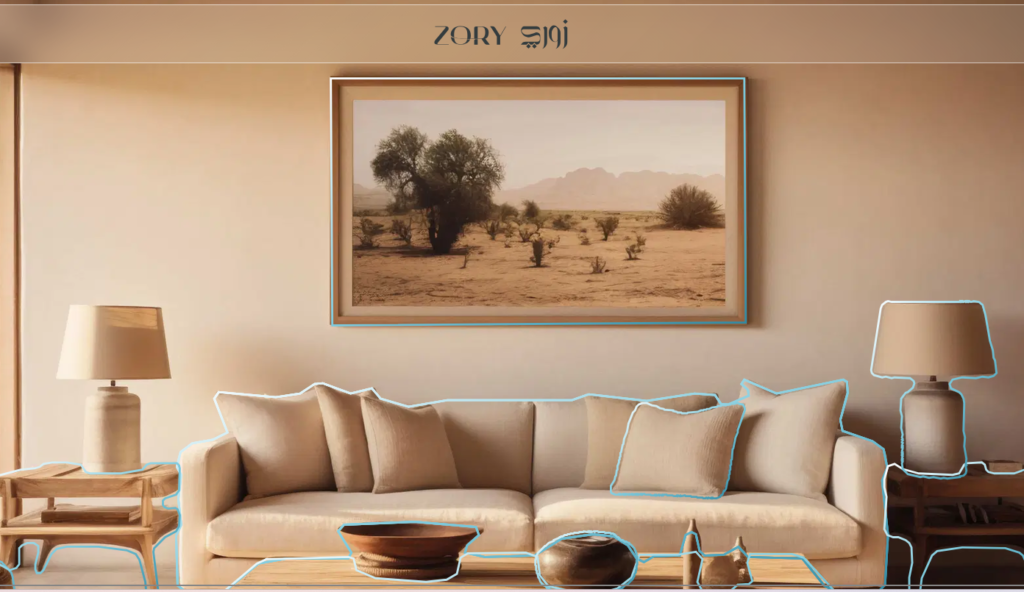
A real estate developer can use AI interior design tools to create several visualizations of the same unit, changing the furniture style, colors, and layout of elements according to the target segments.
Instead of offering just one visualization, the room could be shown, for example, in a modern design, another in a minimalist design, and a third in a more luxurious design. This can be applied to:
- Living rooms.
- Bedrooms.
- Kitchens.
- Home offices.
- Open spaces.
- Small apartments and units of different sizes.
AI virtual staging tools for real estate can also be used to create visualizations targeting different needs, such as a practical design for a family, a simpler design for a single person, or a visualization focused on making the best use of small spaces.
How Does Virtual Staging Help Speed Up the Buyer’s Decision?

A buyer may hesitate in front of an unfinished unit because they can’t easily turn dimensions and floor plans into a clear mental image.
AI virtual staging for real estate helps close this gap by providing a direct visual representation of how the space could be used.
When the customer sees an empty room, they may wonder about the right furniture size or whether more than one piece could fit in it.
But when they see the space virtually staged through AI tools for real estate developers, it becomes easier for them to assess the furniture layout, the flow of movement within the room, and the overall expected look.
How Can Zory Be Used to Virtually Stage Real Estate Units?
Zory offers developers a way to turn unit floor plans into furnished visualizations customized to each buyer’s preferences.
Instead of showing the same unit with a fixed image to all customers, the sales team can learn the style and colors the buyer prefers, then use the unit’s floor plan together with these preferences to create a visual representation reflecting the potential look of the space.
This is done easily through AI virtual staging technology for real estate, which starts by identifying the buyer’s style, then designing the unit according to their preferences, creating a furnished preview, and sharing it with them and their family.
How Does a Developer Measure the Success of AI Virtual Staging Tools for Real Estate in Their Campaigns?

A developer can evaluate the impact of virtual staging by comparing the performance of units and campaigns that use customized visualizations against the performance of previous experiences, while keeping other factors as fixed as possible.
Among the most important indicators that can be tracked:
- Conversion rate: the percentage of customers who moved from viewing or interacting with the unit to requesting information, booking, or a later sales step.
- Engagement rate with the visualizations: the number of customers who viewed the designs, requested a customized version, or shared them with their family members.
- Viewing and meeting requests: comparing the number of customers who moved from the visual representation to contacting the sales team or requesting a viewing.
- Sales cycle length: tracking the time from the first interaction with the unit to reaching the booking or sale stage.
- Transition rate between stages of the buyer’s journey: such as moving from the ad to the unit page, then to the visualization, then to contacting sales.
- Performance of different designs: finding out whether a certain style or a certain way of presenting achieves higher engagement among different segments of buyers.
- Customer acquisition cost: comparing the cost of attracting a qualified customer before using the visualizations and after integrating them into campaigns.
- Sales linked to the visualizations: connecting customers who interacted with the customized designs to their actual results in the CRM system.
The developer can also break down the data by project, unit, customer source, and design type, in order to know where the visualizations are delivering real value and where the experience needs adjustment.
Conclusion
Selling a unit before it’s complete requires more than showing a floor plan or a 3D image, the buyer wants to imagine how the space will look once it actually becomes their home.
This is where AI tools for real estate and AI virtual staging for real estate give an opportunity to turn unfinished spaces into customized visual representations that help the customer understand the unit’s potential, explore it in the style that suits their taste, and move forward in the buying journey with greater confidence.
By linking these visualizations to engagement and conversion data, the developer can find out what actually attracts buyers and improve the marketing experience for each unit and customer segment.
And if you’re a real estate developer marketing your units before they’re complete, try Zory for real estate developers now, and start turning your floor plans and spaces into customized visual experiences that help your customers picture their home and make their decision with greater confidence.