

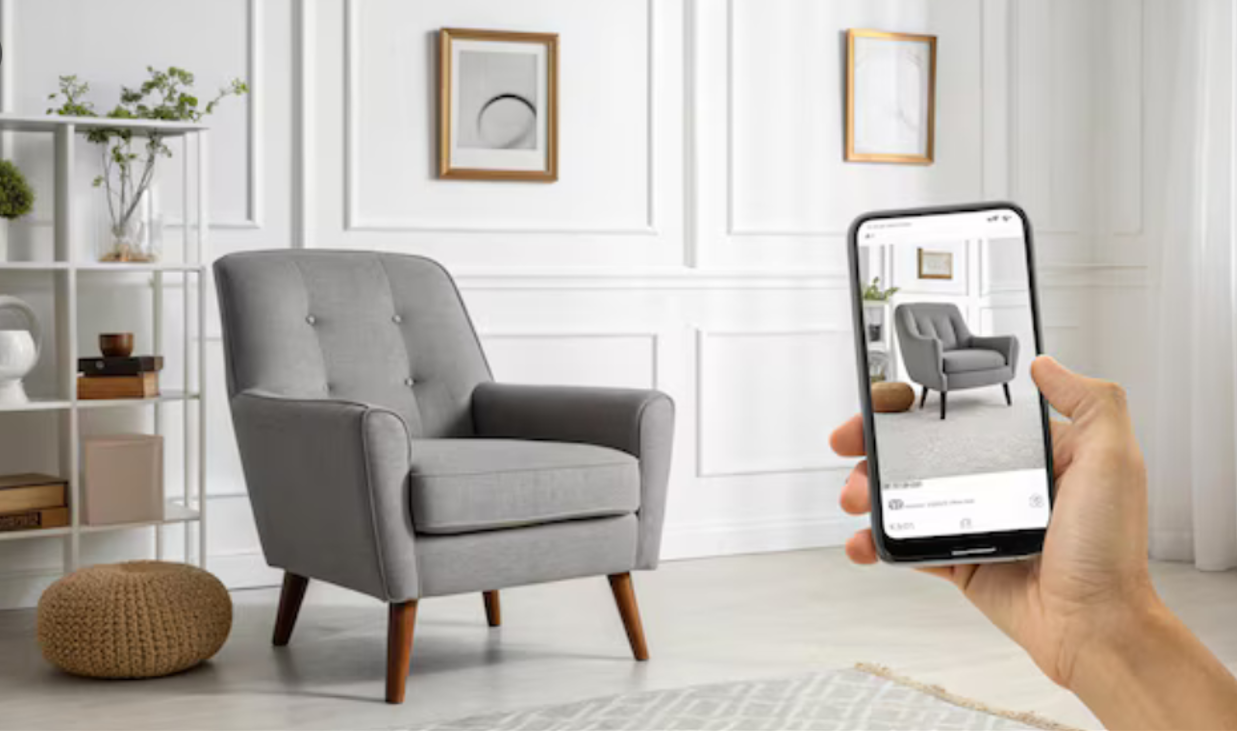

Sell furniture online was never easy — but today it is harder than it was just a few years ago. Not only because competition has increased, but because the shopper themselves has changed. Today’s shopper is more informed, less patient, and holds higher expectations. They are no longer satisfied with a product image on a white background to decide whether that sofa deserves a place in their living room. It is worth noting that 78% of shoppers abandon their cart for one single reason: the inability to visualize the product inside their actual space.
In today’s article, we explore why the rules of the game have changed, and what the smart retailer needs to successfully sell furniture online in 2026.
How Has Shopper Behavior Changed When Buying Furniture Online?

The shopper who, a few years ago, needed to visit three showrooms before making a decision now opens fifteen stores at the same time from their phone screen.
They compare, save, ignore, and move on — and all of this happens within minutes.
The competition is no longer between you and the store next door on the street, but between you and every furniture store in the region that appears in search results.
In this flood of options, the shopper’s attention has become more valuable than anything else. When a buyer stops and looks at a furniture piece they like, the first question going through their mind is not “Is this product beautiful?” — it’s “Is this product right for me?”
This is the fundamental shift in shopper behavior today when buying furniture online.
They are no longer searching for a product they like — they are searching for an answer to a very personal question: how will this look in my space?
The online store that doesn’t have an answer to this question simply doesn’t have enough to keep the shopper on its page — and as a result, it significantly fails to sell furniture online.
Why Do 78% Of Customers Abandon Their Cart Before Completing Their Order?
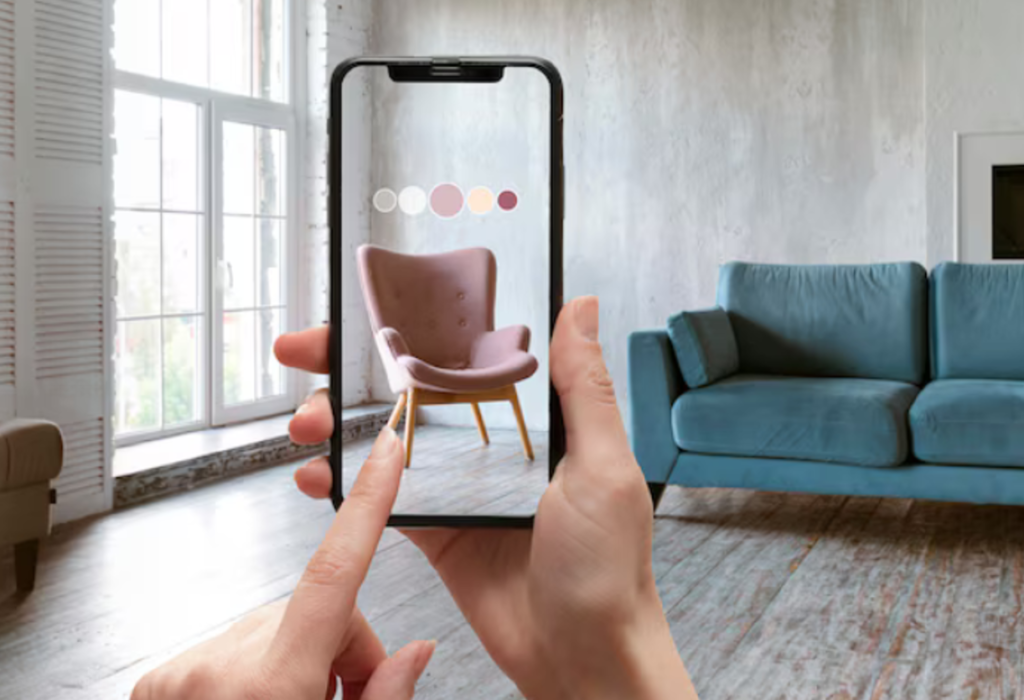
Studies have shown that 78% of customers abandon their cart when shopping for furniture online.
This means that out of every ten customers who add your product to their cart, nearly eight of them leave without buying.
If you believe the problem with failing to sell furniture online lies in the price or shipping costs, the truth is that the primary reason behind this number is something deeper — the inability to visualize.
The customer sees an image of the sofa on a white background, likes the design, adds it to the cart, and then stops.
Do you know why? In that moment, doubt begins to creep in: will it fit the size of my room? Will its color match the rest of my furniture? Will it look too big or too small in the space?
When they find no answers, they decide to “think more” — and that thinking usually means they won’t come back. This directly and negatively impacts the ability to sell furniture online.
The difference between “I like this product” and “I am ready to buy it right now” is the difference of certainty.
A customer who has not reached that certainty will not press the buy button — regardless of the quality of your product or the competitiveness of your price.
Every customer who leaves carrying that doubt takes with them a real cost — the cost of acquisition, advertising, and time.
All of that can go to waste in a single moment, because a simple question went unanswered.
What Does The Shopper Need To Press “Buy Now” With Confidence?
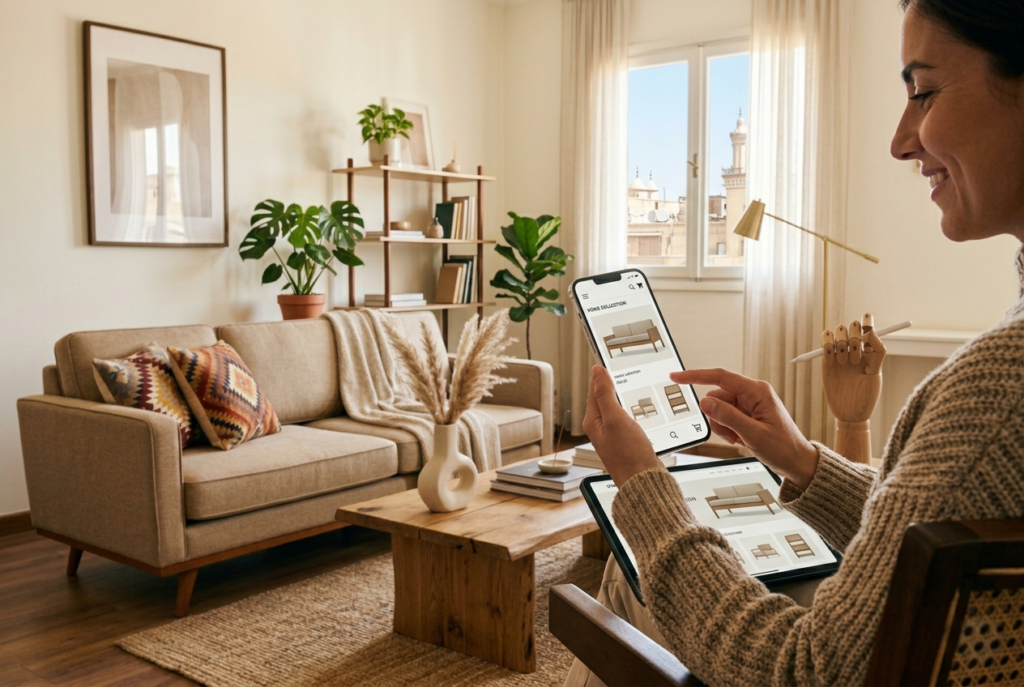
The answer is simpler than many retailers imagine. The shopper is not asking for the impossible — they simply want to see.
They want to see the sofa they liked inside a room that resembles their room, with dimensions that match their space, and colors that coordinate with what they already have.
They don’t want to imagine, guess, or take a risk — they want to see and then decide.
This feeling of visual certainty is what transforms a hesitant browser into a buyer, and ultimately leads to successfully selling furniture online in an effective way.
When a customer can see your product inside a real context that resembles their space, the questions of doubt disappear automatically.
They no longer ask about the dimensions because they can see them. They no longer hesitate about the color because they can see how it looks alongside the other pieces.
Also, they no longer worry about taking a risk because the decision is no longer a risk — it is now based on what they saw with their own eyes.
Retailers who give their customers this certainty don’t compete on price — they compete on experience. And in the battle to sell furniture online, it is those who have the right tools that win.
How Does Zory Transform The Furniture Shopping Experience From Browsing To A Purchase Decision?
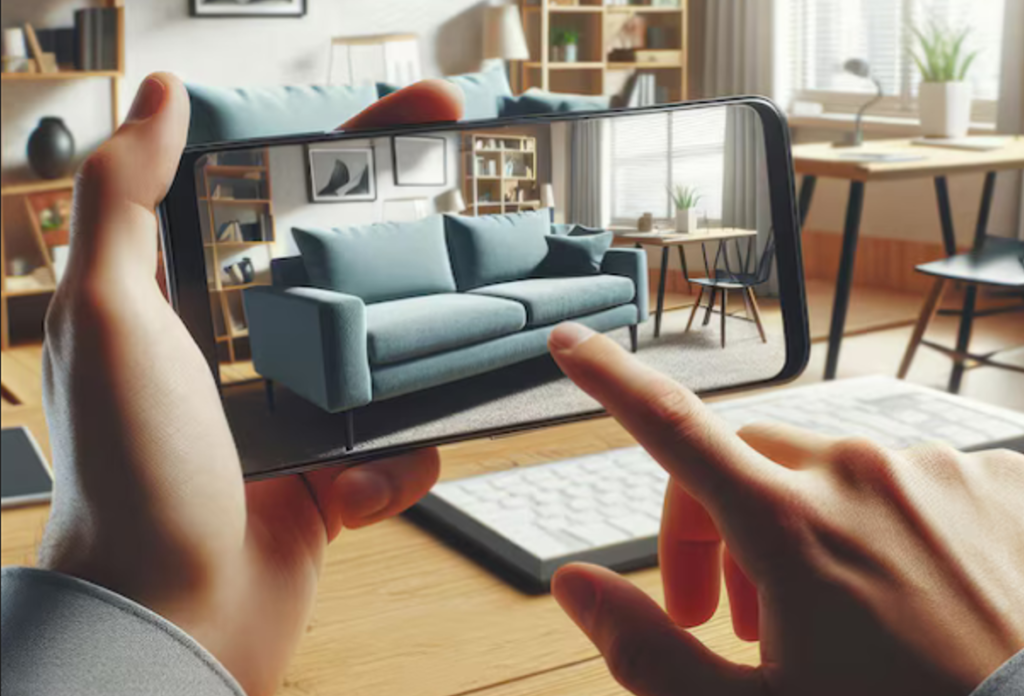
Zory doesn’t just add prettier images to your products — it places your products inside your customer’s life.
Through three integrated channels, you can reach your customer wherever they are and give them the experience that turns hesitation into a decision.
On the Zory platform, your products appear inside AI-generated room designs in front of thousands of active users, along with monthly reports showing impressions and conversions.
Through the API tool for your website, your customer can design their room using your products directly on the product pages and buy with confidence without ever leaving your site.
And inside the showroom, your sales team can design the customer’s room in front of them on the spot — which raises the effectiveness of selling furniture online and helps close sales within the same session.
The AI doesn’t stop at displaying the product either — it automatically suggests complementary pieces that match the customer’s selection in terms of style, dimensions, and budget.
This means a customer who came looking for a sofa may leave with a sofa, a table, and a rug — because the recommendation came at the right moment in a natural, non-intrusive way.
How Do You Make Your Store The Top Destination To Sell Furniture Online?
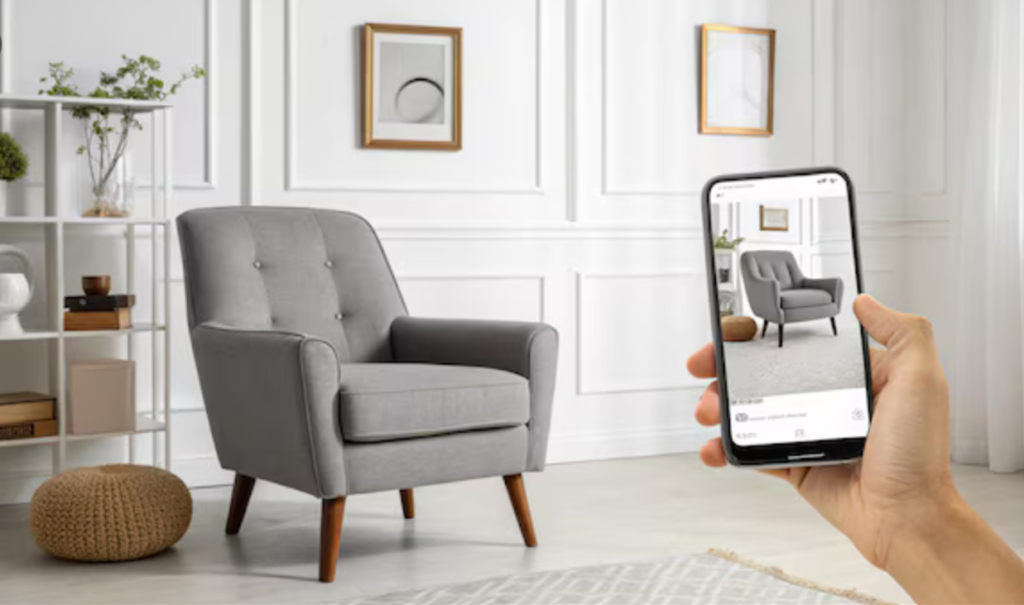
A traditional catalog simply displays images of individual pieces. A smart store, on the other hand, displays a lifestyle.
The difference between the two is not in the number of products or the quality of the images — it’s in the store’s ability to answer the question running through every shopper’s mind: “How will this look in my home?”
The retailer who shifts from selling individual pieces to selling complete design experiences doesn’t just increase their ability to sell furniture online — they fundamentally change the nature of their relationship with the customer.
The customer no longer sees your store as a place to buy a piece when they need one, but as a reference they return to every time they think about refreshing their space or adding something new.
This kind of loyalty is not built through discounts — it is built through unforgettable experiences.
And with the Zory platform and its live catalog featuring more than 50,000 products from trusted retailers in the Gulf market, every retailer can now be present inside the dream room of their customer.
Enhance The Furniture Shopping Experience In Your Store Through Zory
The rules of selling furniture online have changed, and what was enough yesterday is no longer enough today.
The beautiful image on a white background was sufficient when shoppers were searching for a product.
But today’s shopper is not searching for a product — they are searching for a room. They are searching for the certainty that gives them the confidence to press the buy button.
Retailers who understood this shift early on are no longer competing on price or on the number of products in their catalog. They compete on experience — and this is a battle won by those who can place their products inside the customer’s life before the purchase is made.
The Zory platform was built specifically for this shift — starting from having your products appear inside AI-generated designs in front of thousands of users, to an interactive design experience within your website, to an effective sales tool inside your showroom.
Try Zory in your store, place your products inside your customers’ rooms, and watch for yourself how the hesitant buyer transforms into a confident one.