

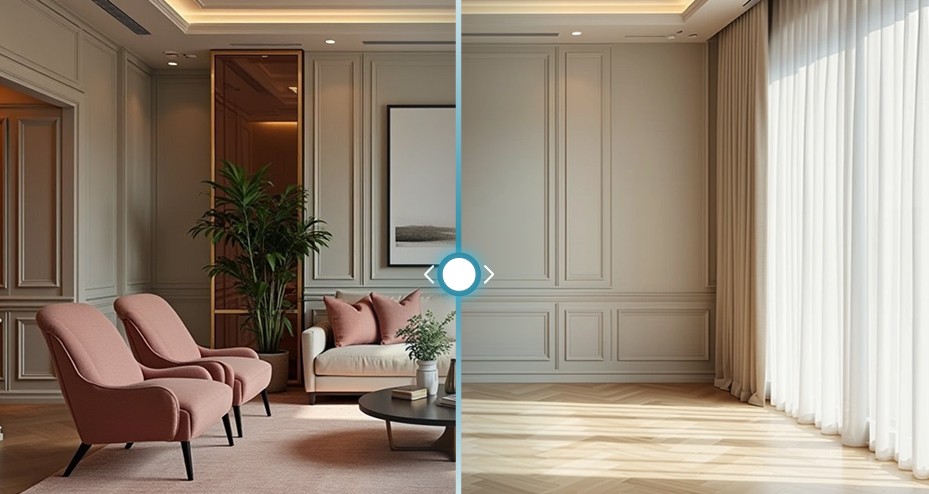

The furniture trade in the Middle East is growing fast as digital transformation takes hold — but behind that growth hides a very real challenge that merchants deal with every single day: lots of traffic, not enough actual sales. Despite heavy ad spending and expanding product catalogs, the numbers reveal a clear gap in the buying journey. Cart abandonment rates in the furniture and home décor sector hit around 78%, which translates to roughly 20 times more lost orders than completed purchases. And that’s not a demand problem — it’s hesitation. When customers can’t visualize how a piece of furniture will actually look in their space, they second-guess themselves and walk away at the last second.
Today, we’re walking you through real case studies that expose this gap — then diving into the biggest shifts happening in furniture trade right now, and how AI and augmented reality platforms are helping merchants build a more successful future.
The Visualization Problem: The Biggest Psychological Barrier in Furniture Buying
According to a 2023 Shopify study, 64% of consumers say the biggest obstacle they face when buying furniture online is simply not being able to picture how it’ll look in their home.
A separate independent study by IKEA Research found that over 70% of customers who returned products said the item didn’t look in their home the way they’d imagined it would.
And here’s the hard truth — that gap between expectation and reality isn’t a product flaw. It’s a flaw in the buying experience itself. People don’t naturally think in measurements and dimensions. They want to see. They want to try. They want to imagine.
In the Saudi market specifically — where apartments and villas tend to be larger than the global average and design styles range from classic to modern to traditional Arabic — this challenge gets even more complex.
The customer isn’t just asking “is this sofa beautiful?” They’re asking “will this sofa actually work in my living room corner? Will it fill the space right?” These are exactly the kinds of questions that anyone working in the furniture trade needs to have answers for.
The Abandoned Cart Problem: 20 Times the Lost Orders
Research from the Baymard Institute puts the average cart abandonment rate across e-commerce at 70.19% — but in the furniture and home sector, that number jumps to 78% or higher.
In plain terms: out of every 100 people who add something to their cart, 78 leave without buying.
What’s even more concerning is that research shows stores without visual tools — like augmented reality or 3D design features — are losing the equivalent of 20 times their actual sales volume in missed opportunities.
In other words, what you’re selling today is only 1/20th of what was possible if the visualization barrier didn’t exist.
That kind of gap can make a massive difference in your furniture trade bottom line.
A Cutthroat Furniture Trade Market and Rising Ad Costs
Saudi Arabia sits among the highest-cost digital advertising markets in the region. According to Meta Business and Google Ads reports for the Saudi market, the average cost per click in the interior décor and furniture sector rose by 35–50% between 2021 and 2024 — driven by more and more new stores competing for digital visibility.
The painful part? All that rising ad spend goes toward attracting visitors, a large chunk of whom will abandon their cart anyway.
So when acquisition costs go up, the cost of every abandoned cart goes up right along with it.
The Other Side of the Story: Furniture Stores That Launch Strong and Quietly Fold
Between 2020 and 2024, the e-commerce furniture trade in Saudi Arabia saw a massive wave of both new entrants and quiet exits.
During the COVID era and the e-commerce boom that followed, dozens of new merchants launched stores with solid capital — but without an effective conversion strategy.
The pattern that kept repeating itself looked something like this:
- A store spending 50,000 to 100,000 SAR per month on social media and Google ads
- Pulling in thousands of visitors and thousands of cart additions
- But an actual conversion rate stuck at 1–2% — well below the globally acceptable benchmark of 3–5% for furniture trade
- Eventually realizing the spending isn’t covering costs, and shutting down
These stores usually didn’t fail because of bad products or bad pricing. They failed because of a broken buying experience.
And their exit didn’t give existing competitors a break — it actually made things worse by inflating overall ad costs while they were still in the market.
Why Traditional Furniture Retailers Struggle to Go Digital — Even With Great Products
As the furniture trade increasingly shifts online, many traditional merchants who built real reputations through showrooms and physical exhibitions are the ones getting hit hardest.
A large number of them have failed to bring their successful offline experience into the digital world — and it’s not just about money. The main gaps are:
- Technical capability — Many find the process of building an online store and connecting it to inventory and shipping genuinely complicated
- Visual content — Most traditional merchants believe photographing hundreds of products at professional quality will cost a fortune
- Digital marketing experience — Running effective ad campaigns requires specialized skills that many simply don’t have
So a lot of traditional merchants stay trapped within their physical showrooms. They offer great products, competitive prices, and strong local reputations — but they’re either unable or unconvinced when it comes to expanding digitally.
Case Studies: How Augmented Reality Has Transformed Furniture Buying Around the World
Augmented reality has fundamentally reshaped the furniture buying experience. Purchasing decisions no longer have to rely on imagination or guesswork — customers can actually see a product inside their real space before buying.
Here are some global case studies that made a measurable difference in furniture trade:
Case Study 1: Wayfair — AR as a Competitive Advantage
Wayfair, one of America’s largest online furniture platforms, invested heavily in AR technology and reported in their 2022 results that:
- Users who interacted with the “View in Room” feature were 3.4 times more likely to purchase compared to those who didn’t
- Average time spent on the site increased by 45% among users of the tool
Case Study 2: Houzz — From Inspiration to Purchase
Houzz, the platform specialized in interior design and décor, documented that only 11% of users were buying directly before they introduced visual tools. After integrating their “View in My Room” feature:
- The purchase rate among tool users more than tripled
- Return rates dropped by 22%
The takeaway is clear: AR and AI aren’t just nice-to-have tech additions in the furniture trade — they’re a direct driver of better purchase decisions and less buyer hesitation. By reducing returns and improving conversion rates, it’s become obvious that letting customers visualize a product in their actual environment genuinely changes buying behavior.
Why Saudi Arabia Is a Golden Opportunity for AR in Furniture Trade
The Saudi market offers a uniquely compelling opportunity for these technologies — one that sets it apart from other markets:
- 2.5 million households relocating to new homes every year, each needing furniture and décor
- 1 million residential units planned for delivery by 2030 as part of Vision 2030 projects
- Internet penetration above 95%, with mobile shopping on a steady rise
- The 18–35 age group represents a huge share of buyers — and they’re digital natives
It’s also worth noting that Saudi consumers have a high design sensitivity and strong expectations around visual harmony and quality.
They’re not just buying a sofa — they’re buying the vision of their ideal room. That cultural reality makes visual technology even more powerful and meaningful in this particular furniture trade market.
How Zory AI Helps Furniture Merchants Break Through the Digital Barrier
With all the challenges traditional furniture merchants face, and all the opportunity that AR and AI unlock, Zory AI stands out as one of the best AI platforms for interior design in the furniture trade space.
Zory takes a fundamentally different approach from other AI tools. It gives customers the ability to visualize furniture and home décor inside AI-generated 2D and 3D room designs — before they ever make a purchase.
Three Channels, One Seamless Experience
Zory operates across three integrated channels:
- The Zory Online Platform: Merchant products appear inside AI-generated designs in front of thousands of users, with monthly reports showing impressions and conversions. All of this without spending a single riyal on paid ads.
- The Merchant’s Own Website: The interactive design experience is embedded directly into the merchant’s site, with designs linked to available products. Customers design their room using the merchant’s products and buy with confidence — without ever leaving the site.
- Inside the Showroom: The sales team can design a customer’s room in real time using the merchant’s own products, right in front of them. That turns a casual browsing visit into an immediate purchase decision — saving time and closing more sales.
Impressive Results That Reflect Zory’s Impact
Since launching in September 2025, Zory AI’s numbers tell a clear story:
- Over 10 million views across social media platforms — with zero paid ads
- More than 50 active merchant partners, with new ones joining every month
- Over 52,000 products listed from partner merchant catalogs
- More than 10,000 AI-generated designs created to date
- Over 400,000 product impressions tied to designs in real user experiences
Final Thoughts
AI and augmented reality in the furniture trade are no longer a luxury — they’re a competitive necessity.
The numbers and results above make that case pretty clearly. Any merchant serious about growth needs to get on board with this technological shift if they want to cut down on abandoned carts and rising marketing costs.
The gap between a store that offers visual tools and one that doesn’t isn’t just a difference in features. It’s a 20x difference in captured opportunity.
Zory delivers that equation in a practical, ready-to-implement way — with fast integration and no technical expertise required.
That makes it the logical choice for any furniture trade merchant who wants to turn visitors into buyers, and buyers into loyal customers.
If you’re a furniture merchant looking for a real, actionable way to move beyond the limitations of traditional retail and start selling with more impact and clarity — Zory opens a direct door to building that transformation inside your business.