

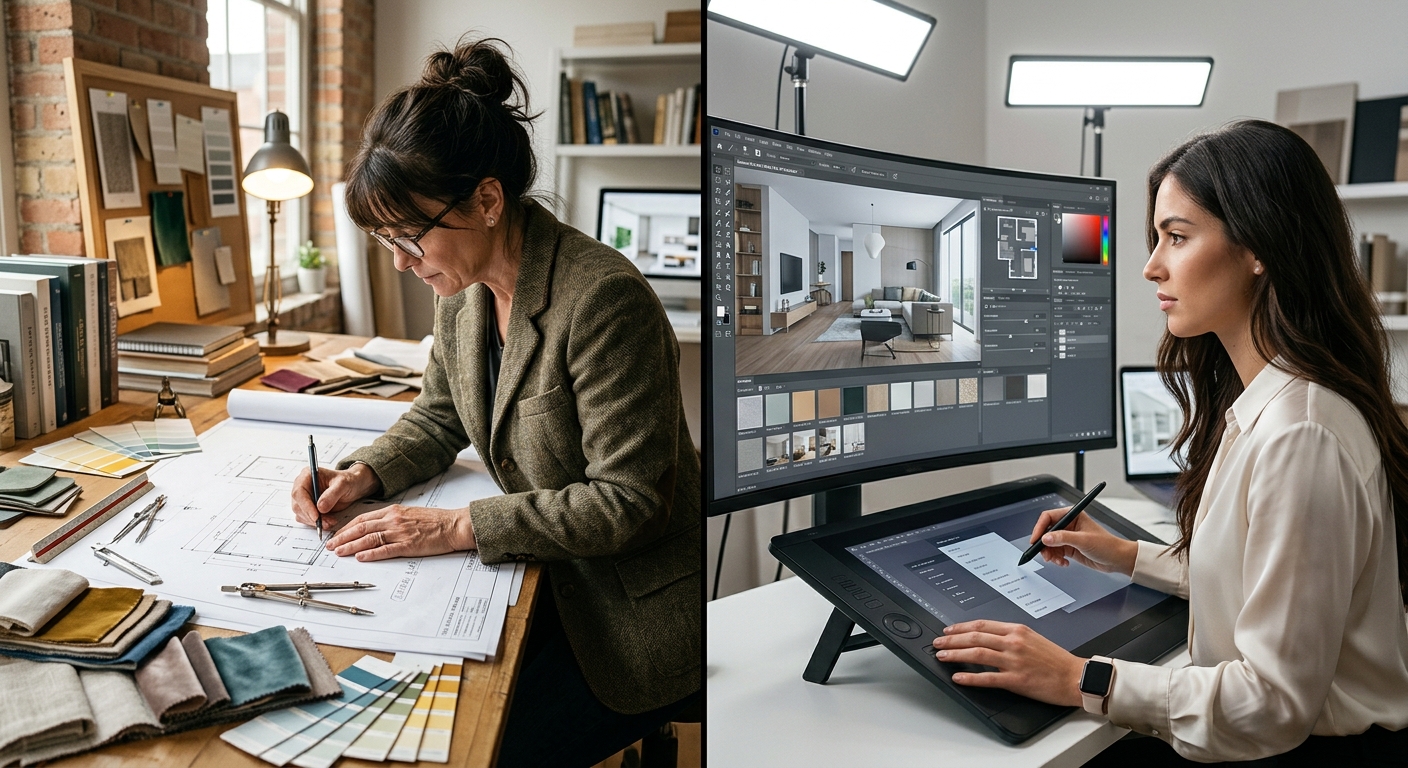

With the spread of AI tools, many people now find themselves wondering about AI interior design vs traditional design. In 2026, planning a home no longer necessarily starts with a visit to a furniture showroom or booking an appointment with an interior designer. You can now use AI to try out different styles, visualize your room, and discover the right furniture before making any decision. That said, this does not mean traditional design has lost its importance, a professional designer remains an essential element when it comes to technical details and actual execution.
In this guide, we will explain AI interior design vs traditional design, and the advantages and limits of each.
What Is AI Interior Design?
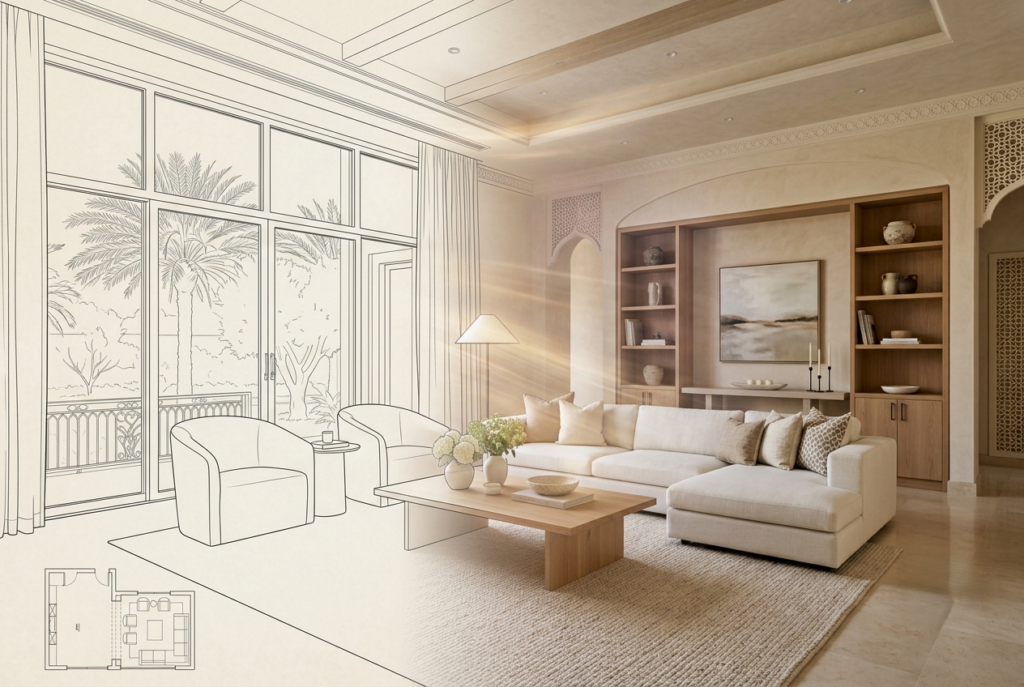
It is the use of smart technologies to analyze spaces and create design visualizations and ideas based on photos, room plans, dimensions, or the user’s preferences.
Instead of starting from an empty space in your mind, you can enter a photo of your room or its floor plan and specify the style you prefer, then get multiple visualizations within a short time.
Its uses are not limited to choosing the shape of the room, advanced platforms can also help with:
- Trying different design styles.
- Suggesting suitable colors and combinations.
- Visualizing furniture arrangement.
- Exploring furniture pieces suited to the space.
- Turning floor plans into interior visualizations.
- Editing the design and trying multiple alternatives.
- Linking some visualizations to real furniture products.
This makes artificial intelligence especially useful at the exploration and decision-making stage, before moving on to actual execution.
What Are the Advantages of AI Interior Design?
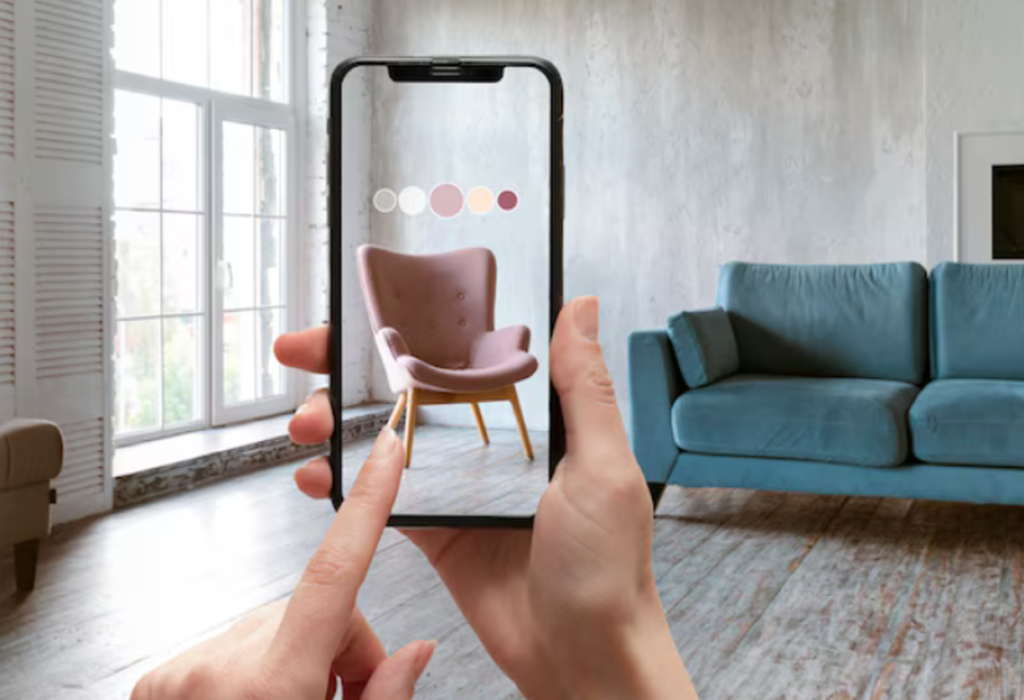
There are certain strengths that AI tools have, which show clearly in the difference between AI interior design vs traditional design. Among them:
- You start designing quickly: instead of spending days gathering photos and trying to imagine the result, you can create initial visualizations quickly and try more than one direction before making a decision.
- You see the idea before executing it: this is one of the most important advantages of AI, especially when it’s hard to imagine the effect of a certain color or a new furniture arrangement on the room.
- Trying multiple styles: you can compare modern design with classic, luxurious, minimalist, and other styles, and find out which direction suits your taste and your space best.
- Reducing hesitation before buying furniture: seeing a furniture piece within a complete design gives you a better picture than looking at a standalone product photo.
- Saving time at the planning stage: you can reach a clear initial visualization before contacting a designer or starting to buy furniture, which makes the discussion about the project more specific.
What Are the Limits of AI Interior Design?

Despite its progress, not every AI-generated design should be treated as a plan ready for execution. Some tools may produce a beautiful image that does not accurately account for the location of electrical outlets, plumbing, structural walls, actual furniture dimensions, or ease of movement within the room.
Some visualizations may also show products that don’t actually exist on the market. This means the value of these tools differs according to their capabilities.
There is a big difference between a tool that just generates design images and a platform that can understand the space and link the design to real products, offering recommendations based on dimensions and budget, such as the Zory platform.
Zory goes beyond these limits by linking the design to the actual space and dimensions, and offering furniture recommendations based on style and budget, with more than 50,000 real products that can be found and purchased.
In this way, the Zory platform does not just create an appealing image, it offers a design experience that is more realistic and more closely tied to the needs of the user and the Gulf market.
What Is Traditional Interior Design?
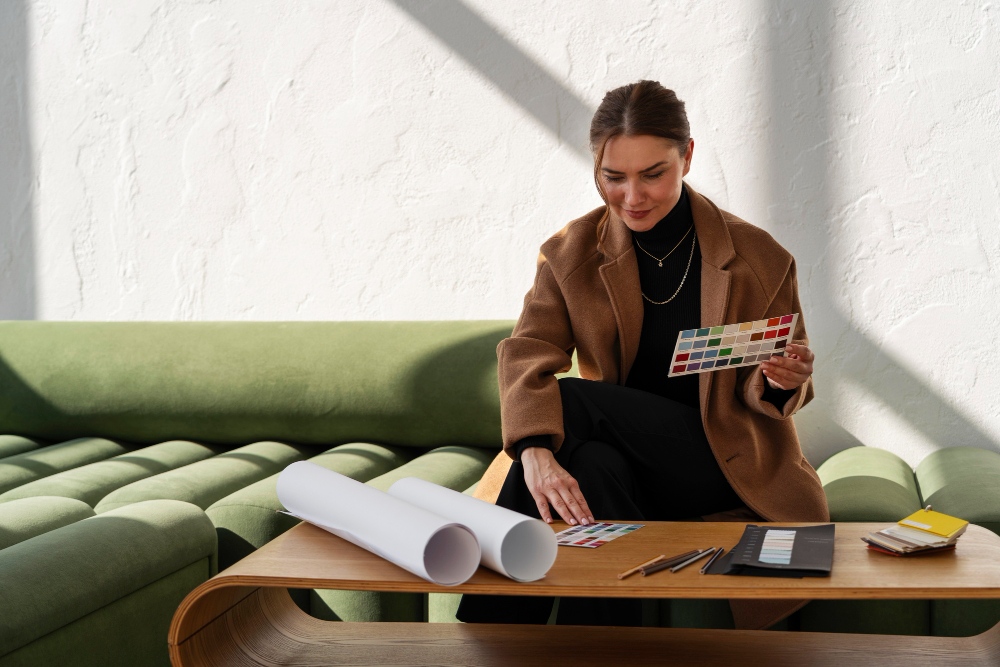
It is a process led by a professional interior designer that starts with understanding the client’s needs, studying the site, and measuring the spaces, then preparing plans and visualizations, and choosing materials, furniture, and finishes, and it may extend to supervising execution and coordinating with suppliers and craftsmen.
What Are the Advantages of Traditional Interior Design?

Despite the progress of AI, and despite the difference between AI interior design vs traditional design, traditional design remains important thanks to the designer’s practical experience and their understanding of details that require human involvement:
- Understanding the client’s needs: a design that suits their lifestyle and preferences.
- Studying the site: relying on actual measurements and conditions of the place.
- Choosing materials: recommending materials suited to quality, budget, and use.
- Feasibility of execution: taking technical and practical details into account.
- Following up on execution: coordinating with suppliers, craftsmen, and the project’s stages.
What Are the Limits of Traditional Interior Design?
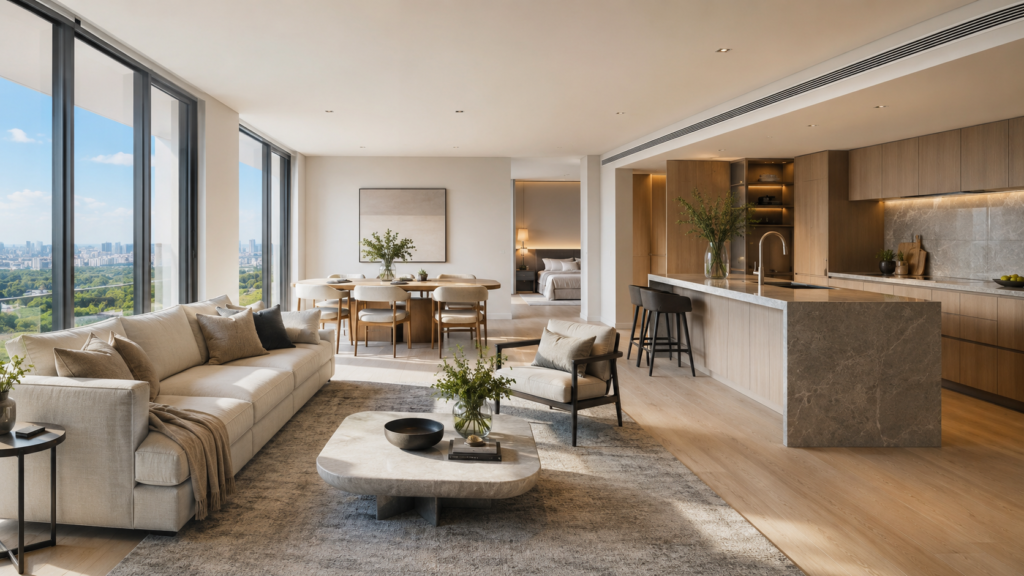
Despite its advantages, traditional design can be less flexible and slower at certain stages, and this shows clearly in the difference between AI interior design vs traditional design. Where:
- It takes longer: because of meetings, measurements, and revisions.
- Its cost is higher: especially with full-service projects.
- Alternatives come more slowly: trying out multiple ideas needs extra time.
- Imagining the result can be difficult: before the final visualizations are presented.
- The journey is longer: it requires multiple stages before reaching the final decision.
AI Interior Design vs Traditional Design
The difference between the two approaches can be understood through the nature of the task you want to accomplish:
| AI Design | Traditional Design | |
| Speed | Creates ideas and visualizations within minutes | Needs time for consultation, measurement, and design |
| Exploring ideas | Trying a large number of alternatives quickly | Relies on the designer’s experience and rounds of revision |
| Visual representation | Suitable for exploring the shape of the space | Can be more accurate when based on actual measurements and plans |
| Personalization | Depends on the data and preferences you enter | Depends on studying the client and the site directly |
| Choosing furniture | Can offer smart recommendations on advanced platforms | Depends on the designer’s experience and searching for suppliers |
| Execution | Does not handle on-site execution | Can include supervision, coordination, and execution |
| Cost | Often lower at the visualization and exploration stage | Varies depending on the scope of the designer’s service |
How Can AI and an Interior Designer Be Combined?
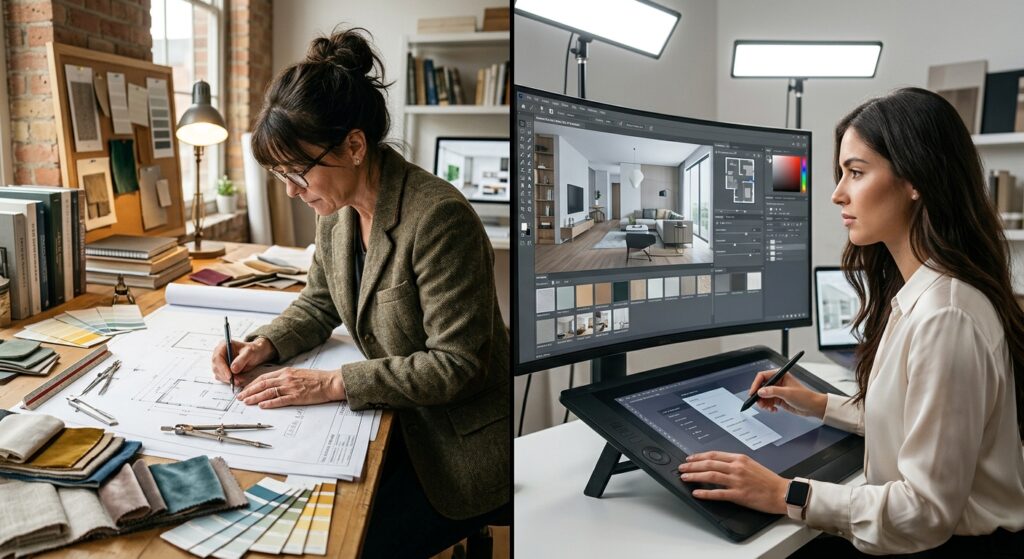
Instead of looking at AI interior design vs traditional design as two competing options, AI can be used as a preliminary stage that makes the designer’s work clearer and more efficient.
A homeowner, for example, can explore several ideas using AI, then present the result to the designer.
Instead of the designer starting from the question “What do you want?”, they can start from a clear visual representation that defines the style, colors, and preferences.
As for the designer themselves, AI can be used to create initial alternatives quickly, then professional expertise can be applied to developing the design, choosing materials, and making sure it is feasible to execute.
So despite the difference between AI interior design vs traditional design, AI speeds up the thinking stage, while human expertise adds depth, precision, and feasibility of execution.
How Does Zory Help Combine Interior Design and Furniture Selection?
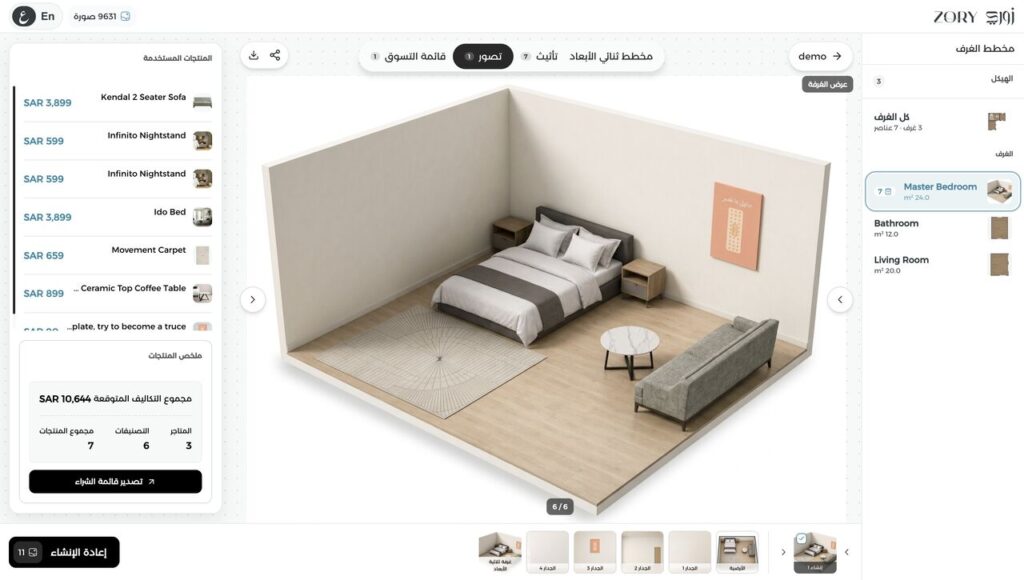
Zory differs from AI tools that focus only on creating beautiful images. Zory was designed to offer a fully integrated experience that links design to furniture and real products, with a special focus on the Gulf market. The platform offers capabilities that help the user:
- Turn floor plans into 3D interior scenes.
- Redesign rooms and try different styles.
- Get furniture recommendations that take style, dimensions, and budget into account.
- Explore a huge design gallery of more than 50,000 real products.
- Try out furniture within the visualization instead of viewing it as a separate image.
- Move from the design stage to selecting products and purchasing.
Zory also serves different needs, from homeowners and interior designers to furniture retailers and real estate developers, which makes it closer to a fully integrated design ecosystem than just an image generator.
The most important advantage for the Gulf market is that Zory was built with the local context in mind, through regional intelligence and an Arabic-first experience, instead of relying only on global tools that do not necessarily take the nature of the local market, products, and preferences into account.
Which One Suits You: AI Interior Design or Traditional Design?

Now that we’ve explained AI interior design vs traditional design, you might be wondering which one is right for you.
In reality, the answer depends on the stage you’re at:
- If you’re at the beginning of the project and need ideas, visualizations, comparisons between styles, and to discover furniture, AI gives you great speed and flexibility.
- But if you’re getting ready for execution and need precise measurements, plans, materials, on-site supervision, and coordination, having a professional interior designer remains important.
In many cases, the smarter solution is to combine both, where:
- You use AI interior design tools to clarify your vision and speed up exploration.
- Then you benefit from human expertise once you move on to technical and execution decisions.
Conclusion
The difference between AI interior design vs traditional design is no longer about choosing between humans and technology, it has become about how to make the most of the strengths of each.
AI gives you greater speed in visualizing ideas and trying alternatives, while the designer gives you the expertise needed to turn the idea into a practical, executable design.
Zory offers a more integrated model than traditional image-generation tools, because it combines AI design with an understanding of the Gulf market, furniture recommendations, real products, and, ultimately, purchasing.
Start with Zory today with Zory’s smart tools, and explore designing your space in a faster and clearer way, from the very first idea to choosing the right furniture.