


AI interior design for professional designers has become an important part of the evolution of the interior design profession. These tools help the designer save time, explore more ideas, and present compelling visualizations to the client before execution begins. As these tools have developed, AI is no longer just a means of creating a beautiful image; it has become capable of helping to understand spaces, suggest furniture, coordinate elements, and turn initial ideas into visualizations that can be discussed and developed. But the abundance of available tools makes the choice more difficult.
In this article, we review the most important things that AI interior design for professional designers offers, and how designers can make the most of them.
Why Have AI Tools Become Important for Professional Interior Designers?

AI interior design for designers has become a practical way to speed up work stages without replacing the designer’s creative expertise.
The designer spends a great deal of time on research, preparing visualizations, trying out alternatives, choosing products, and making revisions with the client, stages in which AI can cut out a large part of the effort. Its importance shows in:
- Speeding up idea development: trying several design styles and directions in a short time.
- Turning ideas into visual representations: presenting the idea to the client clearly before execution.
- Cutting down repetitive tasks: such as trying different layouts and searching for matching pieces.
- Improving communication with the client: seeing the design makes discussing revisions clearer.
- Offering multiple options: the designer can show the client more than one visualization in a single session.
In this way, AI becomes a productivity tool that gives the designer more time to focus on creativity and important design decisions.
How Do AI Tools Help the Interior Designer at Different Stages of Work?
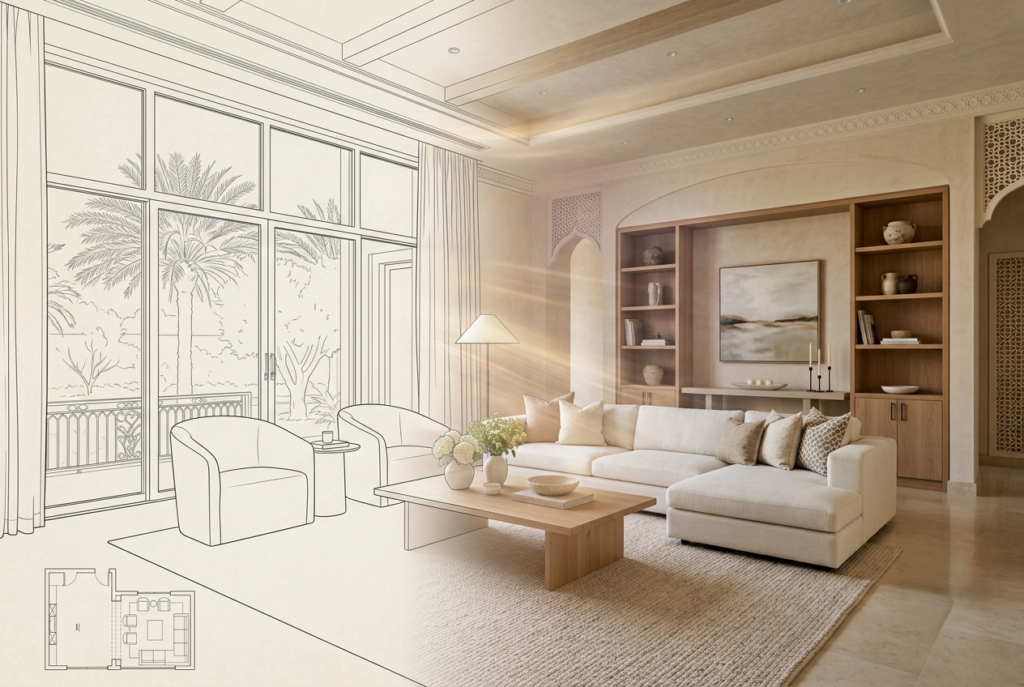
AI can be integrated into multiple stages of a project, from the first idea all the way to product selection:
- Understanding the space: analyzing floor plans, photos, and dimensions to form an initial impression of the place.
- Developing the idea: trying different styles, colors, and layouts quickly.
- Visual representation: turning the plan or idea into a realistic scene that helps the client picture the result.
- Choosing furniture: suggesting pieces that suit the style, the space, and the budget.
- Presenting alternatives: offering more than one design direction and comparing options with the client.
- Revisions: trying out different changes quickly instead of rebuilding the visualization from scratch.
- Selecting products: when the tool is linked to a real catalog, moving from design to furniture selection becomes easier.
What Is the Difference Between an AI Tool for Designers and a Tool for Creating Design Images Only?
The two tools may seem similar, but the difference becomes clear when they are used on a real project.
Image-generation tool
- Focuses on producing an appealing image based on a description or a reference image.
- Useful for inspiration and exploring ideas.
- Does not deal precisely with room dimensions, does not offer real products, and does not help with moving from the image to a purchase.
AI tool designed specifically for designers
- Understands the space and its dimensions.
- Suggests designs suited to the project.
- Provides smart furniture and product recommendations.
- Takes style and budget into account.
- Offers multiple options that can be edited.
- Links the design to real products.
- Makes it easier to present and discuss ideas with the client.
How Does AI Interior Design for Professional Designers Help Deliver a Better Client Experience?
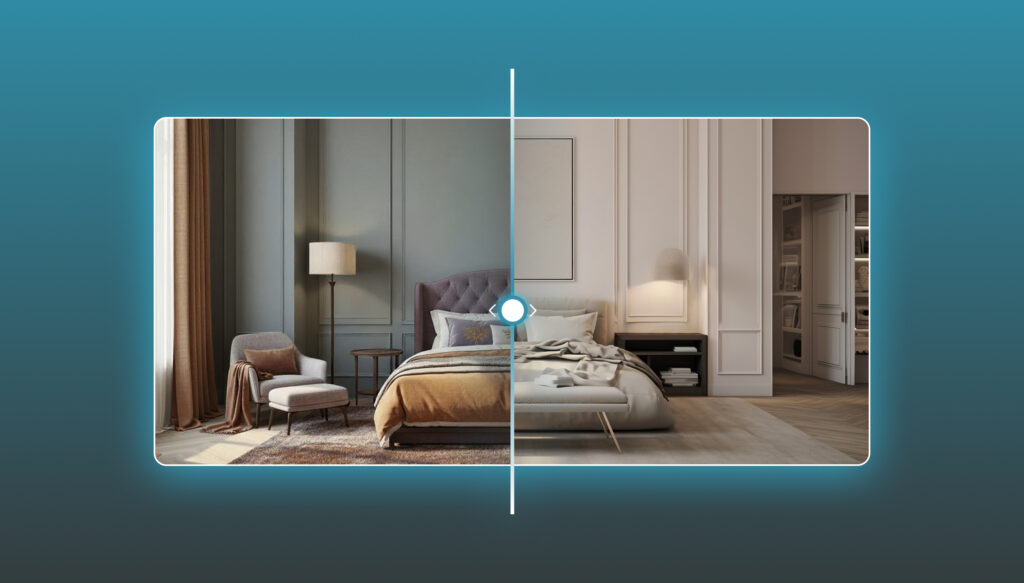
The value of AI-powered interior design is not limited to speeding up the designer’s work; it also helps make the client part of the design process rather than a mere recipient of the final result. This can be achieved through:
- Turning the idea into a clear visualization: seeing the design visually makes it easier for the client to understand the idea than relying on explanation and description alone.
- Offering multiple options: the designer can present more than one style or layout and discuss them with the client within a short time.
- Reducing the expectations gap: when the client sees a clear visualization before execution, there is less chance their expectations will differ from the final result.
- Making revisions easier: changes to colors, furniture, or layout can be tried quickly, instead of setting everything up again from scratch.
- Boosting client confidence: the more the client participates in the choices and sees the impact of their decisions on the design, the more confident they become in the final result.
- Turning design into an interactive experience: some platforms allow the client to explore products, adjust the design, and then choose what suits them, which raises the value of the service the designer provides.
How Do AI Tools Help the Interior Designer Save Time?
The designer spends a significant part of their time on tasks that can be sped up with the help of AI, allowing them to focus on the aspects that require their expertise and professional judgment.
Among the most notable tasks that AI interior design for professional designers can carry out and shorten the time needed for are:
- Researching ideas and styles: exploring multiple design directions within minutes.
- Creating initial visualizations: turning a plan or an idea into a visual representation quickly instead of preparing every visualization manually.
- Trying out alternatives: testing different layouts, colors, and furniture pieces without starting from zero each time.
- Searching for suitable furniture: accessing pieces that match the project’s style, dimensions, and budget.
- Presenting options to the client: preparing several visualizations in a short time instead of settling for a single option.
- Shortening revision rounds: the more directly the client can see a change, the faster the final decision is reached.
The goal of AI interior design for professional designers is not to replace the designer, but to reduce the time spent on operational tasks.
This means creating an opportunity to dedicate more time to creativity, planning, and understanding the client’s needs.
What Should You Look for When Choosing an AI Tool as a Professional Interior Designer?
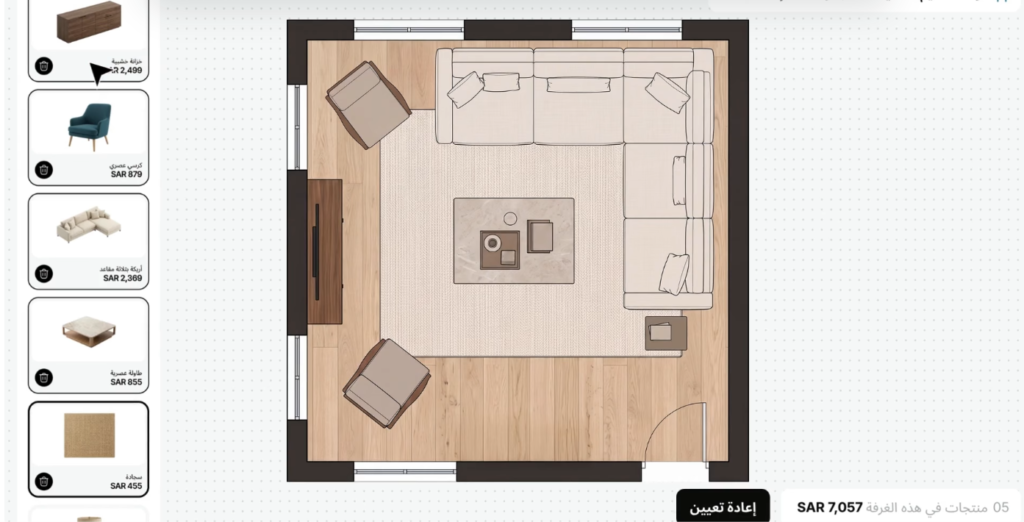
Not every AI interior design tool for professional designers is suitable for professional use.
The designer needs a tool that adds real value to the workflow, not just one that produces attractive images. So pay attention to:
- Accuracy in handling floor plans and dimensions: so that the visualizations are applicable and not just inspirational images.
- Quality and realism of the visualizations: especially when used in client presentations and commercial projects.
- The ability to understand style and budget: to get recommendations that are more accurate and better suited to the project.
- The presence of real products: furniture pieces should ideally be findable and purchasable, not just elements generated within the image.
- Ease of editing and experimentation: so you can develop the design quickly with the client.
- Support for the local market: especially for designers working in the Gulf, where preferences and available products differ from other markets.
- The ability to integrate it into the workflow: the more a tool is able to move from visualization to product selection and purchase, the greater its practical value.
- Ease of use: a good tool should save time, not add complicated technical steps to the designer’s work.
How Does the Zory Platform Help Professional Interior Designers?
Zory goes beyond the idea of simply creating interior design images; it helps the designer move from the initial idea to a complete visualization that can be presented to the client and linked to real products.
Among the most notable features of AI interior design for professional designers offered by Zory are:
- Turning a floor plan into a furnished 3D scene within minutes, which shortens the time needed to prepare initial visualizations.
- Offering smart furniture recommendations that take into account the design style, the dimensions of the space, and the budget.
- Access to more than 50,000 real products from trusted retailers, instead of relying on virtual elements that are difficult to execute.
- Presenting several options to the client quickly, making comparison easier and helping reach the right design faster.
- An interactive experience for the client, through which they can adjust the design, choose products, and take part in the decision.
- Linking the design to purchasing, so the designer’s role does not end at presenting the image, it is possible to move from the visualization to selecting the furniture and products.
In this way, Zory helps the designer reduce the time spent on repetitive tasks and focus more on creativity, understanding the client’s needs, and developing the design solution.
Why Is Zory Different From Global AI Tools for Designers?
The fundamental difference between the AI interior design for professional designers offered by Zory and other tools is that Zory was not built as a general-purpose tool for creating design images.
It was designed as a specialized platform that connects design, furniture, the local market, and the client experience within a single system. The most important points of difference are:
- Designed for the Gulf market: Zory is the first Arabic AI platform for interior design and operates with regional intelligence that understands the local design context and market needs.
- Real products: a huge catalog of more than 50,000 products from trusted retailers, which brings designs closer to actual execution.
- Moving from visualization to purchase: use does not stop at creating the design, the client can choose and purchase the products.
- Serving the designer and the client together: the platform does not just help the designer get the job done; it also gives the client an interactive experience within the design process.
- A focus on dimensions, budget, and style: recommendations are not based on aesthetics alone, but take into account fundamental factors in the design decision.
- An ecosystem that extends beyond the designer: Zory also serves homeowners, furniture retailers, and real estate developers, creating an integrated environment around design and furniture.
Conclusion
AI has become an important tool for the professional interior designer, but the real value does not come from using just any tool, it comes from choosing a platform that adds to the designer’s expertise, saves their time, and gives them a greater ability to deliver a distinctive experience to the client.
The designer who can turn an idea into a realistic visualization, choose the right products, and involve the client in the decision delivers value that goes beyond mere design.
This is where Zory comes in, a platform designed to make this process faster and more integrated, from 3D visualization and smart recommendations to real products and the purchasing experience.
Register with Zory today, and discover how AI interior design for professional designers can raise the value of your services and give your clients a clearer, more interactive, and more professional design experience.